


DREAMS PARK, Cooperstown NY—This place goes to great lengths to eliminate distractions and the pressure parents sometimes add to games.
There are 22 fields here, all beautifully maintained, and you won’t find parents or fans behind a single backstop. We’re all seated down the foul lines, far from home plate. Massive green wooden fences rim every field, keeping out prying eyes and other distractions.
Even with the fences and the distance between parents and players, the scene can feel overwhelming. Baseball also brings unexpected challenges. The game can be brutal.
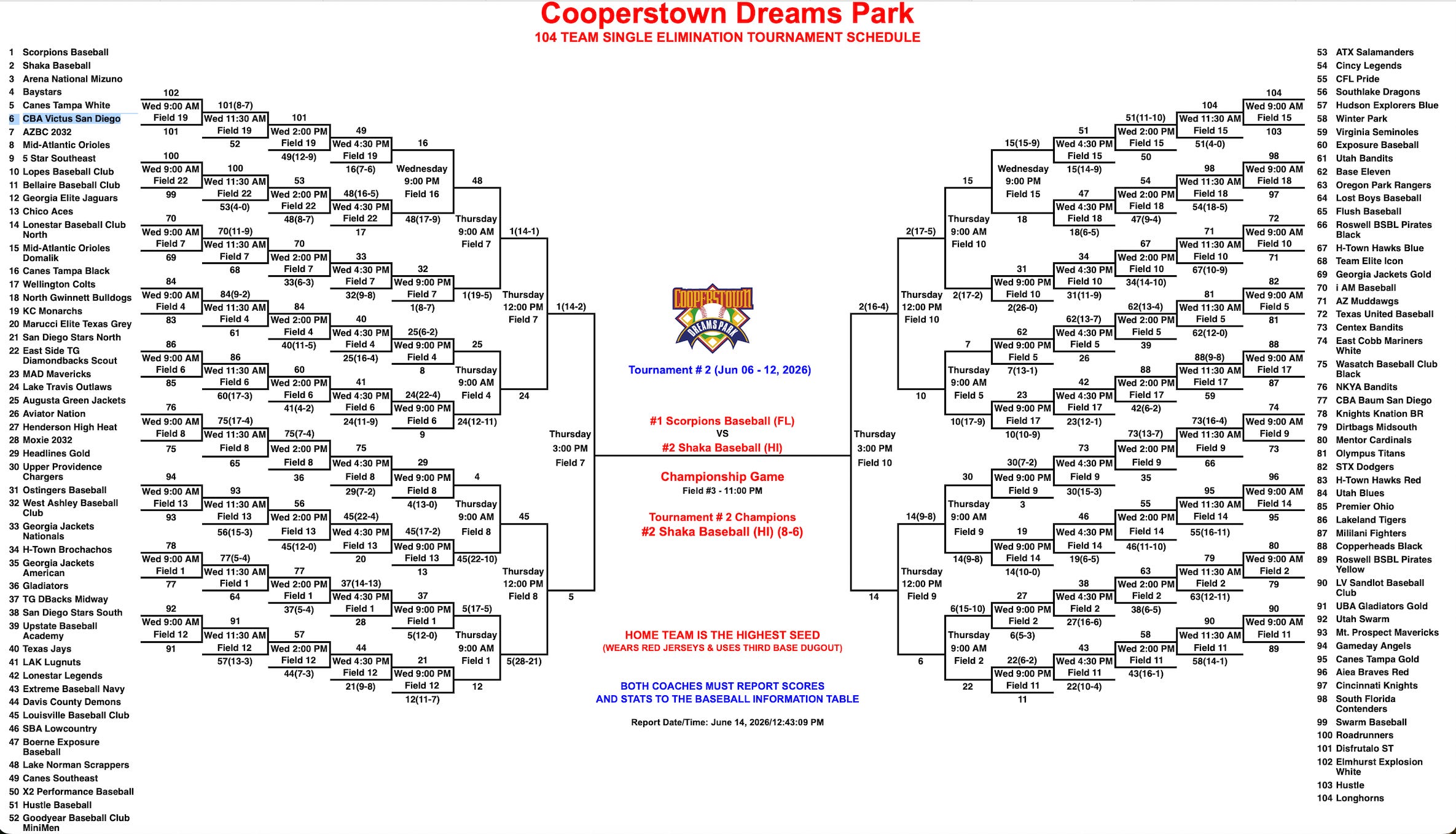
My son’s team played during Week 2 along with 103 other teams from across the country, including three from Hawaii. They played really well, finishing in the top 8 of the weeklong marathon.
I saw the best and worst from parents and players. There were times when Alex and his teammates looked electric and moments they had to fight through. One of those moments highlights how competitive this game can be, how quickly it can turn on a kid, and what it asks of players and parents when it does.
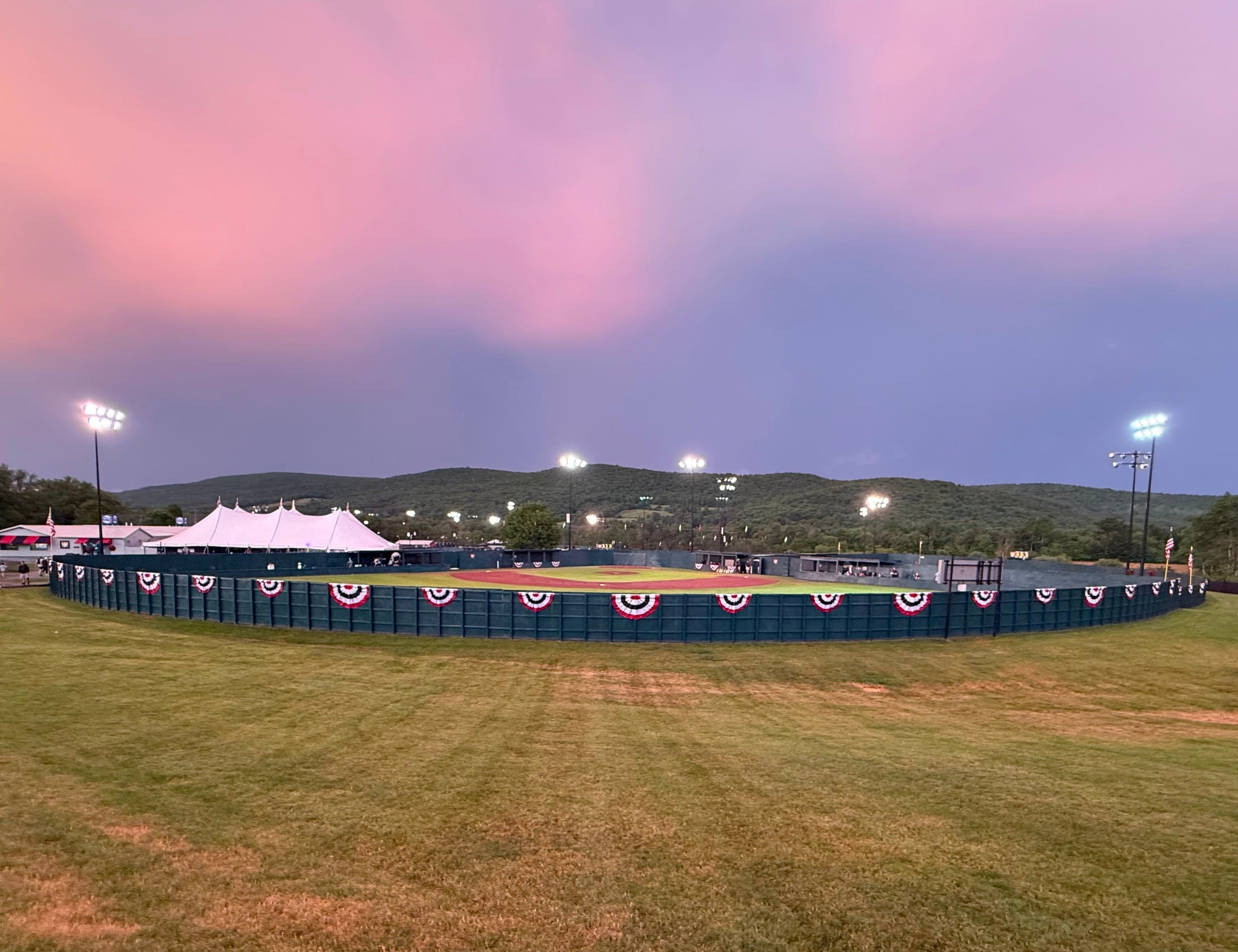
Cooperstown worships the game more than any other place on the planet. “Hello Baseball,” is how an older gentleman greeted me on our first day as we strolled through the parking lot of Double Day Field, considered the birthplace of baseball.
Alex looked like he does on Christmas morning during most of his time here. “I’m having so much fun,” he texted us from his team’s bunkhouse.
The magic wasn’t always there. You could see the game get too big for some boys, especially on Day 1. I saw it in my son. He looked tense. His swings weren’t smooth or strong.
No big deal, I thought. Normal, given the environment.
Day 2 brought less pressure and better baseball. Alex looked like himself again — driving balls all over the field, including one into the centerfield fence that landed with a thud you could hear around the park. He went 3-for-4 with a clutch hit with this team trailing 4-3. His intentions that day: “Be smooth. Go All Out. Try My Best.”
Day 3 was somehow better. He hit back-to-back home runs, each easily clearing the centerfield fence. He made his plays in the field. His pitching wasn’t nails but the defense behind him wasn’t as sharp as it normally is either. Regardless, the wins continued to pile up and Alex looked as happy as we had ever seen him.
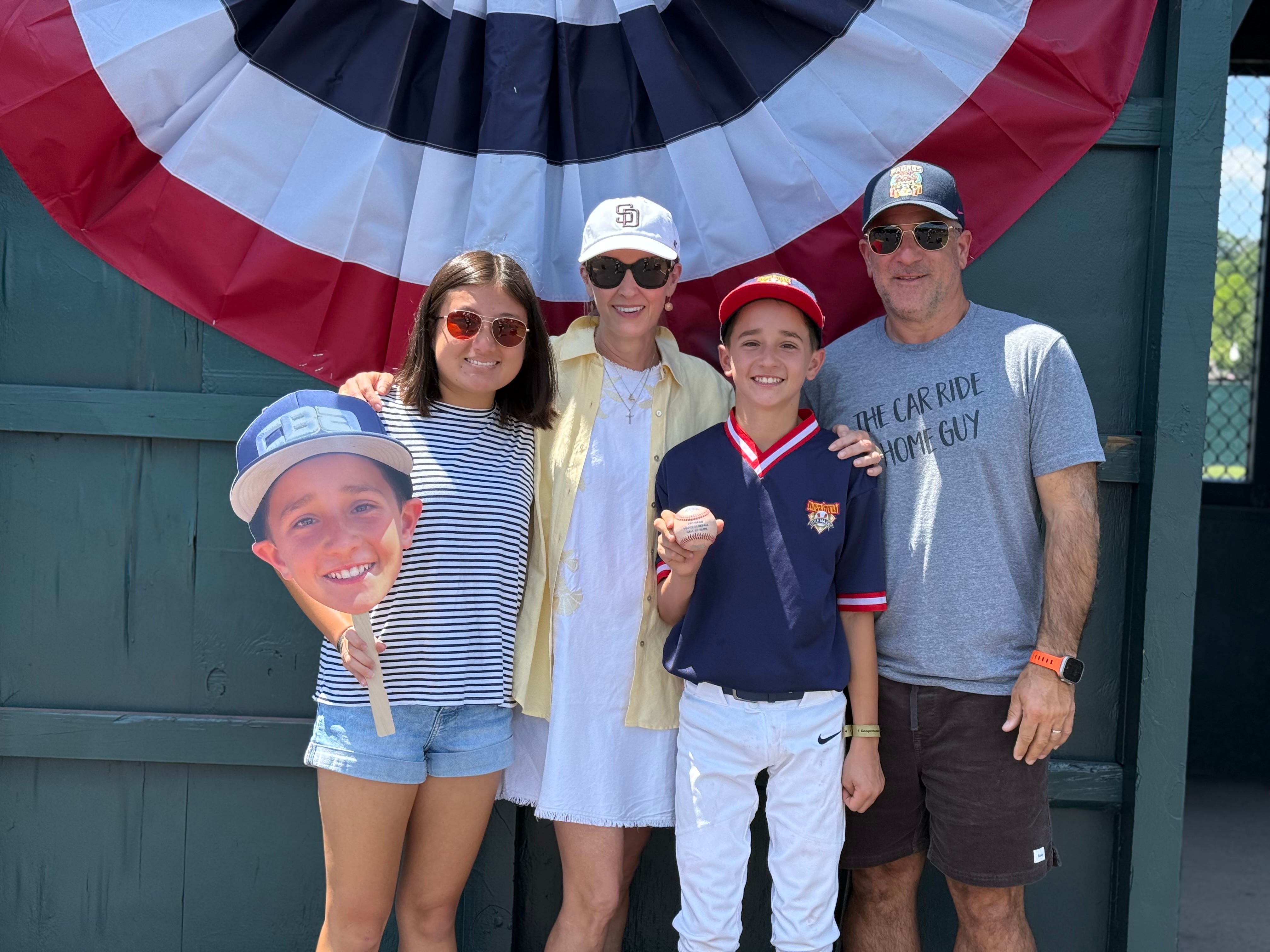
His team finished pool play 5-0 — the sixth seed out of 104 teams. That meant byes on Day 1 of bracket play. We didn’t play until 9pm. Our game was pushed back nearly two hours because of rain. When I saw Alex before the game, he looked perplexed.
“They moved me down in the lineup,” he said.
“It doesn’t matter,” I told him. “Just keep raking.”
“Yeah,” he said. “Maybe they did it so I’m close to the top of the lineup.”
Things didn’t go his way, especially late with the game tied 3-3. His team won, but he was sad. Where Elizabeth and I had seen joy all week, there was now doubt and disappointment.
These are quiet but emotional moments not easily seen by anyone outside your kid’s inner circle, but if you’re in there with him — you see and feel all of it.
We knew he’d be fine. He’s a tough kid. He’d been here before, disappointed by a coach’s decision or his performance, down on himself, and then back on top. He went through it before Sectionals one year during All Stars and his hitting coach got on him. “It doesn’t matter where you play or where you bat in the order,” he barked. “This game will eat you up if you bring disappointment into it. Do your job.” Alex responded. He led his team in hitting during Sectionals.
After that rain-delayed game in Cooperstown, Elizabeth and I drove back to our cottage with Nicky and Natalie. We were anxious. The team’s next elimination game was less than 12 hours away. Would Alex bounce back by then? We knew he would likely pitch and of course be counted on to barrel some baseballs.
Seeing your kid wrestle with the brutal side of baseball hours before the final round of games — just 16 teams remained at that point — on the biggest stage he’s ever played on is tough. But taking on his disappointment would make things worse. Worrying about him is normal. Showing him is not. Our job is to be supportive and positive. Easier said than done given the long week, the heat and humidity, the cold I was battling, and the tension in the stands that grew with each victory.
“Chin up,” I said to him after that late-night game as he approached us with eyes that said he was struggling. “You’re good.”
He looked better the next morning from what we could tell during warm-ups, and he was moved up in the lineup. We reminded him to go hard, have fun, enjoy it. “This is what you’ve trained for.”
He flashed a smile and looked relaxed and confident, his old self. But the mojo from earlier in the week never fully returned.
His team won their second elimination game, advancing to the final eight before losing a heartbreaker, 9-8, to a big Texas team. Alex started on the mound that game. He left in the second inning with his team down 4-0. He had just struck out a batter before dirting a pitch and then waving his coach to the mound. His shoulder was hurting with each pitch.
I picked Alex up a couple hours later, after he and his teammates cleaned out their bunkhouse. He was fine. Quiet, but fine. He wanted to know how I thought he played.
“I think I played pretty good,” he said
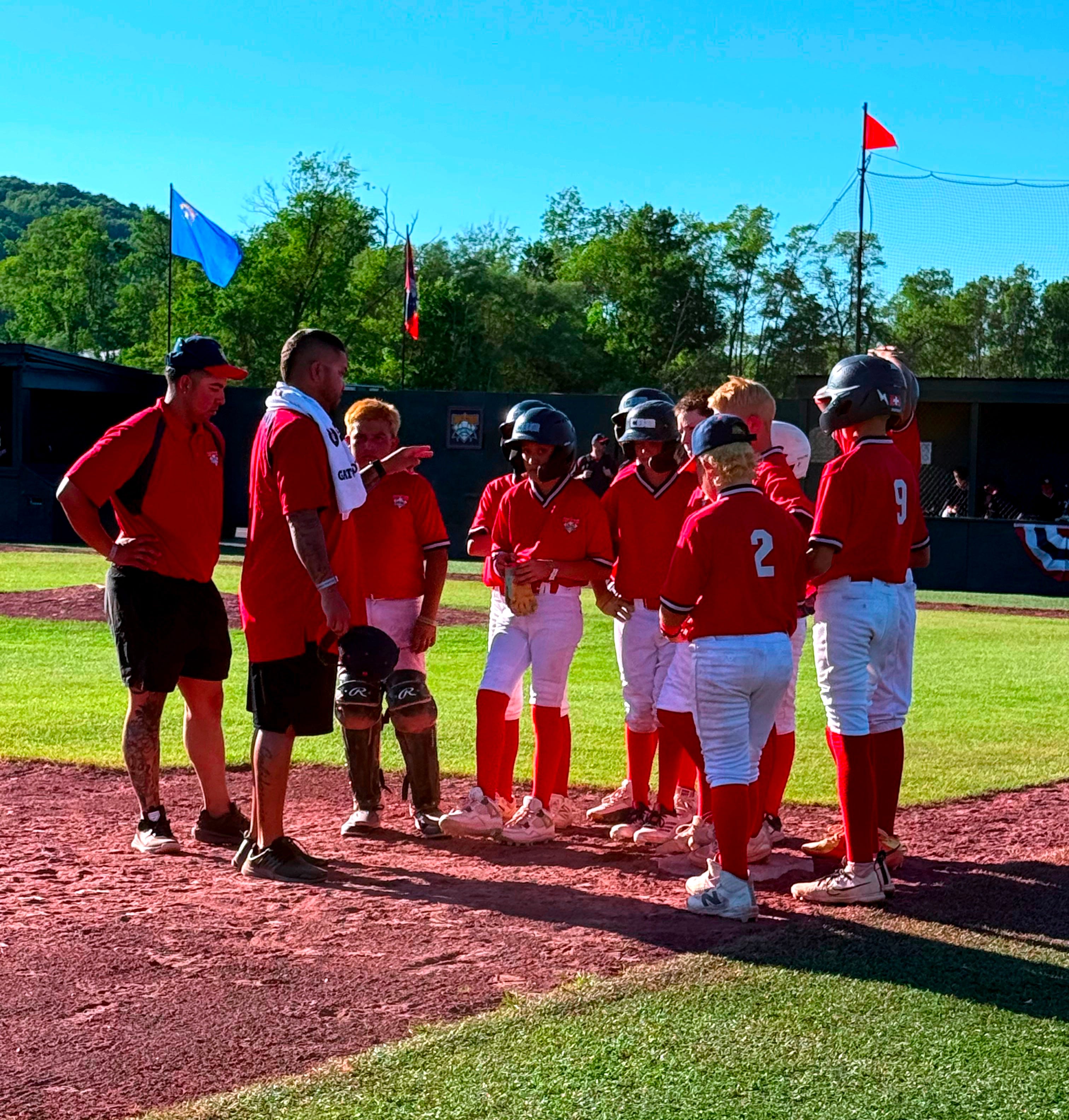
Before we recapped the week I told him how proud Elizabeth and I were of him, his teammates, and his coaches. Finishing in the top 8 is a big deal, I said. Some kids on his team were sick, others were injured, but they never gave up. They had runners at the corners, down by one, when it all ended on a foul tip with Alex on deck.
His coach, Anthony Soto, fought back tears when he gathered parents and players after the final out. He told the boys he would always be available to them. Then he hugged each of them.
“Heck of a run this week by the 12u CBA Victus San Diego group in Cooperstown!” is what his travel organization said on Instagram. “Got to the Round 8 out of 104. They made the entire program proud!”
Alex and I briefly walked through his week — the defense, the clutch hits, the back-to-back home runs. We talked about his pitching, too. His off-speed stuff was working but, he said, he needed to do a better job locating his fastball, especially on fields built for hitters. Then I told him it looked like he’d carried some of his disappointment from that late-night game into the games the next morning.
“It’s okay to feel frustrated and disappointed. Those feelings are normal. You feel that way because you care. Because you’re a competitor. Because you know you’re one of the best on the field, no matter who is on the field,” I said. “But you gotta push through that. You gotta let it go and be where your feet are. This is going to happen again. You’re going to face disappointment again, and it won’t feel fair, and you’ll be mad. But you have to feel it, then flush it and get locked in.”
He was looking out the window, watching the green hills roll by — the ones that look airbrushed into the Cooperstown horizon.
“Yeah,” he said softly.

Alex was quiet that evening. Tired. Still wrestling with his emotions. The doubt and disappointment faded, but they were replaced.
“We should be playing in the championship game tonight,” he said as I tucked him in. “And I don’t get to play in Cooperstown again.”
“I’m also sad because I only have a couple more months with Coach Soto and Coach Eddie” before moving to 13u.
That’s another thing Dreams Park understands. For many 12 year olds, this is the last big youth baseball moment before they move up to new coaches, bigger fields, heavier bats, longer base paths. A lot of boys stop playing after their 12u season. It’s why Dreams Park treats these boys to an experience they’ll never forget.
Alex will be fine, but he’s still not yet where his feet are and that’s okay. If I were him, I’d relive the moments from this week for a long time, too.
We spent our last day shopping, having lunch, visiting the Hall of Fame (for the second time), and a historic farm and art museum. “I’m gonna miss this place,” Alex said at lunch. “I love it here.”
On the way to the airport, he said: “This has been a great last day. It really cheered me up.”
All of us said “Goodbye Cooperstown” as we pulled out of town, more in love with the game than before we arrived.
Go Deeper
Some of you are dealing with issues that keep you up at night: Your kid can’t recover after an error. He doesn’t like his coach. He’s constantly checking GameChanger and comparing himself to his teammates. He wants to quit. Your relationship is suffering.
That’s what my one-on-one coaching sessions are for.
➡️ Visit my Stan Store to book a coaching session, email questions, order playbooks, or inquire about speaking.
About Baseball Dad & PR Guy
Baseball Dad & PR Guy is a weekly newsletter about youth sports culture and how parents and coaches shape the experience for young athletes.
Subscribers also get what I use after games—what to say, and what to leave unsaid on the ride home.
My essays are built around the 5 Moments That Shape Young Ballplayers, from the nerves before a game to the car ride home.
From the stands, I write about those moments and what they mean for confidence, identity, and a kid’s love of the game.
Read more about the 5 Moments and why they matter.
⚾ Join the conversation: Travel Baseball Moms & Dads (Facebook)
⚾ Follow along: Tony Manolatos – Baseball Dad & PR Guy (Facebook)More at tonymanolatos.com
As a Cooperstown resident, I’m glad to hear that your son enjoyed his time here.
I was captivated by your storytelling once again, Tony. Great work. I would have been over the moon to have been able to play at Cooperstown as a boy. So cool you were able to give that to Alex. When I was a kid, my mother and I would always talk about going to the Hall of Fame Museum someday. I think around 30 or 31, I was playing triple-A for the Mets in Buffalo, and flew her out for a series that had a day off in the middle. We were able to drive down and spend a full day there, and finally knock that off our bucket list, lol.