


Trust is one of those words we throw around a lot. In youth baseball, it often sounds like this:
“Swing looks good kiddo. Trust it!” That’s a text from my son’s hitting coach, sent recently during a tournament ahead of bracket play.
What about us parents? Do we trust our kids to perform? Are we relaxed? Confident? Or are we tense, trying to coach them in the moment, trying to fix them after the game?
Trust is one of three big ideas I came away with following my conversation with mental performance coach Dave Austin. The other two:
What you feed will grow. What you focus on will expand. What you starve will die.
Nerves aren’t the problem. Pressure is normal. Doubt is universal. The players who succeed learn to love it.
Don’t miss my most popular story. ↓

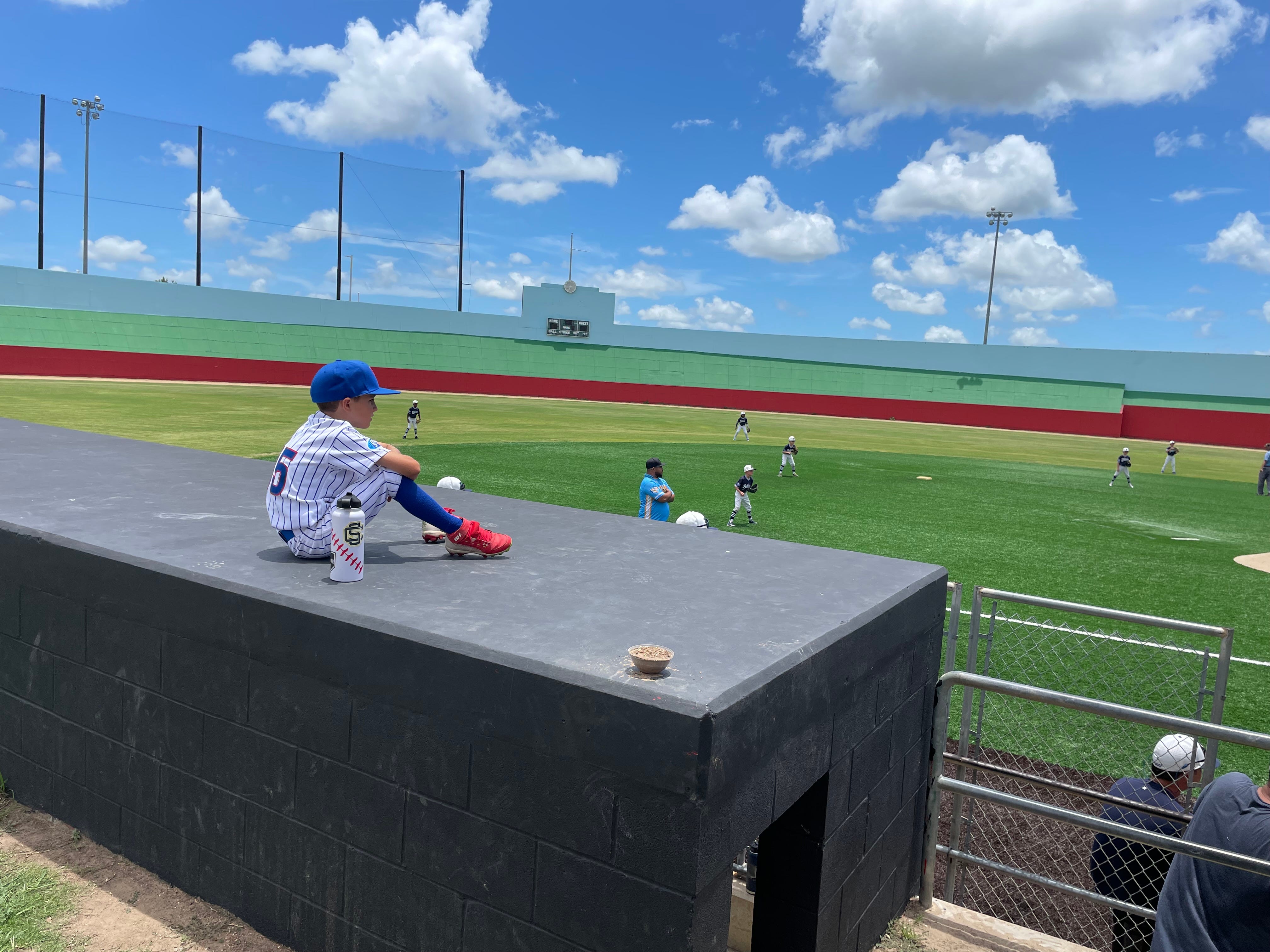
Trust Them
About halfway into our conversation, Dave shared a story I’m still thinking about.
It was about a former two-sport star—QB at Stanford, top MLB draft pick—who was struggling early in his baseball career. When he called Dave he said: “I don’t want to be the biggest failure in the history of the game.”
Talk about pressure. After one 0-for-4 night, he got back to his hotel room. Dave was with him.
“I want parents really to hear this,” Dave told me.
His dad called.
Then his hitting coach.
Then his agent.
Then his uncle.
Each one breaking down every pitch.
Everyone was trying to fix him. They were so sure they were helping him they couldn’t see what they were really doing. The critiques, the handwringing, the pressure—they were suffocating this young man and crushing whatever confidence he had left.
“It was all a distraction,” Dave said. “All of it.”
Distractions kill performance—and a lot of the time, parents are the distraction.
When kids know they have room to fail and we’re going to love them no matter what, it removes pressure.
SHORT SURVEY: What do you say to your son/daughter before, during, and after games? Would love to hear from you.
Young ballplayers also develop faster when we trust them to make adjustments instead of trying to direct them from the stands. If they don’t make the adjustment, they’ll get another shot soon. Either way, they’re getting In-N-Out after the game.
What You Focus On Grows
“What you feed will grow. What you focus on will expand,” Dave told me. “What you starve will die.”
Our job isn’t to fix everything. It’s to create an environment where confidence can grow through support, reps, encouragement. And starve the stuff that gets in their way…the expectations, the critiques, the tension, the raised eyebrows.
The game is not easy. Obsessing over failure, something a lot of players do, makes it harder. When we reinforce doubt, often without realizing it, we create more pressure.
What we say, and don’t say, matters. Especially on the car ride home.
Eliminating distractions—all that noise—is the one thing that has the most impact on players, Dave said.
The players who learn to focus (Extreme Focus is the name of Dave’s business) are usually the ones who succeed. They can turn a weakness into a strength.
A client of Dave’s, A’s star catcher Shea Langliers, was not a good hitter with two strikes. But he and Dave worked on that moment repeatedly in their pre-game sessions. “We kept feeding it until it grew. And now Shea is one of the best two strike hitters in baseball,” Dave said.
I’ve seen this with my son, Alex, who is 12. There are moments on the mound where he’ll step off, take a breath, and reset. He’s not thinking about mechanics. He’s going back to reps—what it’s supposed to feel like. More often than not, the next pitch is a strike.
Nerves Aren’t the Problem
Early in our discussion, Dave moved to the edge of his seat from his hotel room in Atlanta. His face filled the frame. He didn’t want anyone to miss this point:
“A lot of players think, ‘It’s only me who has the nerves. It’s only me who has the doubts.’ Everyone does! Trust me. I’ve worked with MVPs. I’ve worked with Cy Young winners. Everyone feels the same thing.
“It’s just a matter of working through it.”
Those who do learn to love the pressure and live for the nerves. The best players embrace those feelings. It fuels them.
There were times when I was talking to Dave that I could hear my wife’s voice. Elizabeth has almost always handled pressure better than me.
A long time ago, she started doing something simple but powerful with Alex. There are times when pressure is Alex’s buddy—helping him focus, or lock in as he would say. Other times, it’s not so easy to lock in. Elizabeth reads him well. If she sees tension, she’ll say:
“Find your joy, Alex.”
I can hear her because I’m loading the truck, waiting for them to say goodbye.
“Remember why you play this game,” she adds. “You play baseball because you love it, because it makes you happy, because you’re good at it.”
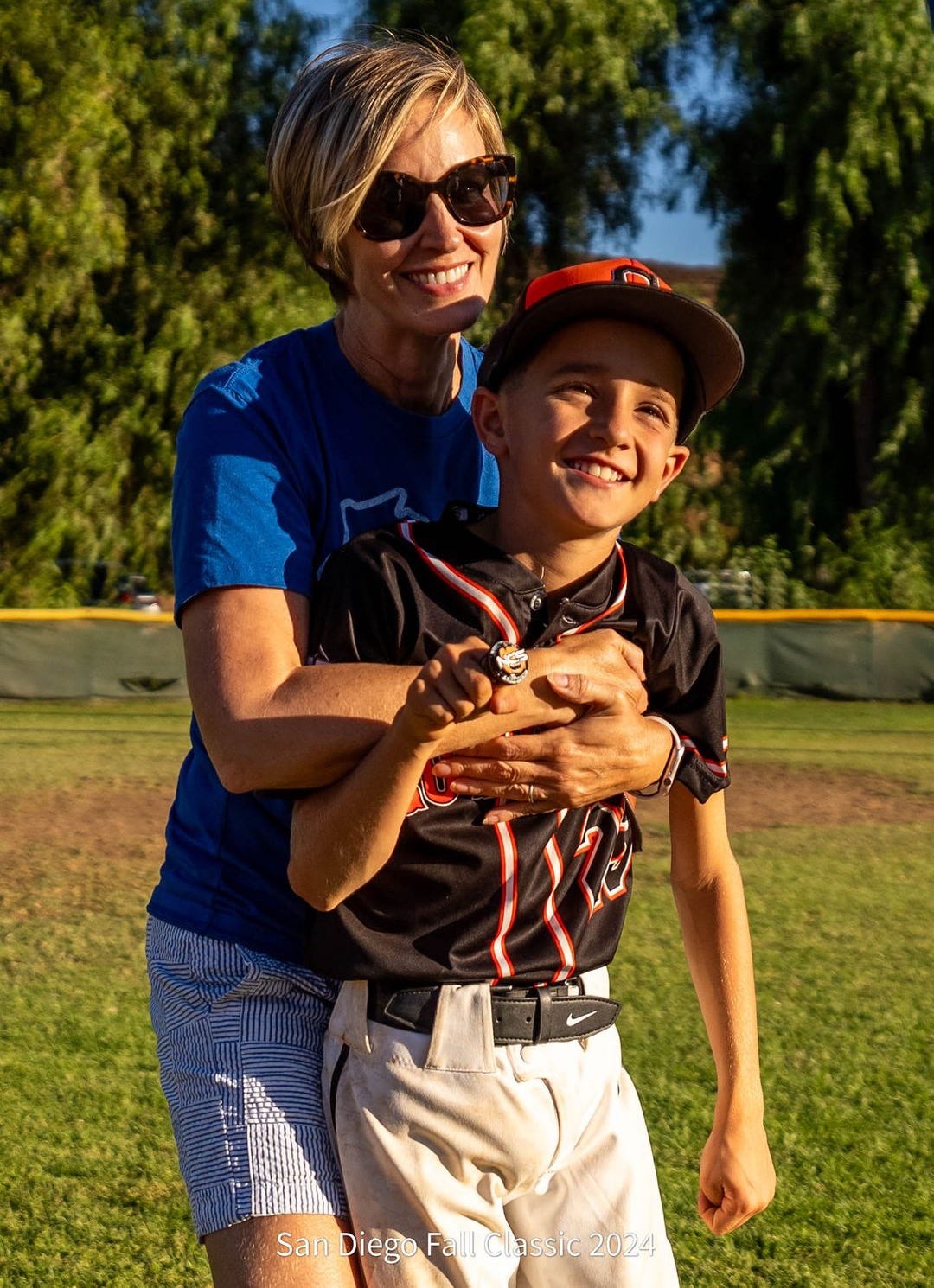
All of these moments—on the field, in the dugout, in the car, at the front door—add up. That’s not always easy to see. They shape who our kids become.
All of us want the same thing: kids who are happy, confident, and love the game. If they lose that, we should ask ourselves why…and be honest about the answer.
So what do you say when your kid goes 0-for-4? Or strikes out with the game on the line? Or walks to the car knowing he didn’t have it that day?
The moment isn’t the hardest part. What happens next is. I’ve been there. And I’ve gotten it wrong.
###
Go Deeper
Some of you are dealing with issues that keep you up at night: Your kid can’t recover after an error. He doesn’t like his coach. He’s constantly checking GameChanger and comparing himself to his teammates. He wants to quit.
That’s what my one-on-one coaching sessions are for.
Visit my Stan Store to book a coaching session, email questions, order playbooks, or inquire about speaking.
I also put together a simple 2-minute script for the car ride home: what to say, and what to leave unsaid. I’ll send it to you when you subscribe. ↓

About Baseball Dad & PR Guy
Baseball Dad & PR Guy is a weekly newsletter about youth sports culture and how parents and coaches shape the experience for young athletes.
Subscribers also get what I use after games—what to say, and what to leave unsaid on the ride home.
My essays are built around the 5 Moments That Shape Young Ballplayers, from the nerves before a game to the car ride home.
From the stands, I write about those moments and what they mean for confidence, identity, and a kid’s love of the game.
Read more about the 5 Moments and why they matter.
⚾ Join the conversation: Travel Baseball Moms & Dads (Facebook)
⚾ Follow along: Tony Manolatos – Baseball Dad & PR Guy (Facebook)More at tonymanolatos.com
Very well written, Tony. Loved how you intertwined all the different people, and full of great direction for baseball families. JB’s journey was tough to watch unfold, he was/is a tremendously great person, too.