


You all liked the reel and essay I posted last Sunday about two boys who walked away from baseball. More than 500,000 views, 3,000 likes, and 1,000 comments across Instagram and Facebook. Parents, coaches, former college and pro players, professors. Some were funny. Some were heartbreaking. Some were both. Thank you! —Tony
Don’t sweat All Stars. Seriously. It’s not a big deal.
I say that knowing it can feel like one. Some kids quit the game because they’re passed over. Friendships are lost. Lawsuits filed. Seriously. Lawsuits. Every year, I’m told, and the lion’s share right here in Southern California—the epicenter of youth baseball.
I’ve seen the good and the bad with All Stars. We lived it. Our son Alex, who aged out of Little League a year ago, was a multi-year All Star — his 10u team played for the state championship. There were moments we loved and some we'd redo. Big picture? It doesn't matter. But it doesn't always feel that way.
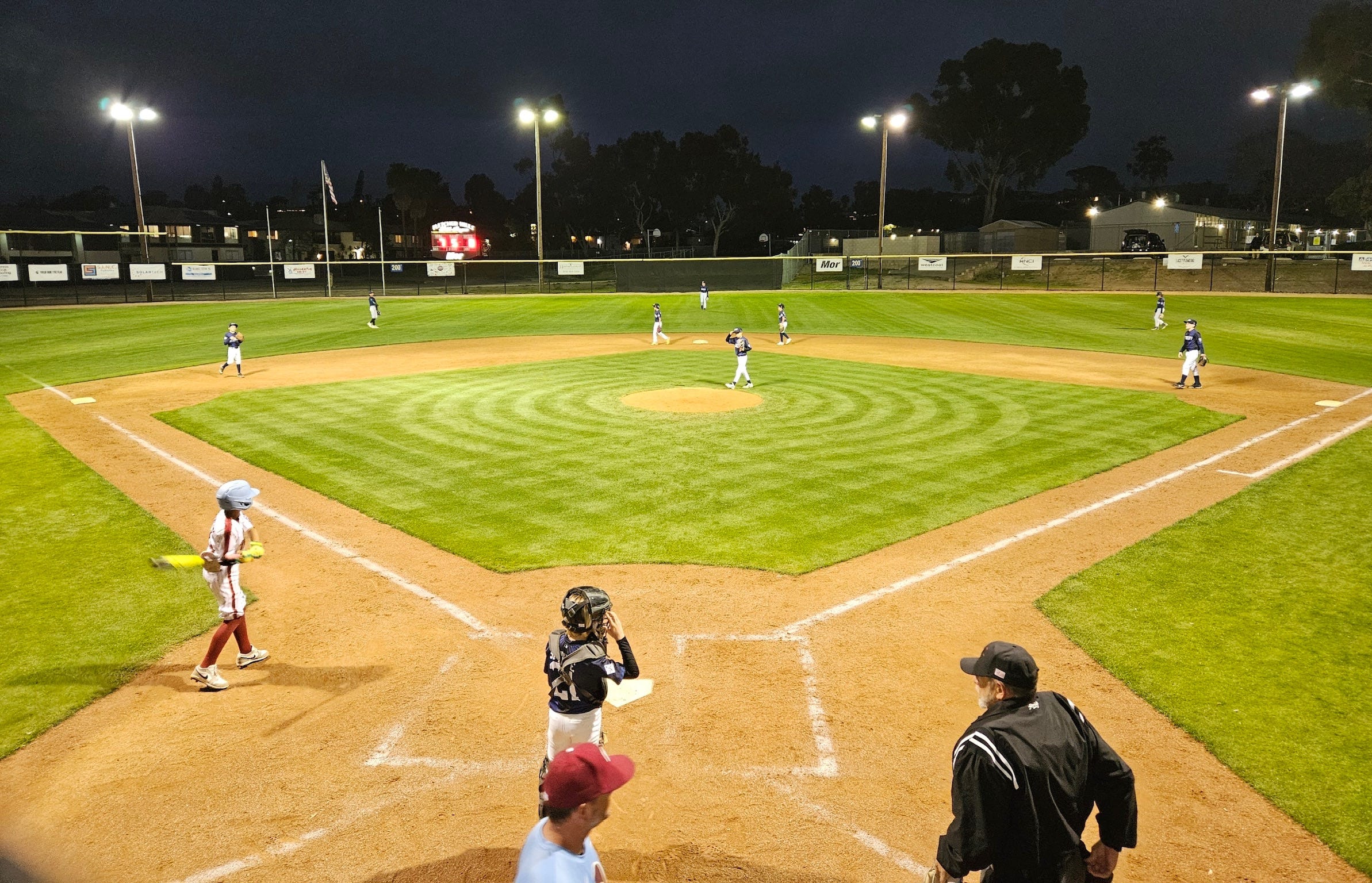
I mention this because Little League seasons are wrapping up and that means All Star teams are being picked, and if you spend any time in youth baseball groups on Facebook you can see the anxiety rising like a rogue wave. So before it pulls you under, read this.
Baseball Parents & Coaches: sign up for a paid annual subscription and I’ll send you a free link to join my live session on May 27th.
🟠Ramp down the game-day pressure.
🟠Protect your relationship with your kid.
🟠Make better travel ball decisions.
$35 value. Yours free with an $80 annual subscription. Limited seats.
Supported by:


Your kid's travel ball coach — if he's legit, and Southern California has some of the best in the country — is not going to ask you about All Stars. He doesn’t care. He wants to see if your son moves with athleticism. If he plays fast and with confidence. If he has good footwork and a strong and accurate arm. If he takes good swings. If he’s coachable and understands the game. If he’s a good teammate who hustles.
That’s the evaluation. Not All Stars.
The kids who are great at 10, 11, 12 are often just winning the puberty race. The travel ball coach knows that. The All Star selection committee looks through a different lens—and it does their work behind closed doors.
If you talk to anyone in your local league about the All Star selection process here is how that conversation will go:
Can I see the vote tally? No.
Why don’t we just let the kids decide? Because they will vote someone onto the team who doesn’t belong.
Why not take the voting out of it and let the stats decide? Because some of the moms keeping score don’t know what they’re doing.
Why don’t we take some of our fees and get our volunteer scorekeepers some training so the stats are accurate? You can’t trust GameChanger.
Bottom line: the adults in charge of shaping the All Star experience aren’t giving up control.
If your kid makes the team, understand a few things going in: there’s a lot of rules for kids and parents, some written and some unwritten. The people in charge take this stuff very seriously. Not all of them but a lot of them. The system, not unlike an entrenched bureaucracy, does not welcome feedback or inquiries.
Here is what one All Star coach told me after I politely (I swear I was Mr. Positive) emailed my son’s manager and asked him to have a conversation with my son about his pitching rotation: “You’re not supposed to say anything to an All-Star coach other than, ‘Good game.’”
All of us who’ve been around Little League have an All Star story or two. Dave Austin, the mental performance coach who works with big leaguers — I interviewed him recently — told me about “Mr. Baseball” in his town, a guy who sounds familiar to a lot of us. He worked against Dave and his then 11-year-old son, the best second baseman in the league. Dave’s son didn’t make All Stars because Mr. Baseball and the other folks running the league didn’t like Dave.
Dave’s story and others like it play out every season in leagues across the country. We know better. All of us. That doesn’t mean there’s less madness or anxiety, but you don’t have to take any of it on.
Here’s what I wrote to a mom on Facebook who said she was “heartbroken for her boy” because she’d heard he wasn’t going to make All Stars:
“Try to take the long view and understand that little leagues are run by a handful of folks and very often there is not a lot of transparency or accountability. Keep in mind this will pass soon. My honest advice, unless someone has gone out of their way to hurt your kid, let it go. Good luck to you and your son!”
These are uncomfortable truths, but they’re truths:
—Power in little league is centralized. Every little league has a clique.
—Families connected to the people in power are usually happier around All Star selection day than families on the outside looking in.
—Volunteers — moms and dads — deciding who makes All Stars from a pool that includes their kid, their kid’s best friends, or your kid, aren’t going to run a clean process.
The system is not set up to go your way. That’s okay, because it honestly doesn’t matter much.
If your son is selected, enjoy it. It is fun. In the moment it feels like a big deal, and for him it is. Be proud. Celebrate. Then get ready for a long, hot, dusty, expensive summer with a lot of highs and some lows.
If he ends up on the outside looking in, try not to take on his disappointment. If you do, that’s okay, but don’t let him see your emotions. Keep things positive with him, but also don’t be afraid to talk straight if you think politics was in play. Kids get it and they appreciate knowing we do too.
Most importantly: Go get a burger. Remind him his baseball journey is long and it’s just beginning. And tell him the best part is you finally get to take that summer vacation.
###
So what do you say when your kid goes 0-for-4? Or strikes out with the game on the line? Or walks to the car knowing he didn’t have it that day?
The moment isn’t the hardest part. What happens next is. I’ve been there. And I’ve gotten it wrong.
###
Go Deeper
Some of you are dealing with issues that keep you up at night: Your kid can’t recover after an error. He doesn’t like his coach. He’s constantly checking GameChanger and comparing himself to his teammates. He wants to quit.
That’s what my one-on-one coaching sessions are for.
Visit my Stan Store to book a coaching session, email questions, order playbooks, or inquire about speaking.
About Baseball Dad & PR Guy
Baseball Dad & PR Guy is a weekly newsletter about youth sports culture and how parents and coaches shape the experience for young athletes.
Subscribers also get what I use after games—what to say, and what to leave unsaid on the ride home.
My essays are built around the 5 Moments That Shape Young Ballplayers, from the nerves before a game to the car ride home.
From the stands, I write about those moments and what they mean for confidence, identity, and a kid’s love of the game.
Read more about the 5 Moments and why they matter.
⚾ Join the conversation: Travel Baseball Moms & Dads (Facebook)
⚾ Follow along: Tony Manolatos – Baseball Dad & PR Guy (Facebook)More at tonymanolatos.com
I was “passed over” for the All-Star team as a 12-year-old in Southern California.
I’m 68 and still bothered by the circumstances. Another kid’s father shared with mine that coach withheld my name from consideration. Coach didn’t like me.
Tough part? Same coach move up to senior league to “be with his players.” He was no longer my coach, but we had some less than pleasant dealings for another three seasons.
Doesn’t seem like a big deal to an “adult.” But in a 12-year-old, there’s a lasting impact to this kind of experience.
Take heed, dads, how you “coach” your son through what—to him—are large matters. There are definite teaching moment outside the lines on the field.
Excellent work! I just want to pushback a little on what travel coaches look for—Let’s be honest, the main attribute they look for is whether or not your parents can afford the fee. If so, you’re on the team.
At least that is my experience in FL.