


"wow I've never seen him that happy bf (before), dang, love u guys, miss u alex." —Nicky, 12, texting his family about his twin brother at Dreams Park in Cooperstown.
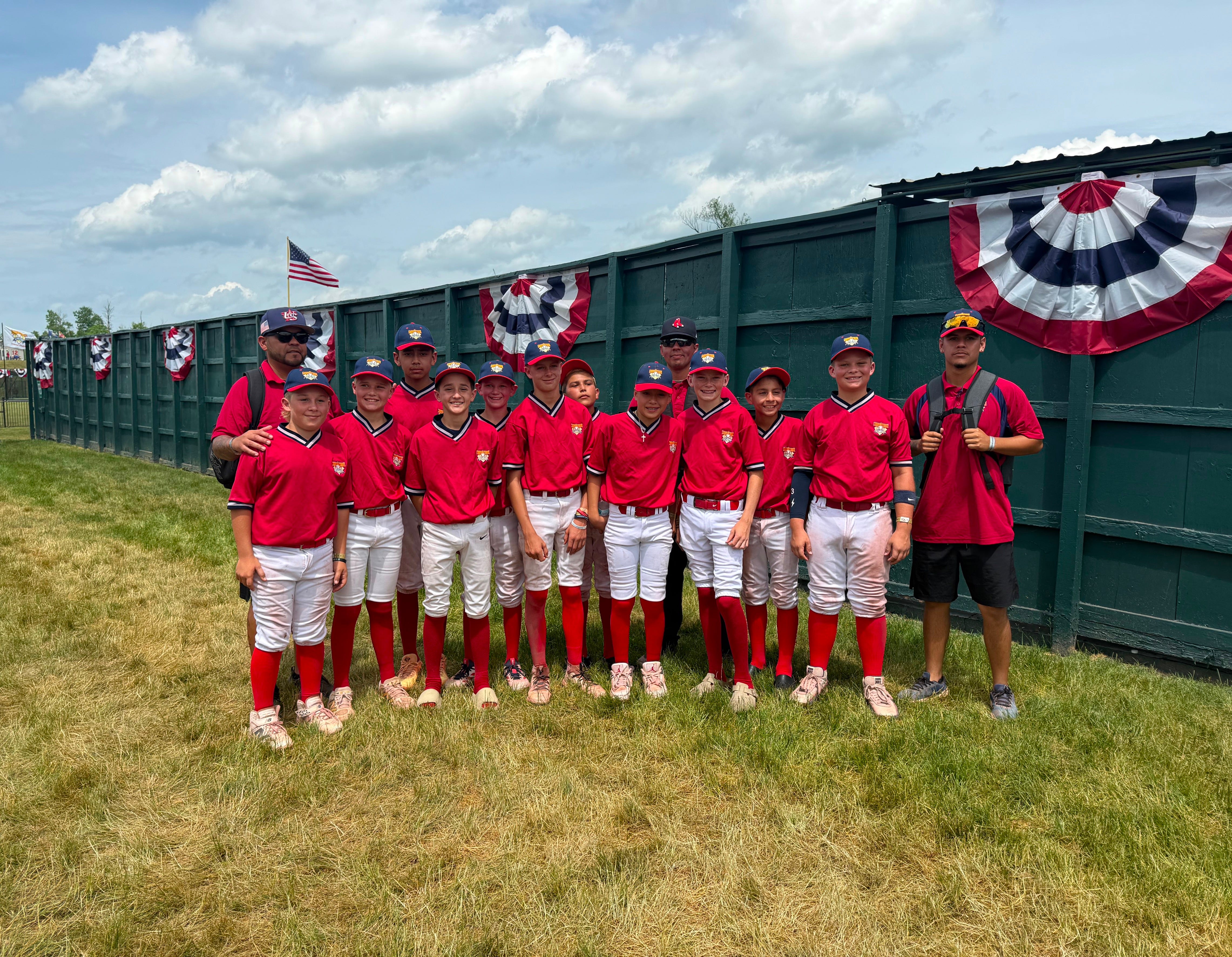
People have strong opinions about Cooperstown. That includes my wife, our son, his coaches, teammates, and me.
I crowdsourced for this essay, posting questions in a few Cooperstown Facebook groups. The posts caught fire immediately, but most were taken down. The arguments among parents and coaches were heated, and the admins had seen enough.
That probably tells you something.
One parent, responding to the outrage over how Dreams Park handled a 14-hour rain delay during Week 4—when only the top 32 teams out of 104 were permitted to compete for the championship—put it this way: “It’s obvious which of you care more about the plastic trophy than your kid’s health.” The parents he was arguing with felt terrible for their kids, many of whom fundraised for months and were left stranded in rain chanting, “Let us play!” in the middle of the night outside their bunkhouses.
The debate about Cooperstown — is it magical or a money grab home run derby? — isn’t really about Cooperstown. The place is special, one of those places that time sort of skipped. Beautiful, too. The green hills surrounding the fields at Dreams Park look airbrushed onto the horizon, and the big, beautiful Otsego Lake sits just beyond it all — a place where the Anheuser-Busch family established a massive lakefront hop farm more than a century ago. In June, when we were there with my son’s team, the weather was perfect and so was the lakefront cabin we rented just beyond the Busch property, still owned by the family and marked by a wrought iron gate that reads, “Aug. A. Busch.” Oh, and Cooperstown is home to the Baseball Hall of Fame.
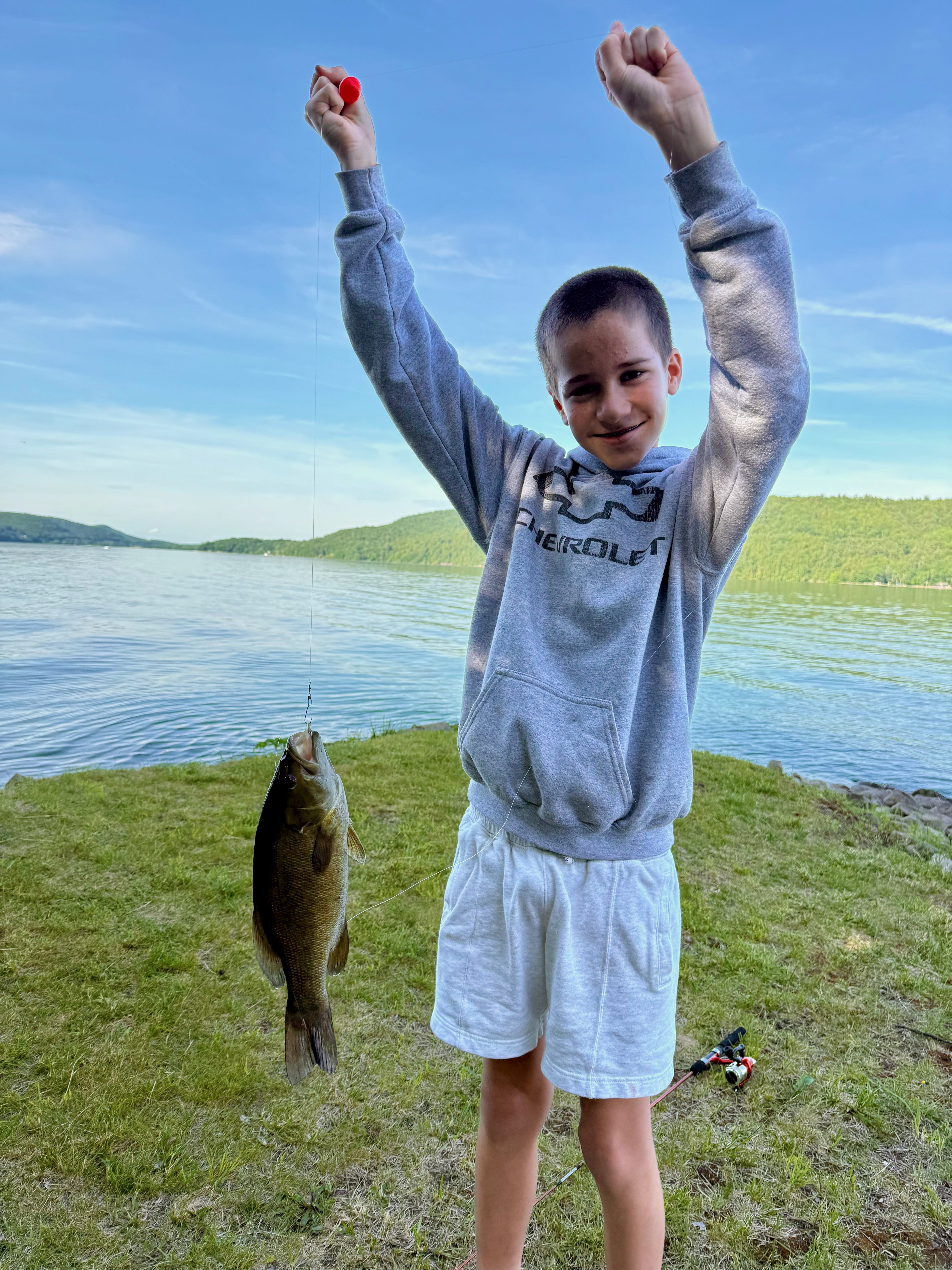
The beauty and the history don’t mean everyone walks away happy or even wants to visit in the first place. That stems less from the experience and more from your expectations.
The parents and coaches who think the place isn’t worth visiting, because it’s too expensive and not real baseball, miss the entire point of the experience. Those who come but leave disappointed expected the best baseball tournament on the planet. The ones who leave emotional — or don’t want to leave — showed up to watch their kid finish something with his teammates, grow up a little, and smile as wide as he ever has on a baseball field. There are moments he will treasure forever. You will too if you get out of your way and let go of all the stuff too many parents bring to tournaments: the expectations, the hand-wringing, the extra pressure, the disappointment.
The Fences
The main debate about Cooperstown centers on the short fences at both parks: Dreams Park and All Star Village. Dreams is the OG, built 30 years ago, grass fields, old-school uniforms — and where my son and his team finished 5th out of 104 teams during Week 2 this summer.
Alex and some of his teammates wanted to play at All Star Village because it’s newer. They like the turf fields there, the modern uniforms, and flat-side hats. Everything at Dreams is a little different, including the knickers, pull-on jerseys, and curved hats. The rules at Dreams are old-school, too. No crocs while in uniform. No hats on backwards. “Where’s your hat?” I overheard a maintenance worker on a golf cart ask a player. “You better find it and put it on. I don’t want you to get in trouble.” Alex’s coach, Anthony Soto, has been taking teams to Dreams for years, including San Diego Stars teams and more recently with CBA San Diego. A team he coached a decade ago advanced to the Little League World Series in Williamsport, Pennsylvania. Coach Soto leans old-school, so Dreams fits the team’s culture.
The fences on all 22 fields at Dreams are 200 feet, but they’re also 8 feet tall. That height means more earned home runs but it is a hitter-friendly facility, especially with juiced travel ball bats. A tough place for pitchers. That’s intentional and mostly replicated further up the road at All Star Village (ASV).
There are 12 fields at ASV, which opened its gates 22 years ago, and the fences ringing most of the fields have similar dimensions to those at Dreams. There also are two “Green Monster” replica fields at ASV. On those two fields, the fence line is pulled in to 180 feet — shorter than most Little League fields — but the wall is raised to 20 feet thanks to chain-link fence extensions.
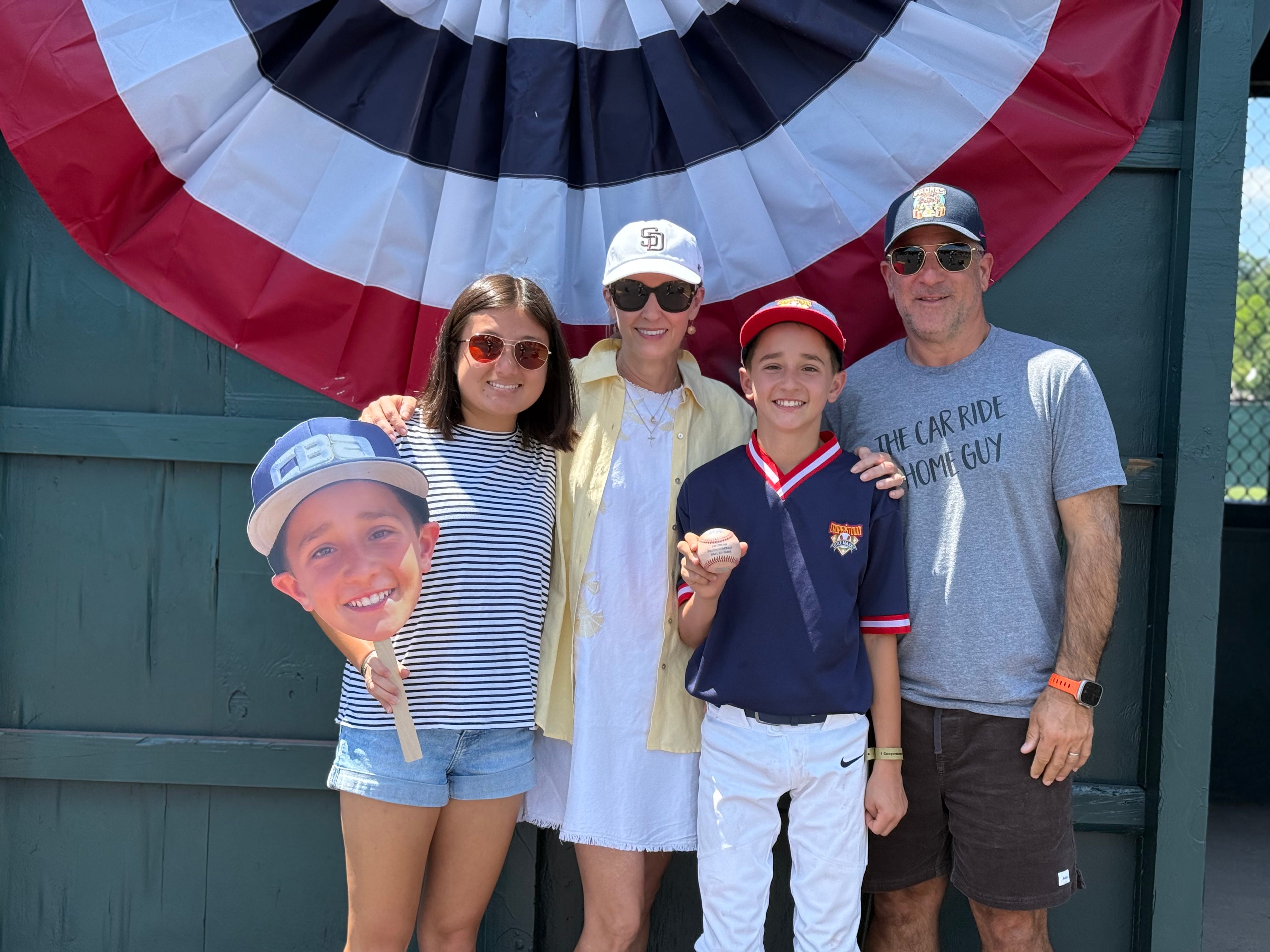
Our son Alex hit two dingers at Dreams, both over the centerfield fence. His hardest-hit ball of the week was a single — a line drive that crashed into the wall with a loud thud. His teammates jokingly shouted, “weight room,” and he thought the ball had died until I explained it was a laser.
Alex is in the athletic, not giant, camp. Prior to Cooperstown, he had only cleared the fence once. So when he hit his first one in Cooperstown, his mom teared up. His teammates celebrated like they had just won a tournament. His coaches slapped his hand as he touched all the bases.
“Are there things about it that make it less ‘baseballly’…yes, but so what,” said Chuck Sanders, whose son is 12 and has played once at Cooperstown and is returning to play again this summer. “Those 200-foot fences ensure a good number of kids hit home runs that they likely would never get to hit.”
Parent Bruce Wallace wrote: “Real baseball starts in high school. And the truth is that many of these kids will either not make a high school team or they may decide to stop playing soon. Let that sink in for a minute. Because that happens a lot.
“Honestly, I don’t think anyone who has decided to attend either park should expect it to be an actual regulated baseball tournament. I bet you that most of these kids will not remember a tournament from their home state, but I guarantee they will remember this week for the rest of their lives, regardless of their record in the end. Remember your money is buying family memories and the opportunity to catch a small moment in time that will be with you and them forever!”
The Facilities
I didn’t get over to ASV, which is farther from town than Dreams, but both places have their fans and their critics. Some of the old-timers I talked to at Dreams hammered ASV as only caring about the bottom line, installing turf that gets too hot and uneven sometimes.
Elizabeth and I were impressed by how well Dreams is maintained. The flower boxes and the red, white, and blue bunting give the place a Disney feel. The manicured grass fields are beautiful, and the massive wooden privacy fences that rim every field keep the kids in — and the parents out.
But there are issues. The food they serve players and coaches is mostly awful, and the snack bars and gift shop are unimpressive for a place that does so much right.
The boys play a ton of ball, too many games for 12u pitchers, especially if your team only has seven or eight arms. Not everyone sees it that way. Some parents think the games are the point — and there aren’t enough of them.
“There wasn’t enough baseball played,” one parent wrote on Facebook. “We traveled far and spent a lot of money to play baseball. Six games guaranteed over six days is sad. We get that in a two to three-day local weekend tournament. Those fields sat empty often. We went expecting a baseball-based experience. We got a horse and pony show with some baseball sprinkled in.”
Some see validity in that complaint. But it misses something Dreams Park understood when they built those green wooden privacy fences.
The kids and coaches live inside the bubble — assigned cabins, team meals, a schedule that is entirely theirs, gated entry, walled off from the rest of us. Parents get the foul line seats and not much else. No dugout access. No coaching from the fence lines. No views from behind the backstop. You sit in designated seating areas, you watch, and you cheer. For some parents, that’s the hardest part of the week. For others, it’s the best part.
“It’s time away from parents who put pressure on the kids to perform all season,” one parent wrote. “The less parental involvement the better. Sit in the stands and watch the kids play — that’s your whole job for the week. The question of whether it’s worth it should be posed to the kids, not the grown adults sitting in the stands micromanaging the teams.”
The separation is the product. The opening ceremony, the six games over four days with a chance to play more, the camp-like setting — all of it is designed to fill a week that belongs to 12-year-old boys, not their parents. The adults who leave disappointed are the ones who couldn’t get out of the way long enough to let the week be what it was supposed to be.
The ones who did — who sat in their foul line seats and let go — describe something closer to a release. One parent, watching from the stands during the week, heard another mom say something that perfectly sums up Cooperstown: “There are so many things in life that don’t live up to the hype, but this experience is everything everyone said it would be.”
A few weeks after we returned, I ran into a baseball dad at a grocery store who I hadn’t seen since Little League ended last year.
“You guys went to Cooperstown, right?” he asked.
“Yeah, it was awesome,” I said.
“It’s magical,” he said.
He was there last summer with his son. He’s not the mushy type.
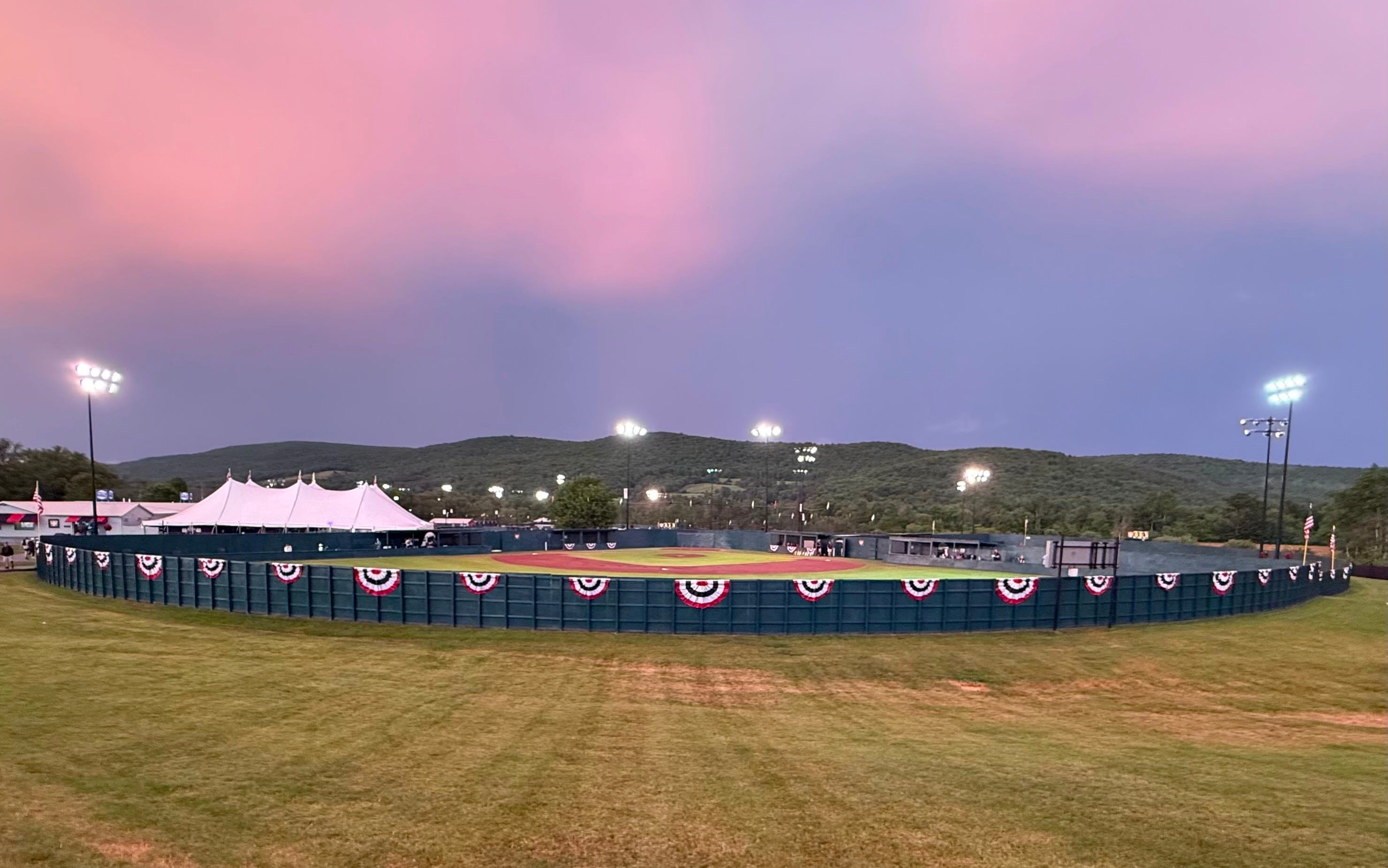
‘I’ve never seen him that happy’
Yes, it costs a fortune. So much so that a lot of teams fundraise for a year. Our team did not raise any money, but it’s worth considering. The food is bad. “Mystery meat” is probably something you will hear while you’re there, and you might even get a text from a coach asking if you can bring take-out to the bunkhouse. The opening ceremony does run long. We enjoyed it and our son loved it.
We knew Alex was a match for Cooperstown our first day there, when we strolled along Main Street, stopping too often at gift shops and visiting Doubleday Field, what many call the birthplace of baseball. “He’s in heaven,” Elizabeth said to me inside Baseballism, shortly after she and Alex visited a nearby store where he tried on a 100-year-old glove. But it was the next day when the full picture emerged. We could see it and so could Alex’s twin, Nicky, who traveled with us along with our daughter Natalie.
When Elizabeth and I texted photos from the opening ceremony of Alex and his teammates to Natalie and Nicky, who were back at the cabin, Nicky texted back:
“wow I’ve never seen him that happy bf (before), dang, love u guys, miss u alex.”
When the criticisms bubble up, and they will, consider what Chuck Sanders said when he thought about his son — who played at Cooperstown once already and is going back again this summer.
“Some of these kids won’t play past 12 years old,” he wrote. “I can’t think of a better send-off for them.”
Neither can I.

This is my third Cooperstown essay. Here are the others:


Go Deeper
Some of you are dealing with issues that keep you up at night: Your kid can’t recover after an error. He doesn’t like his coach. He’s constantly checking GameChanger and comparing himself to his teammates. He wants to quit. Your relationship is suffering.
That’s what my one-on-one coaching sessions are for.
Wow what a trip down memory lane...I played at Dreams Park 25 years ago and it's 100% a memory I'll never forget. I also vividly recall the multiple dingers I gave up (probably gone with any porch)...There's nothing quite like staying in the village. I'll be thanking Mom + Dad again!
There is A LOT about youth athletics that is nothing more than a money grab, yet at the same time those money grabs offer families a chance at making memories. My son is entering his senior year of high school and there are things we have done that we later regretted because it was obvious that it was a money grab once everything was said and done, then there were other events that we knew were money grabs, but we enjoyed them. I guess it is all in how you look at it. I think the key to it all is figuring out what you absolutely do not have to do in order to play "next level" or to be recruited once your kid gets to that age so you don't fall for those ploys and schemes.