


After last Sunday’s practice, in the truck, I told Alex his throws looked good. Everything was on a line. But I could tell something was off.
“Not 100 percent yet?” I asked.
“Yeah,” he said. “It doesn’t feel ready. Feels like the ball dies a little on me.”
“It dies a little because you’re not throwing full strength yet,” I said. “You worried about re-injuring it?”
“Yeah,” he said.
I couldn’t talk him out of being afraid. Didn’t want to. So instead of trying I asked another question.
“We can throw a bullpen in a day or two if you want to test it,” I said. “Get it nice and loose, let it go, see how it feels. Any time it hurts, we stop immediately. But let’s see how it feels at 100 percent. Whenever you’re ready. Sound good?”
He nodded. That was it. No pep talk, no pressure. Just a plan.
He’d hurt his shoulder five weeks earlier, in Cooperstown, last day of a long week, in an elimination game — the same tournament where his team finished 5th out of 104. Since then: ten days of complete rest, a slow throwing progression, a missed tournament, missed practices, a USA Baseball tryout pushed back two and a half weeks so his arm could catch up to the moment. He still wasn’t sure it had.
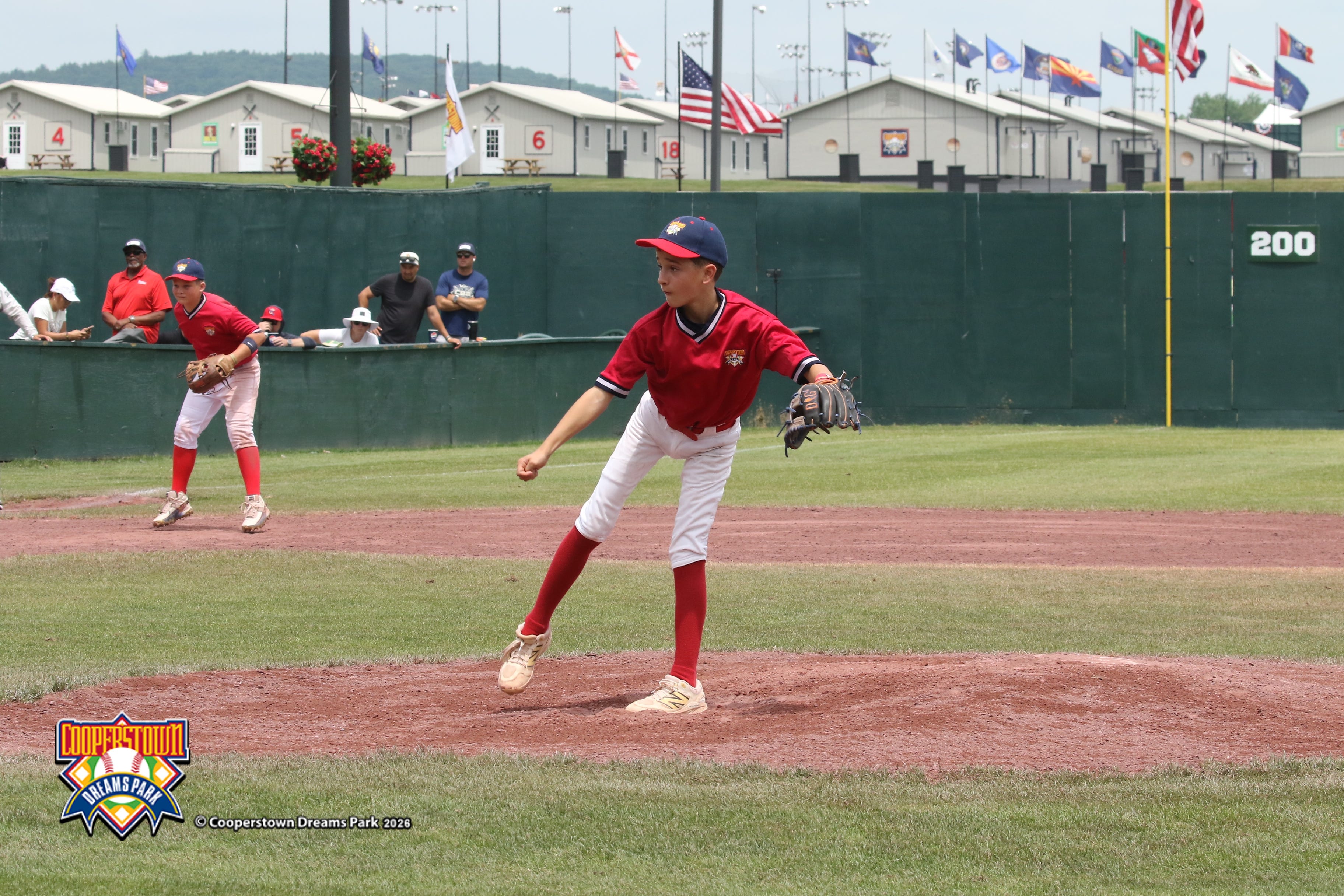
This was Alex’s first injury. Thirteen years old. He started two games in Cooperstown. First time he took the mound he’d given up one run in the first when the plate ump called catcher’s interference on a 1-2 pitch that should’ve ended the inning. The ump walked to the mound and explained to Alex why he was waving the batter to first. Next pitch, grand slam. Five to nothing. Alex stayed in, got through that inning and the next one. Not his best outing, and one of those games where he had to get five outs each inning. But his team went on to win that game thanks to bats that were hot all tournament.
Cooperstown is a marathon, especially if your team advances in bracket play as Alex’s team did. So he was on the mound again, on a day’s rest, in an elimination game. He loves spots like that. Always has. Loves the ball in his hand in big games, big moments. I saw him warming up.
“How’s he look?” I asked the coach catching him.
“He always looks good!” he replied.
But Alex would only get through an inning and a third. He had given up four runs in the first. In the second I thought he was settling in, and I was confident the boys would score some runs and play good defense. Some kids were sick and others injured by this point, but they’re a gritty bunch and they knew the stakes. They played well and the boys in the infield were rallying around Alex, who had just struck out a batter. But then a pick off attempt to first didn’t look sharp. Then Alex bounced a ball in the dirt a couple feet before the plate. Then he waved his coach to the mound. His shoulder hurt with every pitch, he said. He was done. His team would lose that game 9-8 with runners on first and third when it ended.
Of course we all wanted a better outcome, but my thoughts turned to Alex and his arm. He said the pain was in his shoulder joint. That’s a first, I thought. Normally if Alex feels any discomfort on the mound, it goes away after a pitch or two, he said. But this time it got worse with each of his final 3 or 4 pitches.
A lot of kids don’t pull themselves out of that spot. A lot of grown men don’t either. The sports doctor who examined Alex back in San Diego told him: “I know a lot of big league pitchers who would not have taken themselves out of that game. They would have kept pitching, and they would have turned a minor injury into a major one.”
He bent Alex’s arm 30 different ways and studied his shoulders. He liked what he saw and couldn’t say for sure if Alex’s throwing shoulder stung because of a lack of rest between games, because he’s pitched for several seasons, or because Alex grew two inches over 5 weeks this summer. Probably a combination of all three.
He pulled up the X-rays and showed Alex his growth plate, explained what it was, and that everything is loose because he’s still growing. No fracture. Ligaments likely strained, not torn, but the doctor said he couldn’t be certain without a better look so he ordered an MRI and physical therapy. He also put Alex on a limited throwing program — ten days of nothing, then a slow build back.
We pulled him from a tournament. He missed several practices. I rescheduled his final USA Baseball tryout, the one he’d earned by outperforming hundreds of kids in a field that started with 2,000 kids and was down to 200, most of them older and bigger than Alex. Pushed it back two and a half weeks so his arm could catch up to the moment. Even then, he wasn’t 100 percent. Round 2 came and went. The arm held up enough to compete, not enough to feel normal.
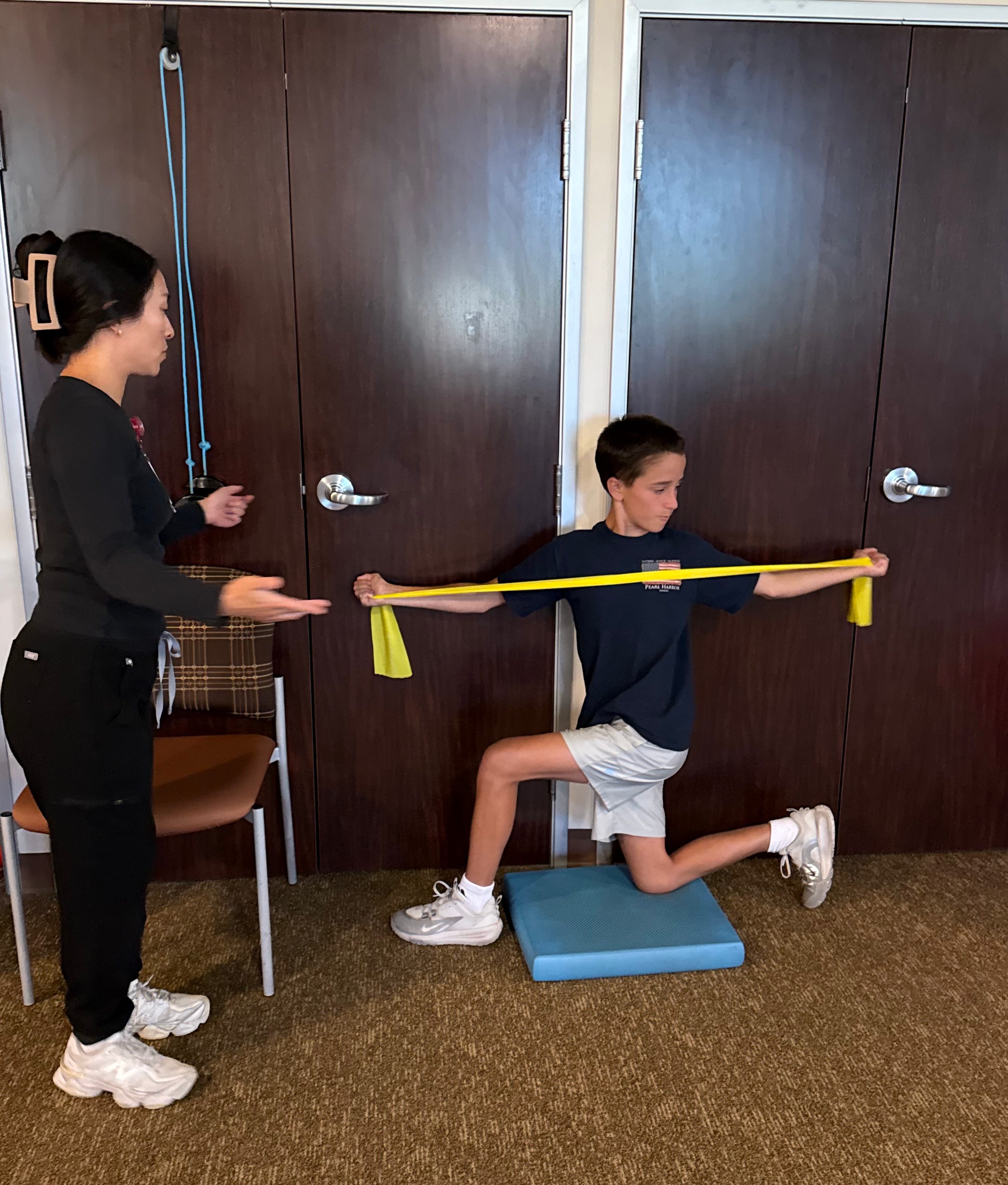
Last week Alex started physical therapy — not just for the shoulder, but for his core and lower half too. A lot of what protects a young arm has nothing to do with the arm.
His physical therapist found a tender rotator cuff and explained that it’s the muscle that gets stretched the most when a pitcher rotates his arm up and back just prior to firing the baseball. She gave him a series of exercises to do every other day and said overall he’s in good shape.
She cleared him to pitch, but told him he needs extra warmup work ahead of time, and if he feels any discomfort at all, he needs to stop. His pitching coach and his coaches with CBA San Diego both said he’s not ready yet, which Elizabeth and I sure appreciated. They each said the same thing: they want to build Alex back up slowly — so he’s throwing confidently and without any pain. So no innings for him this weekend and maybe some light duty next weekend depending on how he’s feeling.
If your son is a pitcher, track his pitch counts, his innings, and don’t overlook all the other throws he makes including warm-ups. Make sure he’s getting enough rest between games, is warming up properly, staying hydrated, and recovering with protein.
All Star season is playing out right now, and some of these coaches chasing Little League glory treat the pitch count rulebook like a math puzzle instead of a medical guideline. They lean on two or three arms — kids no older than 12 — to carry a heavy load across multiple weeks. I understand the stakes. Been there. But the stakes on the other side are a fractured growth plate, a torn ligament, a surgery at 13. Those are the ones that matter the most.
Two days before Alex started physical therapy — and the day after our conversation in my truck — Alex threw a short bullpen and let it go for the first time since Cooperstown. I told his physical therapist and his coaches about it.
Brief sessions like that are the correct path, they told me, to build back confidence and see how everything feels.
Alex had been anxious since arriving home from New York, not wanting to find out the hard way his shoulder wasn’t ready. He tested it the way we talked about. Bands. Warm up throws. Then he got on the portable mound on the side of our house and slowly worked up to game speed. Nothing felt off so he kept pushing until he was at 85/90 percent. He threw from 54 feet too instead of the 50 feet kids pitch from in 12u, because his team has been playing up in 13u tournaments to get ready for the switch on Labor Day.
He said his arm felt great. I could see it. I felt it, too. My hand stung.
Five weeks earlier, and the day after we arrived home from Cooperstown, Alex and I tried playing catch. He stopped us after three throws. Shoulder hurt with every toss.
That’s when Elizabeth and I reached out to his doctor and to his coaches. Coach Jay, Alex’s hitting coach for three years, said something I wasn’t expecting: “I think it’s time we developed a structured plan for Alex, to help him recover and reach his goals.”
Not just a rehab plan. A real one. Weekly structure, strength work, nutrition, film study, hitting, fielding, pitching — the whole picture of what a kid needs to get better at this game, built around the fact that his arm needed rest.
Before I wrote a word of it, I sat down with Alex and asked him three questions. What do you want to be better at by the time 13u starts? What do you think you need to work on most? How many days a week are you willing to commit?
Alex didn’t say he wanted to play shortstop more, pitch more, or bat leadoff. He instead zeroed in the work that gets him there. First thing he said he wanted to do: strengthen his shoulder. Then: be more consistent at the plate and more efficient on the mound. First pitch strikes, make adjustments earlier. Mature answers for a kid who’d just turned 13.
His coaches got involved too. His pitching coach weighed in on what a return-to-throwing plan should look like. His travel coach reviewed everything and added his own guidance, including what to focus on and what to avoid.
I told Alex the work is on him, that I wasn’t going to ask him, encourage him, or follow up. Then I watched him do things nobody reminded him to do. More band work. More time in the garage on his core and lower half, not just the shoulder. Eating more protein and carbs without being told. Getting to bed early and on time every night. Somewhere during this recovery process, Alex connected the dots between what he eats, how he trains, the rest he gets or doesn’t get, and how his body performs.
You can’t force a 13-year-old to do any of this for longer than a week or two. It has to click on its own, come from within.
Alex isn’t perfect. What kid is?
Is he going to see this through, continue to improve, and turn weaknesses into strengths? Probably, but it might not be a linear process.
I admire the goals he’s set, how he goes about trying to reach them, and how he has started connecting what the game demands to the player he’s working toward becoming.
As for the actual plan, Coach Jay and I ended up with a document that does much more than focus on Alex’s pitching arm. It gives him language he understands — “CARBS—half the plate” — for what he is working toward. It also gives his coaches, Elizabeth, and me a shared understanding of how to help him get there without all of us pulling in different directions.
Coach Jay thought other parents could use something like it — not Alex’s plan specifically, that’s his, but the shape of it. So we built a free template, stripped of anything personal, that any parent can fill out for their own kid, covering the same ground: weekly structure, film study, nutrition, strength training, pitching, hitting, fielding. It’s free to use on your own. If you’d rather I build the whole thing with you, tailored to your kid, that’s something I do too.
“I truly believe we need to set your kids up for success, and one of the best ways to do that is to give them a plan that helps them reach their goals,” Coach Jay said in an email to the parents in his network, sharing the template with them. “The work is on them, but it's on us to show them what's possible if they're willing to work for what baseball demands of them.”
DOWNLOAD THE TEMPLATE.
If you find yourself in the car with your kid and he tells you something doesn't feel ready yet — says it out loud, the way Alex did — rather than reacting, ask a question or two.
And if he’s into it, create a plan together.
Every word of this essay was published with Alex’s consent. I asked him if there was anything he wanted changed. “No. I like it,” is all he said. Then he turned his attention to his favorite morning pastime, watching the MLB recap.
About Baseball Dad & PR Guy
Baseball Dad & PR Guy is a weekly newsletter about youth sports culture and how parents and coaches shape the experience for young athletes.
Subscribers also get what I use after games—what to say, and what to leave unsaid on the ride home.
My essays are built around the 5 Moments That Shape Young Ballplayers, from the nerves before a game to the car ride home.
From the stands, I write about those moments and what they mean for confidence, identity, and a kid’s love of the game.
Read more about the 5 Moments and why they matter.
⚾ Join the conversation: Travel Baseball Moms & Dads(Facebook)
⚾ Follow along: Tony Manolatos – Baseball Dad & PR Guy(Facebook)More at tonymanolatos.com
Baseball dad here. Great piece (and great other pieces). My son is now 17 and tore his hammy in HS ball and missed three weeks, but recovered for playoffs and summer. I wrote a piece here about a bad tournament and the emotional toll. Thought you may like (Post Facto - he's doing great).https://substack.com/@lessgrindmorejoy/note/p-207464454?r=3te0lu&utm_source=notes-share-action&utm_medium=web. THX for sharing all your wisdom.
Kudos to Alex for taking care of himself. And lots of great points you made, Tony. My larger concern — and something I feel doesn’t get brought into the conversation enough — has always been the tournament structure (mostly in regards to travel baseball). Lot of throws going on over those weekends compounded over many years.