


The email landed shortly before 10 a.m. on a Friday — prime time for open rates, according to email marketing pros. But honestly, I would have opened this one anytime, any day. So would most baseball parents in my shoes.
Subject line: Your Player Is Invited – Baseball Events for Top Players!
Sender: USA Baseball National Team Identification Series (NTIS)
Less than a month ago, Alex participated in an NTIS Southwest Region workout, so this email caught my attention. But I also was skeptical. Elizabeth and I have received plenty of similar emails over the years — from USSSA Baseball, Perfect Game, and others — and some of them are nothing more than polished marketing pitches.
This one read:
“Dear Parent: We are pleased to invite your player to our upcoming baseball events taking place on holiday weekends in conjunction with academic schedule breaks! Events are ‘invitation only’ and are targeted toward top players that have demonstrated a commitment to excellence, growth, and development!”
It went on to list some pretty cool opportunities in Florida, Arizona, and elsewhere — even at MLB spring training facilities.
Did I sign up?
No. Hard pass.
High-end events are nice, but are they worth it?
Some registration links were marked INVITATION ONLY, and while that may technically be true, I suspect every parent whose kid recently attended the same USA Baseball event my son did received the same invitation. USA Baseball holds legitimate tryouts for regional teams — but those are in the spring and summer. We’re in late October.
I do want to point out that these events sound fantastic — and in many ways, many of them are. These new events in particular sound more like 4-star resort experiences than dusty roadside tournaments. You get what you pay for, as they say, and these high-end events aren’t cheap. Registration alone usually starts around $500. Add airfare, hotels, meals, rental cars, and you’re quickly into the thousands.
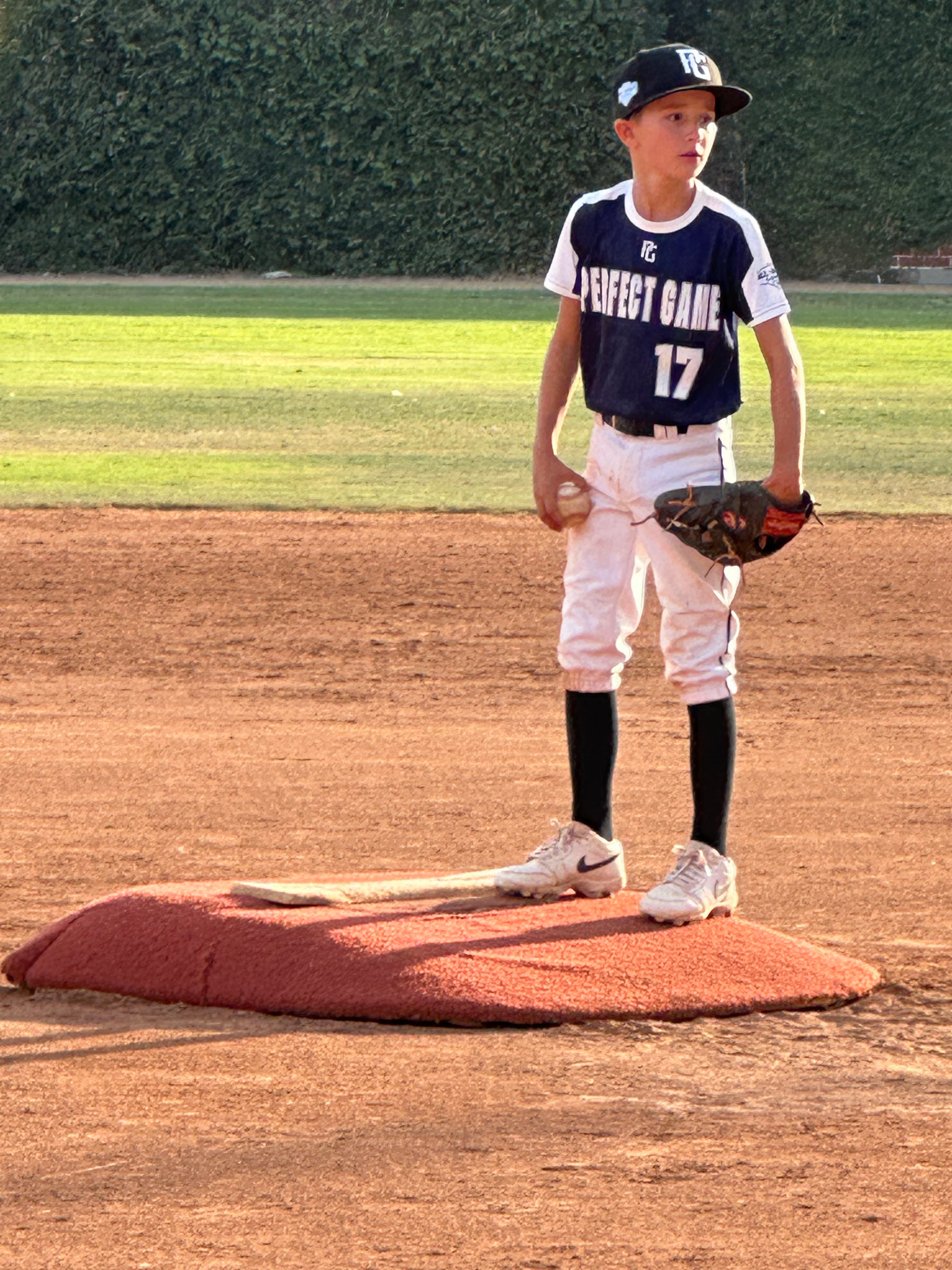
If it were up to our son Alex, a 12U player, he’d play in these events every weekend. The swag alone is a huge draw, but so is the experience, the prestige, the competition, and the travel. Most kids love it all and can’t wait for the next one.
Alex has played in a handful of these events because sometimes it’s valuable to step outside your comfort zone, and no parent enjoys saying no all the time. Yet at this stage of Alex’s development — he’s a 7th grader — these events provide little value. Many travel ball coaches are even more blunt. The ones I respect most have told me that when your son is 12U or younger, most showcase events are little more than money grabs.
Have a plan, be selective, and do your homework.
Next year, when Alex is in eighth grade, the calculus changes. Eighth grade is the unofficial start of the college recruiting process. That’s when a baseline gets established, and a player works to improve from there through high school. So if you had to pick a time to start saying yes to some showcases and events, it’s eighth grade.
If eight grade sounds young it’s because it is. Fortunately, recent rule changes have tightened communication windows between college coaches and young ballplayers:
“The NCAA has recruiting rules that prohibit any communication between D1 coaches and potential recruits before August 1 of their junior year, in an effort to slow down the college baseball recruiting process,” according to NCSA College Recruiting. “Phone calls, texts, and emails from D2 coaches can take place at any time. There are no restrictions on calls from D3, NAIA, and NJCAA coaches, but typically they wait until an athlete’s junior year.”
Before making any decisions about showcases or events, talk to the coaches and trainers in your son’s inner circle.They’ll give it to you straight — and when the time is right, they’ll point you toward the right opportunities.
Notice I said when the time is right. Because if your son or daughter isn’t ready, a bad showing at a showcase can hurt more than skipping it entirely. That’s a point I’ve heard many times from college coaches, MLB agents, and others. Make sure development comes first — skill, confidence, maturity — before exposure.
Also, take a step back and consider how these events fit into your family’s priorities and budget. Have a plan and be selective. Choose the ones that truly make sense. Don’t chase every opportunity just because others are. Some events are valuable. Others are simply great marketing. Do your homework and don’t get stuck on the hamster wheel.
Also, remember to take the long view. Travel baseball is a marathon, not a sprint. The invites will keep coming — sometimes faster than the fastballs. Don’t let them throw you off your game.
🚨NEXT UP: Keep an eye out for the full release of our new podcast — ⚾️Little League & Travel Baseball: The Good, The Bad, And The Ugly — featuring three new sponsors with strong community ties: Berry’s Athletic Supply, East County Rattlers, and Charlie Rose Baseball.
About Baseball Dad & PR Guy
I started Baseball Dad & PR Guy to share what I’ve learned from two worlds that have more in common than you’d think — youth baseball and public relations. Both teach preparation, communication, leadership, patience, and how to handle life’s curveballs.
Through my 12-year-old son Alex, his teammates, and his coaches, I’ve come to love baseball — all its beauty and all its challenges. My goal is to help baseball parents avoid common mistakes and support the journey their son or daughter is pursuing. On the PR side, my goal is to help young public relations professionals reach their potential.
⚾️ Join our growing community of parents helping parents: Travel Baseball Moms & Dads and Baseball Parents Podcast on Facebook. Please also check out my new website, tonymanolatos.com, and my linkapalooza. 🔗