


It’s Little League draft season and that means across the country — including right here in our own neighborhoods — leagues are holding player assessments, managers are filling out draft sheets, and parents are asking the same question:
“Why are we doing all of this… for a kids’ game?”
DISCLAIMER: Our son aged out of Little League last season and now plays travel ball year-round. And yes — I’m a recovering Little League manager 😎 grateful for the good coaches and the great families we met along the way.
Honestly? I get it.
Assessments and drafts can feel like too much. Too formal. Too stressful for something that’s supposed to be fun.
But I also understand the why behind it.
The intent is good: create parity — level the playing field — so every team has a fair shot, and no one team is stacked while another one gets steamrolled all season.
Does it always work out that way?
No.
But that is the goal.
And if you’re a new Little League parent walking into this process for the first time, here’s the truth:
The draft isn’t about labeling kids. It’s about building balanced teams.
Assessments: What They Are and What They Aren’t
Assessments are not a tryout for a scholarship.
They’re not a verdict on your kid’s future.
They’re not a ranking of who matters and who doesn’t.
They’re a snapshot.
And for many kids, it’s a tough environment:
they’re nervous
they’re rushed
they’re being watched
and they don’t always play like themselves
So if your kid has a rough assessment day?
Relax. Let it go.
One assessment doesn’t define anything.
Development happens over months and years — not in one afternoon.
And your son or daughter is going to develop.
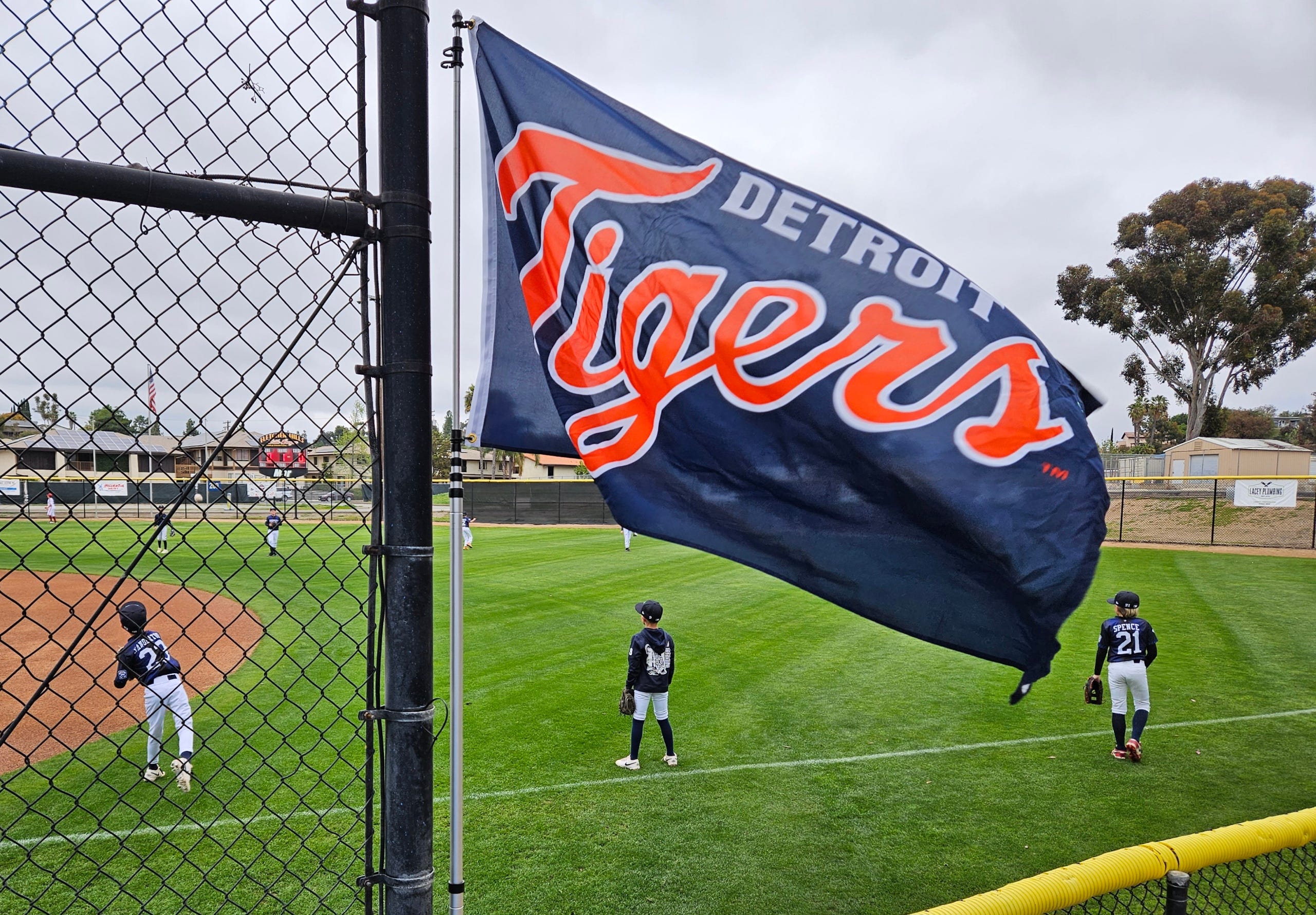
The Draft Room Truth Parents Don’t Always Want to Hear
In Little League, coaches aren’t just drafting kids…they’re drafting families.
Because most managers are volunteers. They have jobs. They have families. They’re doing their best to run practices, coach games, organize lineups, and communicate with 12 families at once.
Most of these coaches value:
kids with solid attitudes
kids who hustle
kids who can throw strikes (or might soon be able to pitch)
kids who are catchers (the unsung heroes)
and families who help the season run smoothly
A great team mom? A reliable team dad? A parent who drags the field without being asked? That stuff matters.
And the opposite matters, too.
A parent who gossips, complains nonstop, questions every decision, and brings drama to the dugout and the stands?
That’s not just frustrating — it can ruin a season for everyone.
The Draft Isn’t the Real Problem
If Little League truly wants parity, fairness, and a great experience for kids…
the draft isn’t the biggest lever.
The biggest missed opportunity is this:
✅ Little League doesn’t coach the coaches.
And that’s wild.
Because most Little League managers and assistant coaches are:
volunteer dads and moms
not professional coaches
not trained in leadership or communication
not trained in how to motivate kids
not trained in how to handle parents
Some volunteers are naturals. Calm, fair, empowering, prepared.
Others…aren’t.
And when you combine uneven coaching with unclear expectations, a small percentage of bad actors start shaping the experience for everyone.
That’s how the game loses kids.
Check out my wife’s story on this topic — “Who’s Coaching the Coaches?” — it’s a great read.
Culture Wins Not Talent
This is where league leadership matters.
I don’t care how good your draft is — if you don’t set culture, you’ll see problems.
Every league should start the season with a clear message from leadership:
This is a kids’ league NOT a parent league.
We coach with respect.
We treat families fairly.
We don’t embarrass kids.
We don’t tolerate toxic behavior from coaches, parents, or board members.
We handle issues consistently — no favorites (not even with board members).
We have a clear process if something goes wrong.
Because when leadership looks the other way, the wrong people get comfortable.
That’s when the game loses its magic. Parents stop volunteering. Coaches become harder to recruit. Kids quit.
That’s the stuff nobody wants to talk about…but it’s a problem for a lot of leagues.
Little League Politics: Why It Happens
Politics take root when there’s:
lack of oversight
no consistent standards
uneven accountability — rules for some, exceptions for others
That’s why every league should have a simple, well-known process:
If there’s a problem…
who hears it first?
who investigates it?
who makes decisions?
what happens next?
That structure protects:
families
kids
coaches
and the league itself
Because without structure, the loudest voices usually win.
League Bylaws and Why They (Should) Matter
Last season, a board member in our league mentioned something to me that didn’t sit right.
She said her job, when she learns of a problem or complaint, is to report it to the full board — not work to solve it.
Sometimes Little League looks and feels a lot like high school… and this felt like one of those moments.
I could practically hear a teenager saying: “My job isn’t to help Judy — I’m duty-bound to report her to the entire Student Council!”
So I did something most parents never do: I found our league bylaws online and actually read them.
And right there — high up in the bylaws — it spelled out the exact opposite of what I’d been told.
The bylaws state that board members should use discretion when issues arise, discuss them only with the board leaders who need to know, avoid discussing them with non-board members, and — most importantly — work to solve problems quickly.
Most volunteer board members are well-intentioned. But many have never been trained on leadership, conflict resolution, or even what the bylaws actually say.
That’s exactly why it’s so important for Little League presidents to set expectations, share the basics, and establish culture — because when leadership isn’t strong, rumors and confusion spread fast…and politics and cliques rush in to fill the gap.
Strong leagues solve problems quickly and quietly. Weak leagues let them grow.
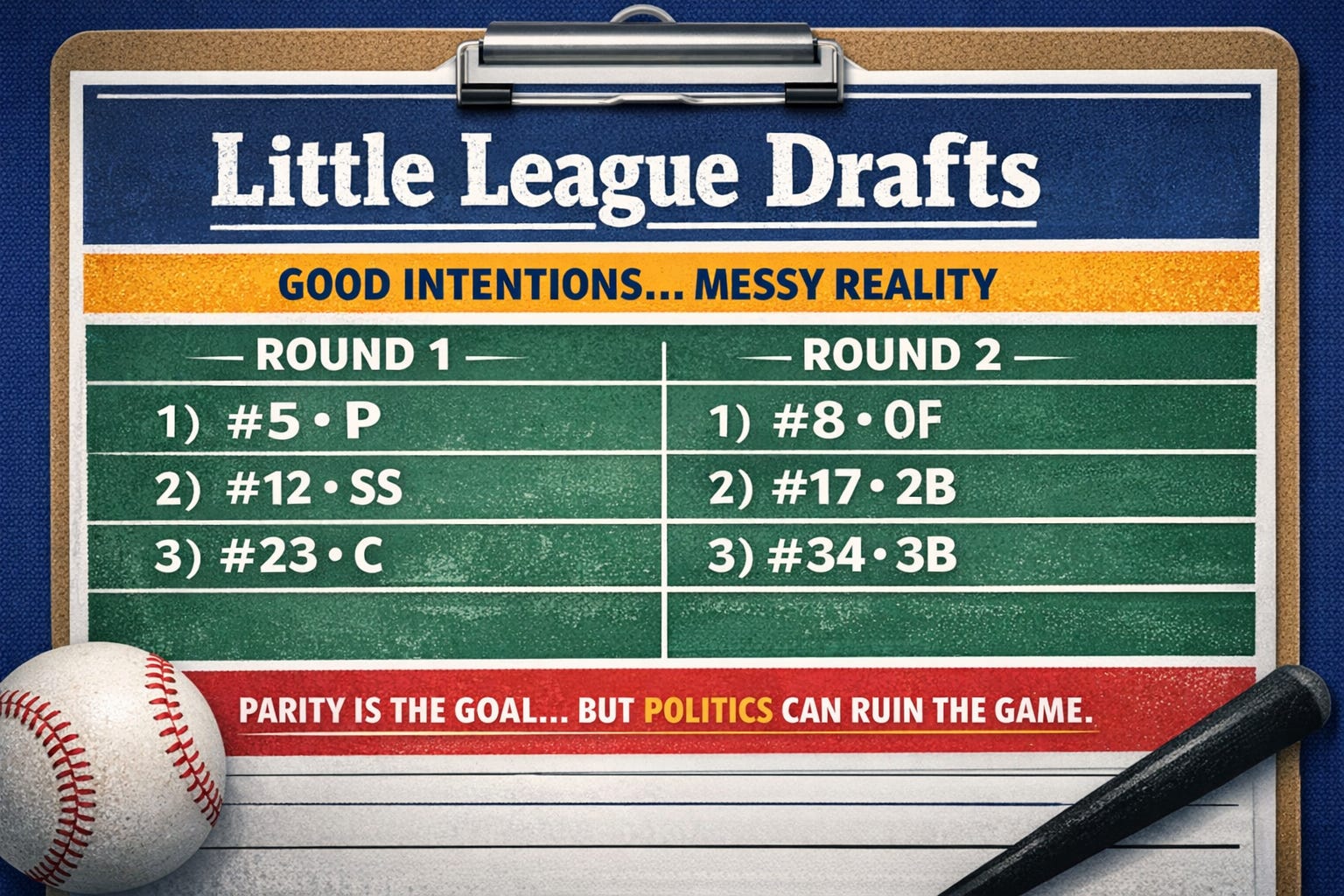
Parent Prep: How to Handle Assessments + Draft Weekend
Here’s what I tell parents — especially new ones:
✅ Don’t turn assessments into a “big moment.”
Your kid will feel whatever you’re feeling.
So if you’re nervous, hyped, or acting like it’s Game 7…
they’ll carry that pressure straight onto the field.
✅ Explain it in kid language.
Try:
“This is just so the coaches can make fair teams. You don’t have to be perfect. Just hustle and have fun.”
✅ Play catch. A few grounders. A few swings.
Nothing intense.
Just knock the rust off and let your kid feel confident doing the basics.
✅ Then let it go.
Because the best development doesn’t happen in assessments.
It happens over time — through reps, encouragement, confidence, and good coaching.
If You Want Your Kid to Stand Out… Here’s the Secret
It’s not exit velo.
It’s not perfect mechanics.
It’s two things coaches value instantly:
✅ Hustle
✅ Attitude
Those two things travel.
And they make any team better.
Final Thought
I know the draft process can feel heavy for a kids’ game.
But the intent is good: parity, fairness, balanced teams.
If Little League really wants to get it right, the next step isn’t changing draft rules…
It’s coaching the coaches.
Setting culture.
And protecting the joy of the game.
Because when the adults lead well?
Kids thrive.
And that’s the whole point.
If stories like this resonate with you, I share one every week here at Baseball Dad & PR Guy — honest lessons from youth baseball, parenting, and the moments in between.
Subscribe if you haven’t already — and please share this story with a Little League parent or coach. It’s through you that we change the culture and grow this community of parents helping parents.
Thank you. ⚾️
About Baseball Dad & PR Guy
I started Baseball Dad & PR Guy to share what I’ve learned from two worlds that have more in common than you’d think — youth baseball and public relations. Both teach preparation, communication, leadership, patience, and how to handle life’s curveballs.
Through my 12-year-old son Alex, his teammates, and his coaches, I’ve come to love baseball — all its beauty and all its challenges. My goal is to help baseball parents avoid common mistakes and support the journey their son or daughter is pursuing. On the PR side, my goal is to help young public relations professionals reach their potential.
Baseball and public relations both teach lessons that transcend the ball field and the PR world — so there’s really no reason not to subscribe.😎
⚾️ Join our growing community of parents helping parents: Travel Baseball Moms & Dads and Baseball Parents Podcast on Facebook. Please also check out my website, tonymanolatos.com, and my linkapalooza. 🔗