


Alex has Little League Shoulder. It’s difficult for me to type that because I never thought we’d be here.
I should point out that his injury could have been worse. He didn’t fracture his shoulder but his growth plate is angry, stressed, inflamed, and the sports doctor he was referred to this summer shut him down for 90 days. But no one expected this — not his doctor, physical therapist, coaches, or Elizabeth and me.
While this isn’t an easy story to tell, it’s an important one to share to help families navigate similar situations. Alex was injured doing something he loves. Elizabeth and I have tried to figure out what we could have done differently — and what wouldn’t have mattered at all. There’s no villain in this story. Just a growing boy, and parents learning where the line is between protecting a kid and letting him be who he is.
If you haven’t read Part 1 of this story and would like to here it is:

Alex’s x-rays were negative and his exams following his injury went well. After some rest, he was throwing again pain free. So the MRI the sports doctor ordered was supposed to come back clean. It didn’t.
To understand his injury, picture the growth plate near his shoulder joint as a soft 'construction zone' — cartilage where the body manufactures new bone, weaker than the solid bone around it.
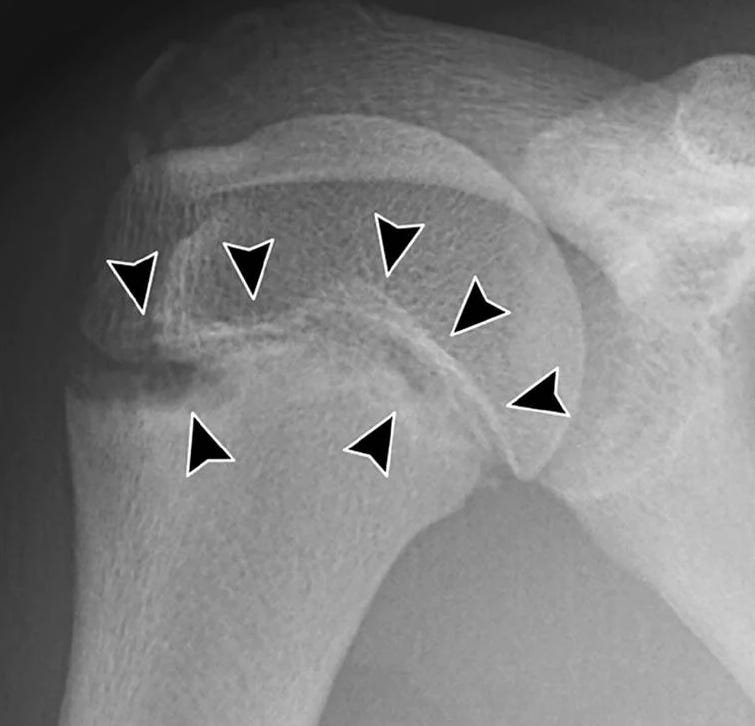
Alex, who recently turned 13, will continue growing for several years, and until he’s done, that growth plate will stay soft, tender, and susceptible to injury. When a young pitcher repeatedly throws with high velocity, their developing muscles pull hard against this fragile zone. In an adult, that stress might cause a muscle strain. In a growing boy, it causes the growth plate to widen, irritate, or shift. Worst case, the pressure rips or fractures the growth plate. In Alex’s case, his muscles simply have not grown as fast as his bones, his medical team said.
Alex grew two inches in 5 weeks this summer, including the week he was in Cooperstown, where the injury occurred. His 12u team, CBA San Diego, had one of those memorable runs kids remember. I’ve shared the details so I’m not going to rehash, but Alex started two games out there. He pitched in the middle of a growth spurt nobody was aware of. He loved all of it. His team finished 5th out of 104 clubs.
Back in San Diego, Alex took a couple weeks off to rest his sore shoulder. Even though his X-rays were negative an MRI was ordered so his sports doctor could have “a clear look” and “rule out” Little League Shoulder. When the pain went away Alex was cleared to start throwing again. He was cleared to practice and participate in a USA Baseball tryout, and with MRI results pending, he was cleared to pitch in a one-day tournament on July 19. He played that day but he didn’t pitch because his coaches and Elizabeth and I didn’t feel he was ready. The day after that tournament, the text from his doctor arrived saying the MRI results were in and they did show “a stress reaction across the growth plate of the humeral head, consistent with little leaguer’s shoulder.”
He went on to say Alex should not throw a baseball or swing a bat for 90 days. I called his office to make sure I understood everything and I mentioned that not swinging a bat for three months would be tough because so much of hitting is about timing and rhythm.
I was told if Alex rested and stuck with his PT the doctor would likely lift some or all of the restrictions in 45 days. I also was told Alex’s injury is fairly common among young pitchers and minor compared to some of what’s out there with hurlers who are still growing.
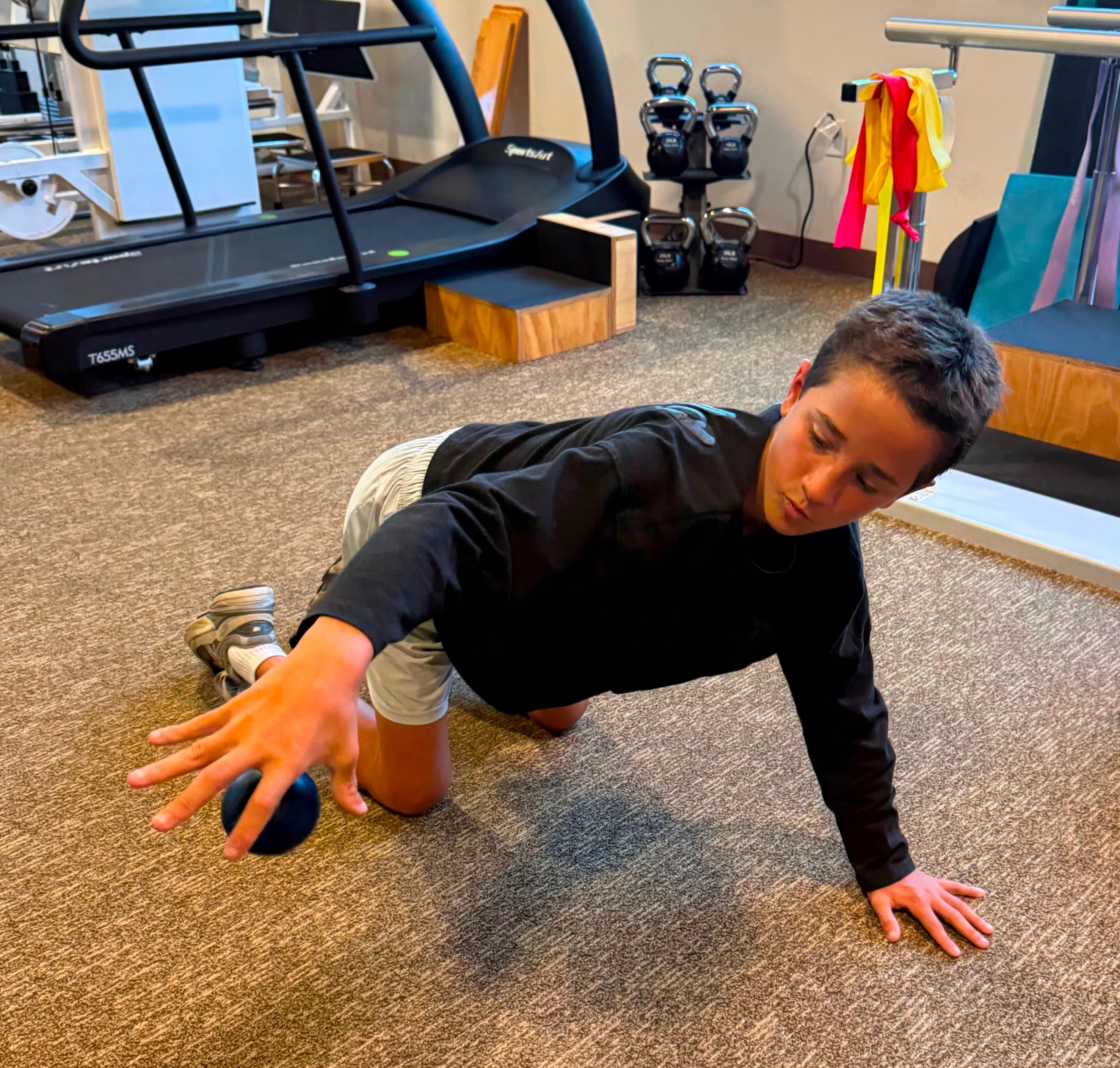
PT put Alex on an every-other-day band routine. If he skips those, doesn't rest, or comes back too soon, he risks a severe injury that could require surgery and sideline him for a year or more, the doc told us.
Alex was playing MLB the Show in his bedroom when Elizabeth and I shared the news. He was sad he would miss an upcoming tournament. He was sad he was going to miss the Perfect Game All-State Games he qualified for as a pitcher. He was sad he wouldn’t “get to play for Coach Eddie and Coach Soto anymore” because they’re his 12u coaches and 13u starts on Labor Day.
When I tucked him that night he told me he was scared. He was worried he might break his shoulder and wouldn’t be able to do the thing he loves almost as much as barreling a baseball: pitch.
After sitting with the news for a day I reached out to Alex’s coaches and to some baseball friends, including Alex’s former travel ball coach, Manny Gagliano. He knows Alex well, played baseball in college, and has coached for decades. He taught Alex how to throw a football curve during warmups before a game, and he was coaching third when Alex hit his first over-the-fence home run. I asked him how often he’s seen similar injuries and what recovery looked like.
“I never had a kid with Little League Shoulder,” Manny told me. But he had a kid whose elbow was hurting after a heavy Little League season, and he made a simple call: “You know what, we’re not going to pitch you this year during travel ball.”
His advice for every parent with a young ballplayer: “High school and college coaches want athletes. The single most important thing you can do now is strength training. And give them a break from baseball. Two or three months.”
I appreciate that Alex’s medical team let me off the hook. They told me the likely cause was throwing while growing. But the bigger picture weighs on me.
Because he’s good at it and because he enjoys it, Alex has always carried a heavy load as a pitcher, not unlike other young hurlers. You manage it, and so do his coaches, but when there’s an injury there’s second-guessing.
When I coached Alex in Little League, I was careful with him and all my pitchers during the regular season — 50 pitches or so max. Alex’s pitch count has only ever climbed into the 80s once, in his last Little League game — 83 pitches, 10 strikeouts, 3 hits allowed, over 6 innings. It wasn’t enough. We lost that playoff game 2-1 on a walk-off home run.
Other coaches, other tournaments, I tracked pitches but not innings. Sometimes he pitched on short rest. I usually gave consent for him to do so, but sometimes I wasn't asked. I've realized I need to be more involved if he's asked to pitch on short rest.
Pitch counts add up across a season, across Little League and travel ball. Nobody’s ever tracking all of it. All those warmup throws and throws across the infield and from the outfield don’t show up on GameChanger.
I wonder if I should have done more.
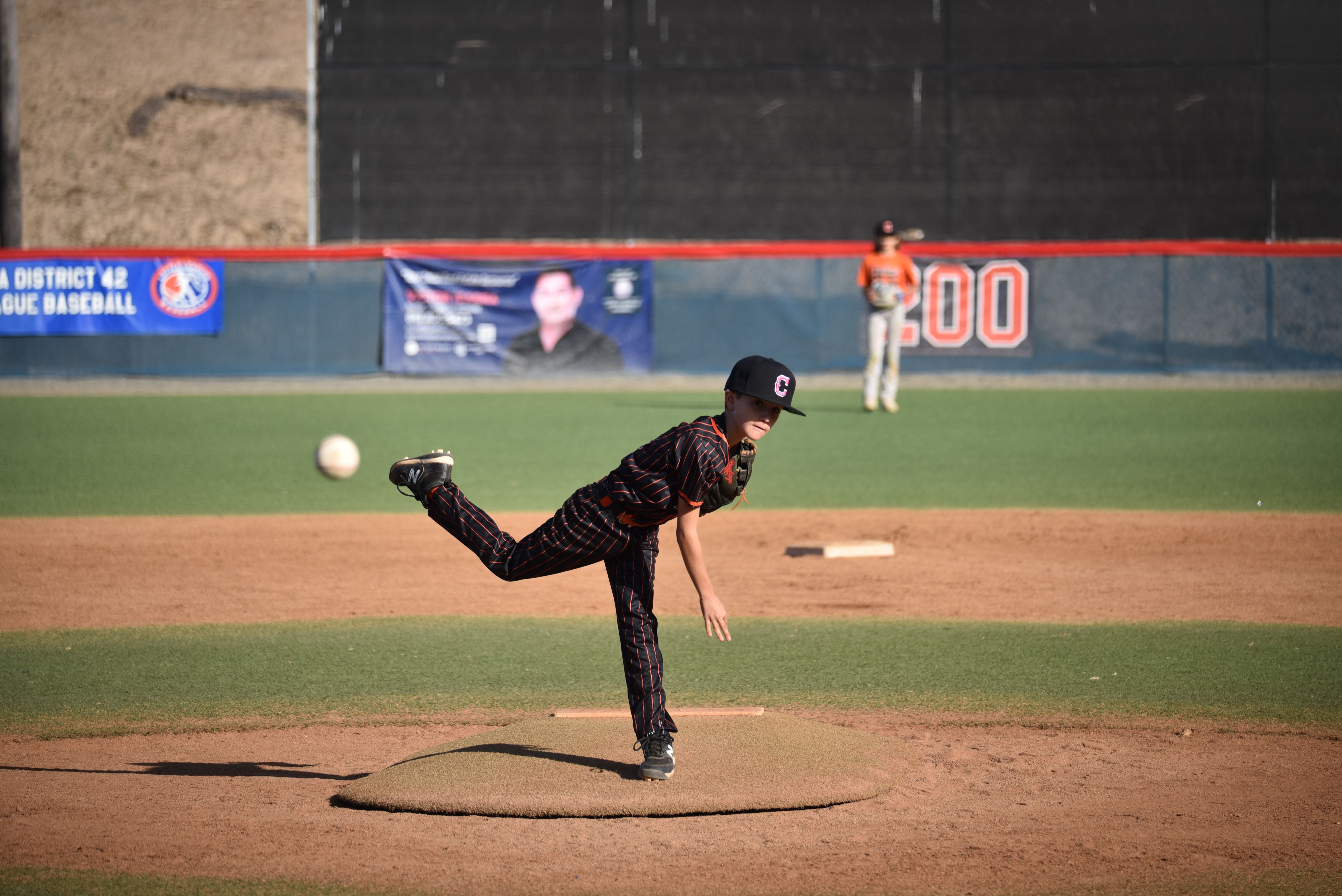
We say yes to about two tournaments a month, but Alex doesn’t pitch in December or January. He plays flag football and a little basketball.
Elizabeth has always felt the pull of travel baseball more than me, but I also agree it is a lot. If it were up to Alex, he would play every weekend. When he does play he usually pitches, usually starts, and usually throws between 55 and 75 pitches total across a two-day weekend tournament.
“He just has it,” one of Alex’s current coaches told me after a recent outing on the mound.
His pitching coach, Chad Starkey, told me Alex doesn’t need to pitch every tournament. “Alex has nothing to prove,” he said. “The goal now is to get stronger, stay healthy, and have some fun.”
The goal has always been for him to be a great pitcher when he’s a junior and senior in high school, not a great pitcher when he’s 13 or 14. That’s easy to lay out there and buy into, easy to understand that none of this matters much until he’s 16. It’s also easy to lose sight of during an elimination game in Arizona at a beautiful facility — when your son earns a start against a nationally ranked team and looks like he was made for the moment.
Alex is handling all this better than me, which is fitting. Last summer he handled the end to his Little League career better than me too.
Elizabeth and I like that he’s taking a break and taking better care of himself. He’s practicing with his team but not swinging or throwing. He hates that but plays by the rules. He’s focused on getting stronger, eating healthier, getting to bed on time, resting his shoulder, and he loves that he’s gotten pretty good at shooting a basketball with his left hand in our pool.
We of course want him to stay healthy once he’s back. His coach, Anthony Soto, told him this won’t be his last injury. He’s right, of course. But that’s not easy for a parent to see.
As I look forward, I see Elizabeth and me keeping an even closer eye on pitch counts, innings, rest days — at least until he stops growing, which is probably close to the same time performance really starts to matter. We also will continue to prioritize all the things that make a growing boy grow, including sleep, rest, and nutrition.
There will be some anxious moments as he resumes pitching, but we will find balance. Protecting him and letting him compete aren’t mutually exclusive.
As I look back, maybe we don’t let him pitch as much. The load on a young kid’s arm who plays baseball as much as Alex has is real. Maybe someone will develop an app for parents to see a young pitcher’s growth spurt in real time, so we can alert coaches and pump the breaks. I’m joking, but that’s actually not a bad idea.
All of us do the best we can with the information we have, and we try and surround our kids with people who care for them as much as we do.
“We want to protect his arm,” Coach Soto told me. “And we will.”
Go Deeper
As a parent coach, I help you help your kid play loose, with confidence and joy. The game gets harder, and our relationships suffer, when we add pressure.
If you’ve gotten the car ride home wrong, caught yourself coaching from the stands, or gotten caught up in the comparison trap, you’re not alone. None of us want to get these moments wrong. The good news: it’s fixable, and it starts with two short guides you can use before your kid’s next game.
Grab your parent playbooks — $20
Want something more specific worked through — your kid, your situation? I do that too.
Email me your issue and I’ll get back to you within 24 hours — $50
Book a coaching session — $150/45 minutes
Lastly, every week I drop new reels on Instagram: @tonymanolatos. Some are related to my essays. Some aren’t. It’s a place for parents to connect with me and each other, to share stories that are funny or moving, do’s and don’ts, and more.
About Baseball Dad & PR Guy
Baseball Dad & PR Guy is a weekly newsletter about youth sports culture and how parents and coaches shape the experience for young athletes.
Subscribers receive the Car Ride Home Playbook — what to say, and what to leave unsaid, after a tough game.
My essays are built around the 5 Moments That Shape Young Ballplayers, from the nerves before a game to the car ride home.
From the stands, I write about those moments and what they mean for confidence, identity, and a kid’s love of the game.
Read more about the 5 Moments and why they matter.
⚾ Join the conversation: Travel Baseball Moms & Dads (Facebook)
⚾ Follow along: Tony Manolatos – Baseball Dad & PR Guy (Facebook)
More at tonymanolatos.com
Man, Tony, you and I are gonna have some great conversations down the road. Such a fine dance between letting a kid go out and have fun and creating lasting memories with friends (without being guaranteed a tomorrow in this game or life) while also making plans and prepping a young ballplayer for a chance to make a run at their down-the-road goals and dreams. There are pitching guidelines, but no two kids are built the same. There are so many variables and factors involved with throwing a baseball, and some kids will develop an issue even when below the threshold; my oldest son did as well (at fourteen). All a player, parent, or coach can do is learn from it and make a better individualized plan moving forward.
It is always so hard to go through something like that. Tough on the kids and the parents! I think you're right to prioritize being a great high school pitcher over being great at 13. Over the years, I have seen a lot of kids flame out because of overuse. Coaches push those pitch limits (much better than innings limits) because they just want to win. You have to be very clear with coaches up front about pitch count per game . . . but also per week, and per season.
We have a grandson who just signed a 4-year ride to an ACC school as a pitcher. He was fortunate to get an advisor who strictly limited his pitch counts in his travel program . . . but also during his high school season. Even as a senior, he was usually capped at 85-90 pitches, only once going over 100. They also relegated him to first base instead of his normal center field the day or two after pitching.
The sad part is, many have told him that these days it's not if you hurt your arm, but when. He has been lucky so far, but with that in mind, he has spent countless hours doing the things he needs to do to keep his arm strong and healthy. And a big part of that is knowing when to stop! Good luck with your son . . . it is a great journey!