


Most of the time, when we think about pressure, we think about the moment itself.
The game. The at-bat. The meeting. The interview. The decision.
But in my experience, pressure rarely comes from the moment.
It comes from everything around it.
Not knowing what success looks like. Unclear expectations. Second-guessing. Worrying about how someone is going to react. Feeling like you don’t have the freedom to just do the job.
I learned that years ago in what was probably the highest-pressure situation of my career—working for the Mayor of San Diego during the Chargers stadium fight.
It was a constant battle. Daily media hits. Talk radio. Competing narratives. A very public, very aggressive effort by the Chargers to shape the story and turn public opinion against the Mayor and the City.
This wasn’t just a local story. National outlets, including ESPN, were covering it. The NFL was involved at the highest levels. The lights were bright.
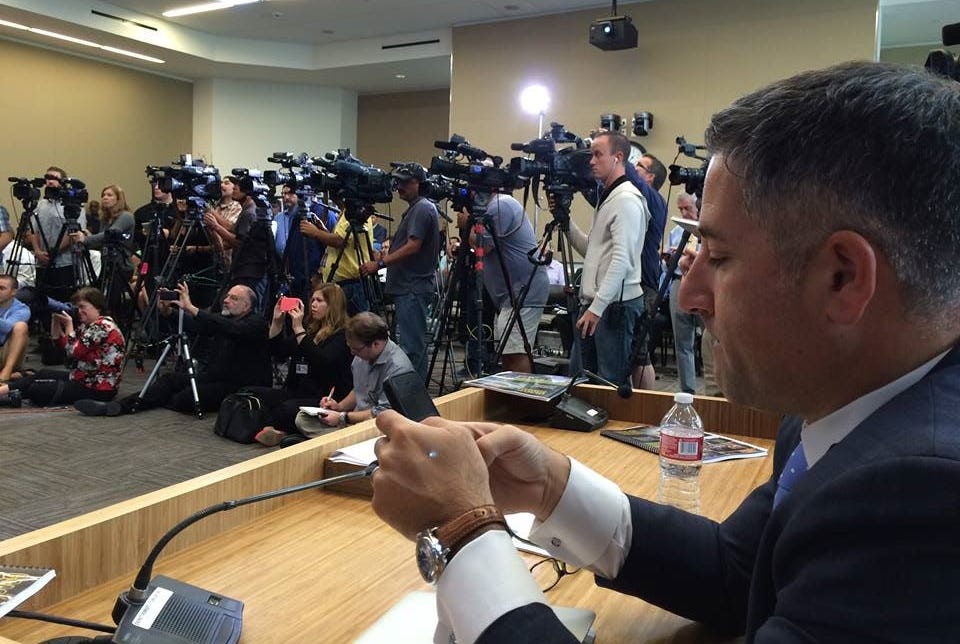
One of my roles was to go on air and respond live—often right after the team’s point person had just made his case.
By any standard, those should have been high-pressure moments.
But they didn’t feel that way.
Not most of the time.
And the reason was simple: trust.
There was alignment. We had a plan. The Mayor trusted me. His team trusted me. I trusted them. Expectations were clear. There was no second-guessing, no looking over my shoulder, no wondering how something would land internally. We knew the Chargers’ game plan. We knew ours. And we were confident we were on the right side of the issue.
So when it was time to go on TV or sports talk radio, I wasn’t thinking about the risk.
I was just executing.
And then I watch youth baseball…and see the opposite.
Not because parents don’t care. Almost all of them care. A lot.
That’s the problem.
They think they can fix what just happened. Or control what’s about to happen.
It’s all noise.
Kids are out there trying to execute. Too often, you see parents interfering, coaching from the stands, barking from the fence line, second-guessing—because they don’t trust their kid in that moment.
None of these folks—I’m not perfect at this either, just better than I was—wake up thinking they want to hurt their kid. In fact, many of them believe they’re helping. They’re not.
Kids don’t need more coaching on game day. They need less noise and more trust.
The more we talk on game day, the less they trust themselves.

“The less you think, the better you play,” is how mental performance coach Dave Austin put it recently.
Think about how much the game slows down and how easy it becomes when the only thing your kid has to do is focus, have fun, and get after it.
Dave’s “Game Ready” approach that he takes players through ahead of games starts with eliminating distractions. The first thing he does is ask players for their three intentions for the game—written down before the session begins.
Trust is a popular first intention. Staying present comes up a lot too. So does “love the pressure.”
“We come up with three things and that’s it—everything else is a distraction,” Dave says. “We teach them to be disciplined to where their mind goes. So you’ve got to focus.”
He adds: “One that’s really big for each player is trust. I’ve done the prep. I’ve done the work. So let it go. Trust in it. Now I’m playing a game. Because if you’re thinking about anything else, it’s a distraction.”
Kids can’t love pressure, stay present, or trust their training when everything around the game feels heavy.
I wasn’t aware of Dave’s approach back when I was battling the Chargers spokesman. How it all played out for the Mayor and the Chargers is well documented.
When I look back at those moments, I remember feeling calm and confident in the middle of something that was anything but calm.
###
Go Deeper
Some of you are dealing with issues that keep you up at night: Your kid can’t recover after an error. He doesn’t like his coach. He’s constantly checking GameChanger and comparing himself to his teammates. He wants to quit.
That’s what my one-on-one coaching sessions are for.
Visit my Stan Store to book a coaching session, email questions, order playbooks, or inquire about speaking.
I also put together a simple 2-minute script for the car ride home—what to say, and what to leave unsaid. I’ll send it to you when you subscribe. ↓

About Baseball Dad & PR Guy
Baseball Dad & PR Guy is a weekly newsletter about youth sports culture and how parents and coaches shape the experience for young athletes.
Subscribers also get what I use after games—what to say, and what to leave unsaid on the ride home.
My essays are built around the 5 Moments That Shape Young Ballplayers, from the nerves before a game to the car ride home.
From the stands, I write about those moments and what they mean for confidence, identity, and a kid’s love of the game.
Read more about the 5 Moments and why they matter.
⚾ Join the conversation: Travel Baseball Moms & Dads (Facebook)
⚾ Follow along: Tony Manolatos – Baseball Dad & PR Guy (Facebook)More at tonymanolatos.com
This is exactly on point!
Well said, Tony. Dave was my mental coach for a few years when I played. Helped me tremendously. Also played a huge in role establishing my own mentorship/mindset business. How do you know him?