


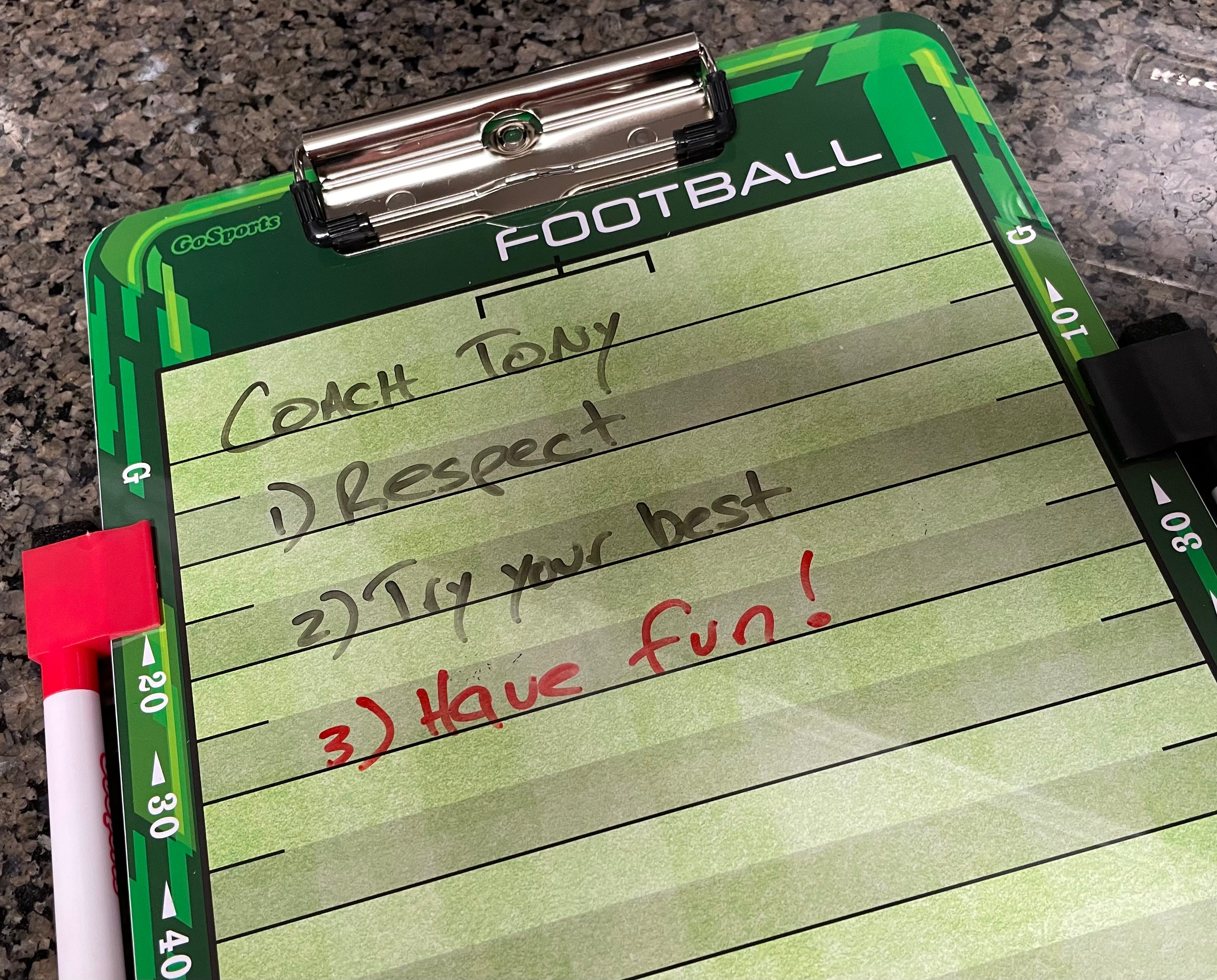
I was so focused on the kids sobbing and the coach trying to connect with them that I didn’t see the little guy drawing in the dirt, but Alex did.
“A lot of tears,” I said to Alex.
“Yeah, but did you see the one kid drawing in the dirt?” he asked.
“No, I was too focused on the coach,” I responded.
He and I were walking to the parking lot of a local high school following his final flag football playoff game last Friday night. On our way out, we walked past a team of young kids who looked to be seven years old. They were huddled around their coach who was on one knee.
There were about a dozen kids facing him and more than half of them were sobbing. Big tears, trying to catch their breath, all of it. It was obvious this wasn’t just any game. This was a playoff elimination game these little boys and girls had just lost. Every team at the field that night, young and old, was fighting for their playoff lives.
“I don’t want to hear that,” I heard the coach say.
“But they cheated!” a little voice said back.
“Look, they beat us by quite a lot of points tonight but that’s not what matters,” the coach said. “What matters is how hard you competed, how much fun you had, and how much you improved this season.”
It was a simple message but an important one. Those little kids had probably never suffered a loss like that, and it might have been easy for their coach to agree that the other team did things that weren’t fair, but he didn’t. He didn’t give them that out. He refocused them, or tried to, and praised what he knew they could control.
I don’t know who he is and I’ll probably never see him again, but I’m glad I walked past him and his little 49ers team.
Alex’s team, the Lions, had its own ending that night, and its own version of “they cheated.”
Those boys, a group of talented thirteen-year-olds, went 8-0 during the regular season and entered the playoffs as the number two seed. They lost a close game that night to the three seed and that was it, season over. Some struggled to handle the loss but the boys overall took it in stride, disappointed but not crushed.
Alex’s coach had a legitimate complaint and told the boys so in their team huddle. But he also said that wasn’t the only reason for their loss.
When the game ended, he had told the boys to stay together and that he’d be right back. He then walked over to the league tent near the entrance and protested the loss because the other team did not follow the league’s equal playing time rule. They had left their starters in most of the game, he said. The league officials shrugged it off. When he came back, he told the boys, “Could we have played a little better in all phases? Yes. Could I have called some better plays? Yes. They didn’t play by the rules and we did, but you guys are awesome. You balled out all season. Keep playing. Keep getting better. I hope you all keep playing.”
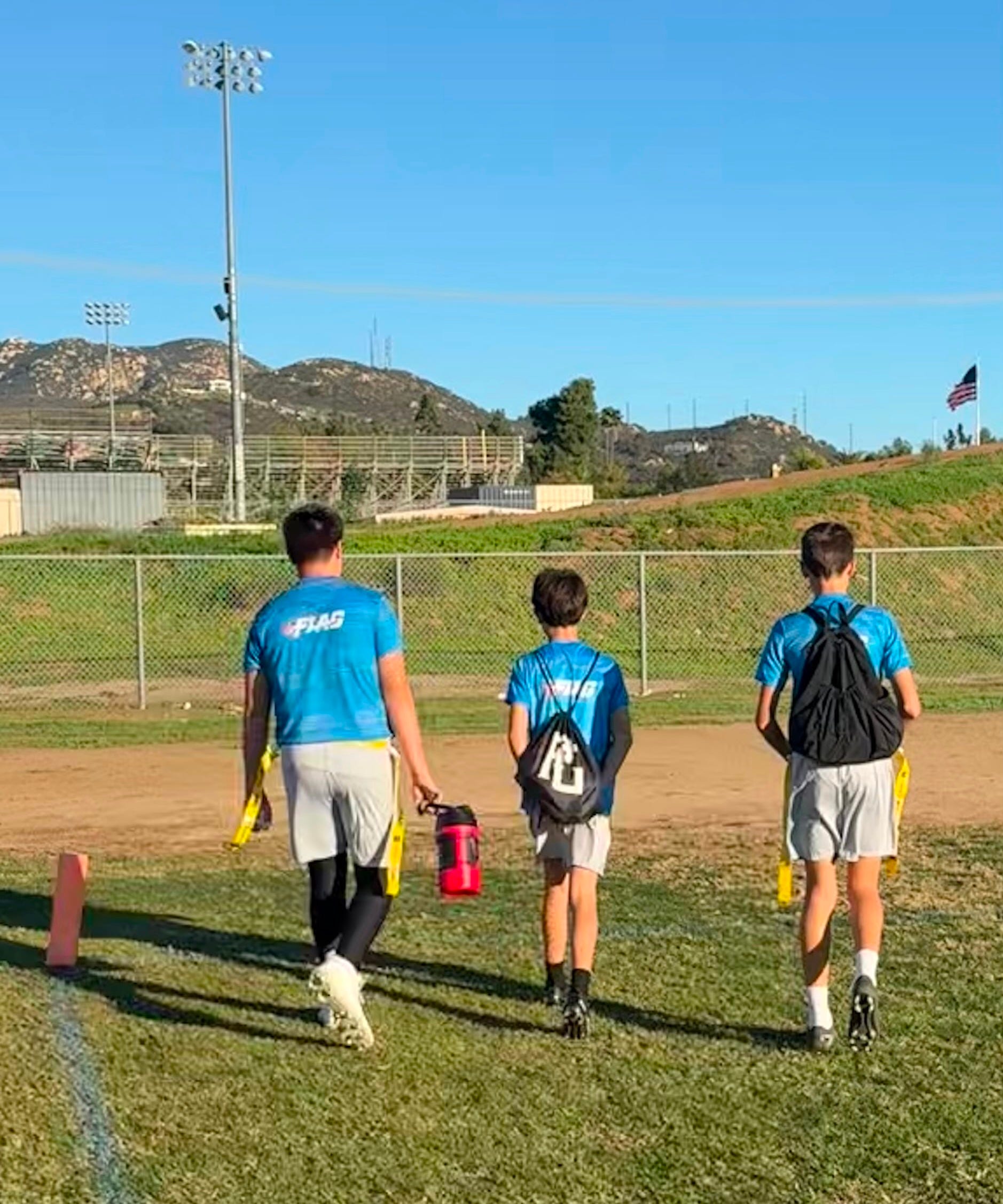
Alex had moved on enough to notice the kid drawing in the dirt. Maybe that little boy felt the same way Alex did: not great but not devastated. I didn’t see that boy because the kids crying and the coach trying to calm them down grabbed my attention like a car crash would. I also was still processing the drama that unfolded after Alex’s game.
The drama is what we notice, and not just after losses. In youth sports, a lot of it comes from the adults, and it’s easy to get pulled in. But it’s the kids that we’re supposed to be watching. All of them. Alex was, and so was that 49ers coach.
“I’m proud of all of you,” he told his team.
How I Help Parents and Players
I launched this newsletter more than a year ago because I wanted to help other parents and I’ve always enjoyed writing. Coach Jay Fejeran of SD CAP Hitting, who trains my son and dozens of other ballplayers, told me what I was really doing was coaching. “You’re coaching parents, players, and coaches,” he said. “And this stuff is important. We don’t spend enough time on it.”
So I leaned in. I started coaching players and parents to help kids play loose, with confidence and joy.
If you’ve gotten the car ride home wrong, caught yourself coaching from the stands, or gotten caught up in the comparison trap, you’re not alone. None of us want to get these moments wrong. The game gets harder, and our relationships suffer, when we add pressure. The good news: it’s fixable, all of it, and it starts with two short guides you can use before your kid’s next game.
Grab your parent playbooks — $20
Already a paid annual subscriber? Playbooks are included with your subscription.
Is your kid in a slump, freezing in big moments, talking about quitting, or playing small because of nerves and pressure? Tell me what’s going on.
Email me your issue and I’ll get back to you within 24 hours — $50
A lot of players and parents benefit from coaching. For players: it’s confidence — nerves, pressure, bouncing back. For parents: it’s the moments — what to say, what not to say, when to get out of the way.
Book a 1:1 Tony Talk for you or your ballplayer — $150/45 minutes.
About Baseball Dad & PR Guy
Baseball Dad & PR Guy is a weekly newsletter about youth sports culture and how parents and coaches shape the experience for young athletes.
Subscribers get my free Car Ride Home Playbook — what to say, and what to leave unsaid on the ride home.
My essays are built around the 5 Moments That Shape Young Ballplayers, from the nerves before a game to the car ride home.
From the stands, I write about those moments and what they mean for confidence, identity, and a kid’s love of the game.
Read more about the 5 Moments and why they matter.
⚾ Follow me on Instagram: @tonymanolatos. I drop new reels weekly that make my wife and kids cringe. They’re built for parents, players, and coaches. Some have taken off. One has more than 300k views.
⚾ A community for parents: Travel Baseball Moms & Dads (Facebook)
⚾ Follow along: Tony Manolatos – Baseball Dad & PR Guy (Facebook)
More at tonymanolatos.com
I really like this. We often rush to interpret things for kids but miss what they’re actually trying to communicate.