


A quick Father’s Day note: My dad taught me to play baseball. Taught my brother too. I remember some of those days like they were yesterday — and I have great memories of us at Tigers games, and watching him play softball. A Tigers World Series game played at my parents’ wedding reception in 1968, long before TVs in restaurants and reception halls were a thing.
My dad passed away a couple years ago. I think about him every day.
Happy Father’s Day to him, and to all the baseball dads out there. Thank you for reading.
—Tony
Most kids stop playing baseball around 12 or 13.
Some leave because it stops being fun. Others leave because it gets harder — the talent around them improves, the game speeds up, and instead of grinding to keep up, they decide it’s not for them anymore.
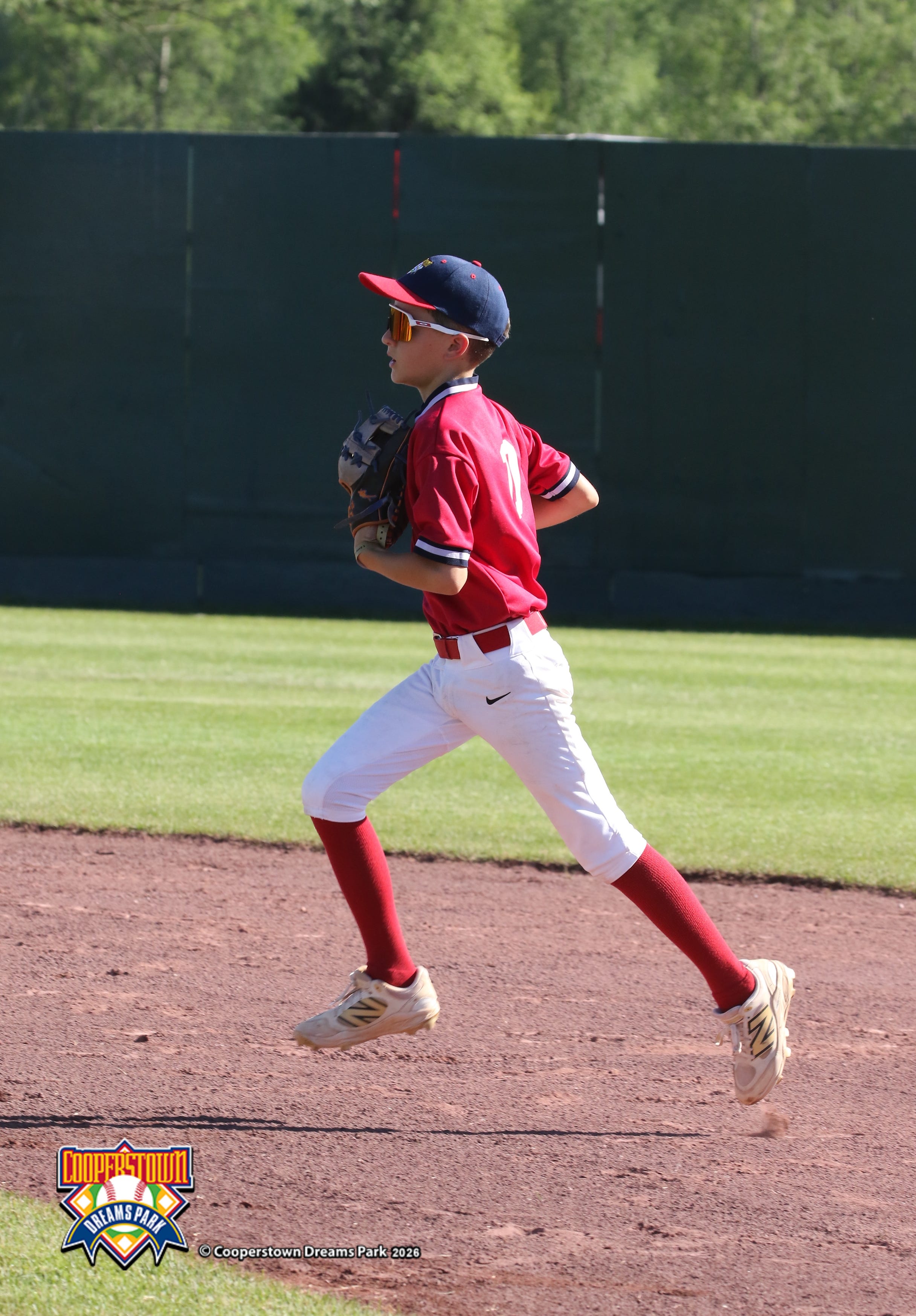
At Cooperstown Dreams Park, where my son played this month with his 12u team, you could sometimes sense who had a longer runway. Watch how a kid warms up between innings. Watch how he jogs on and off the field. Watch how he walks back to the dugout after striking out. Some of them carry themselves a certain way — a quiet ownership, a presence. You don’t have to look hard. It’s like it’s written on their jersey. And when it’s not there, you can feel that too.
Don’t miss last week’s essay on Cooperstown ⬇

Cooperstown has become a rite of passage for a lot of 12u ballplayers. We flew across the country from San Diego to get there. The park, the history, the crowds, the six-game guarantee with the chance to play more — all of it on the biggest stage many of them have ever seen. For some, it won’t get brighter than this.
I shared a post last week on Instagram about the 10 things I took away from the experience that some parents seemed to like. One of them: enjoy the game while it’s pure and innocent, because it all changes soon.
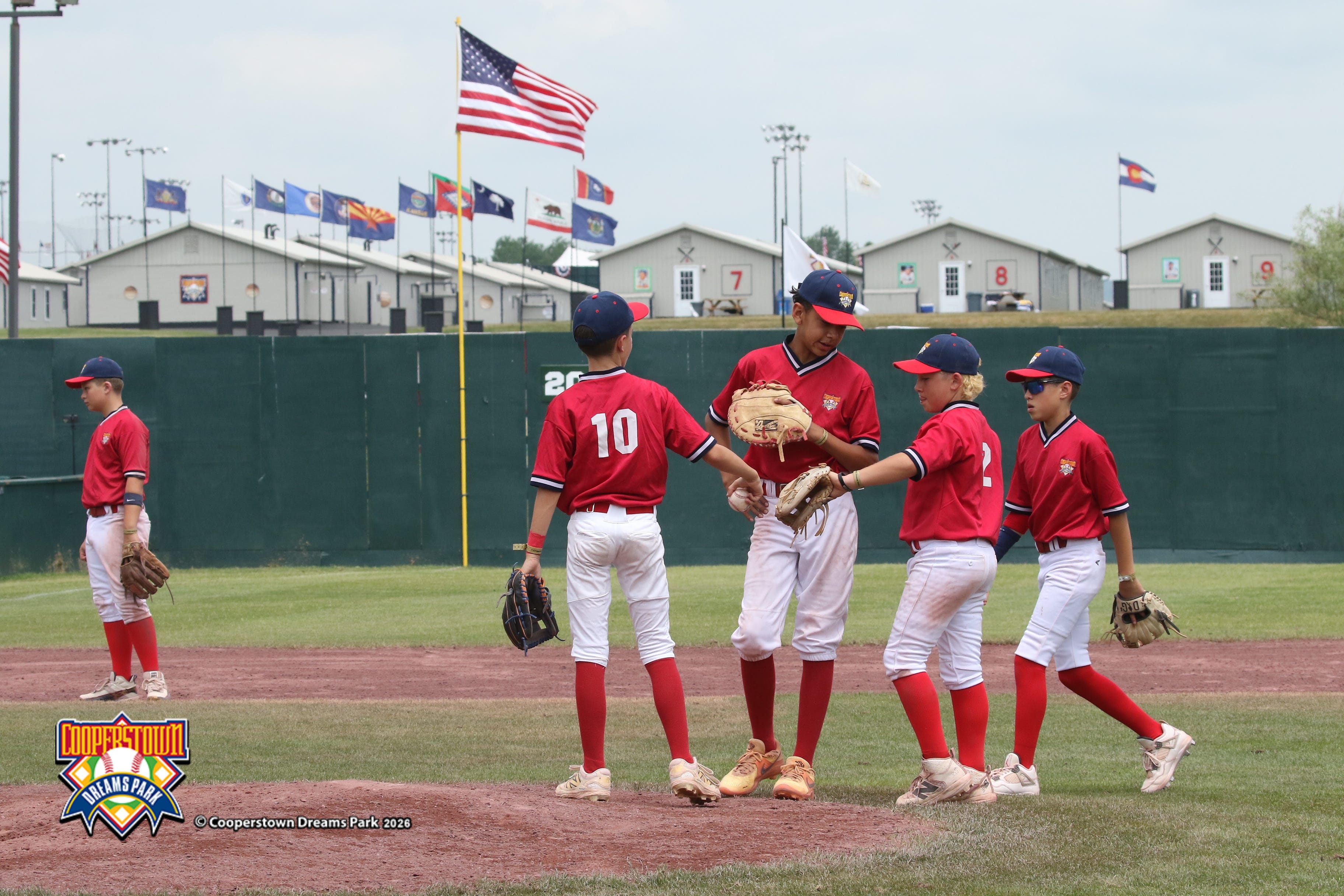
Baseball keeps moving, especially at this stage. Fields get bigger at 13u. Bats get heavier. The talent gets better. In a lot of ways, Cooperstown is a line of demarcation. What comes next asks a different question of every kid: are you going to dig in, or are you going to walk away?
I see the same thing at the hitting facility where my son trains. You can almost tell who’s there because mom and dad want them there, and who’s there because they want to get better — because they love the grind. The ones who are locked in look locked in. Focused, intense, a little sweaty. The ones having doubts look different. Less focused, less confident. Like they can’t wait for the lesson to end.
At some point, every player runs into someone better. A lot of them run into a whole field of guys who are better. That’s when you find out who they really are.
I’ve been in that spot.
I was a star every year I played football growing up, right up until my junior year of high school just outside of Detroit. That’s when it changed. I barely saw the field that year. For the first time in my life, I wasn’t one of the guys.
I had a choice. Accept it, or do something about it.
So I talked to my coach. He didn’t sugarcoat anything. He told me exactly what I needed to do if I wanted a shot my senior year — show up every day, lift, run, watch film. Put the work in.
That summer, I did.
I was up before sunrise, driving myself to school — a Catholic high school about a half hour from my house, just around the corner from my dad’s X-ray business. There were only a handful of us there those early mornings, when it was still dark out and the grass was still damp. We’d jump rope, run laps, lift, then head out for the day. Afterward, I’d go to work in my dad’s warehouse — stocking shelves, moving boxes, delivering film, whatever needed doing. I’d come home smelling like fixer and developer, exhausted, grimy. Dinner, bed, and do it all over again the next morning.
By the time two-a-days started senior year, I was ready. I remember thinking during that first week that my hamstrings weren’t sore because I’d already done the work.
I earned a starting job. I had a good season — good enough that a handful of colleges recruited me. I didn't see that coming my junior year.
I remember how proud my dad was and how he loved watching me play that final season. I also understood something for the first time that summer heading into my senior year: if you really commit to something and put the work in, you can change outcomes. You can set goals and meet them. I was 17 back then, but those lessons have never left me.
A travel coach I know puts it plainly: the kids who stick with baseball after 12u have to start being selfish.
Not selfish like you think you’re better than everyone. Not selfish like you’re worried about who’s ahead of you on the depth chart. Selfish like you’ve decided to take ownership of your own development — and you’re going to do the work regardless of where you stand.
Because that’s when the game changes.
Before 13u, baseball is mostly about the team, the experience, playing with your buddies. The bigger, faster kids usually stand out. They make All-Stars and sit atop travel rosters. We look at that and think we’re seeing the future.
A lot of the time, we’re just seeing puberty.
Late bloomers catch up. Some kids who were dominant at 12 don’t play ball in high school. And a lot of kids who weren’t on anyone’s radar end up being the ones who stick with it the longest. They put in the work and see what it leads to.
My football coach told me that if I wanted it, I had to go get it. Take what’s mine, he said. If a starting job on a good team in a premier league in the shadows of major universities mattered to me, I couldn’t just show up. I had to earn it. Had to be selfish. Had to want it more than the next guy. Had to beat out other guys — even if some of them were good friends of mine. Nothing less would do.
That’s what being selfish really means.
It’s a different vibe than the one you feel at Cooperstown. But you can see who’s ready for it.
⚾️ The Gentlemen Who Keep Cooperstown Running
by Tony Manolatos
Talking to old-timers at Dreams Park was one of my favorite things to do in Cooperstown. The maintenance guys and umpire chiefs would roll up to games in loud golf carts. They all liked to chat.
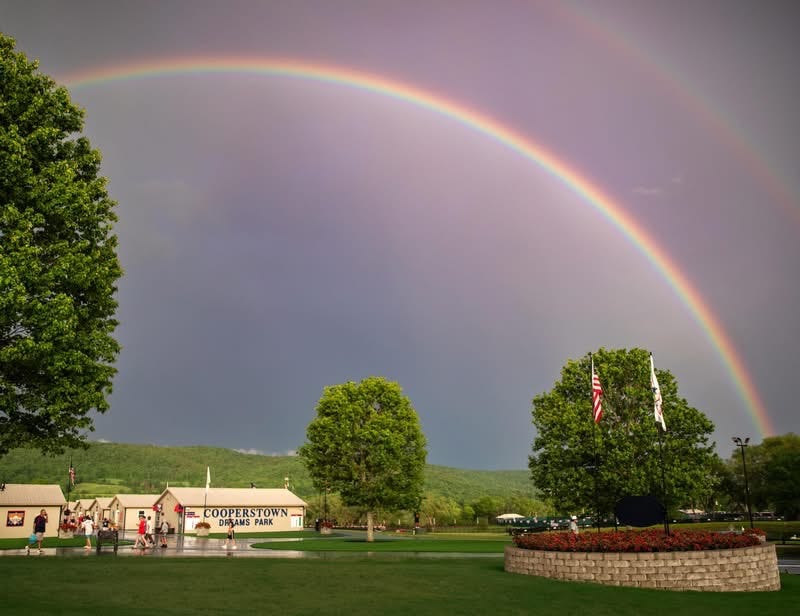
I told several of them how impressed I was. How clean everything is. How well run. The red, white and blue bunting, the manicured flower boxes, the green hills surrounding the park, and of course the fields that look as cared for as any in the Major Leagues. You can’t help but think: this is how the game is supposed to be played.
“It looks like you opened this place 10 days ago, not 30 years ago,” I said to Dale, a tanned and scruffy maintenance worker who’d rolled up to one of our games because word had spread that our boys were crushing the ball. “It’s 20 to 1 now,” I heard someone say over Dale’s walkie talkie.
"Thank you," he said. He told me the park's late founder had acted on a vision his own father had for a place where kids could chase their baseball dreams. "We take a lot of pride in this place. I've been here 14 years, two more to go until I retire. There's nowhere I'd rather be."
Later, an opposing manager got animated with the umps over a call involving my son on the base paths. Play stopped. Both teams went to their dugouts. The umpire chief was called in, made his way to the field, huddled with the umps, and ruled in our favor.
I thanked him as he left.
“I’m going to stick around,” he said. “That manager is a bit of a hot head.”
“I’m sure you’ve seen it all,” I said.
“You have no idea,” he replied.
On the last day there weren’t many families left, so a lot of the gentlemen on golf carts were offering rides to and from the parking lot. I wanted to walk. Alex’s team was just eliminated in a tight game after making it to the Elite Eight. “You sure? It’s all uphill,” the tanned man said. We jumped in and drove silently to our rented SUV.
“Elite Eight is something to be proud of,” our driver said, recognizing our disappointment. “One hundred and four teams. Most are long gone.”
“Thank you. We appreciate you and this place. We’ll never forget this,” I said.
Go Deeper
Some of you are dealing with issues that keep you up at night: Your kid can’t recover after an error. He doesn’t like his coach. He’s constantly checking GameChanger and comparing himself to his teammates. He wants to quit. Your relationship is suffering.
That’s what my one-on-one coaching sessions are for.
➡️ Visit my Stan Store to book a coaching session, email questions, order playbooks, or inquire about speaking.
About Baseball Dad & PR Guy
Baseball Dad & PR Guy is a weekly newsletter about youth sports culture and how parents and coaches shape the experience for young athletes.
Subscribers also get what I use after games—what to say, and what to leave unsaid on the ride home.
My essays are built around the 5 Moments That Shape Young Ballplayers, from the nerves before a game to the car ride home.
From the stands, I write about those moments and what they mean for confidence, identity, and a kid’s love of the game.
Read more about the 5 Moments and why they matter.
⚾ Join the conversation: Travel Baseball Moms & Dads(Facebook)
⚾ Follow along: Tony Manolatos – Baseball Dad & PR Guy(Facebook)More at tonymanolatos.com