


Elizabeth was checking email at the kitchen table in our Mammoth Mountain ski condo last week, and our boys were on the couch with their iPads. All three of them laughed with each grunt I made during my kettlebell swings. I was in the kitchen launching a 53-pound bell into the air 100 times — and that was after my goblet squats and Turkish get-ups.
Not exactly what most people choose to do after a day on the slopes.
So why did I do it? Why did I pack two heavy kettlebells for our Thanksgiving ski trip?
A couple of months ago I signed up for an 18-week program called “Kettlebell Transformation,” and one of its demands is four kettlebell workouts a week. These workouts aren’t easy, but they’re rewarding, and most days I now look forward to them. They’ve become part of my routine — so much so that I packed two of my heaviest bells next to our skis in the bed of my pickup before we headed north.
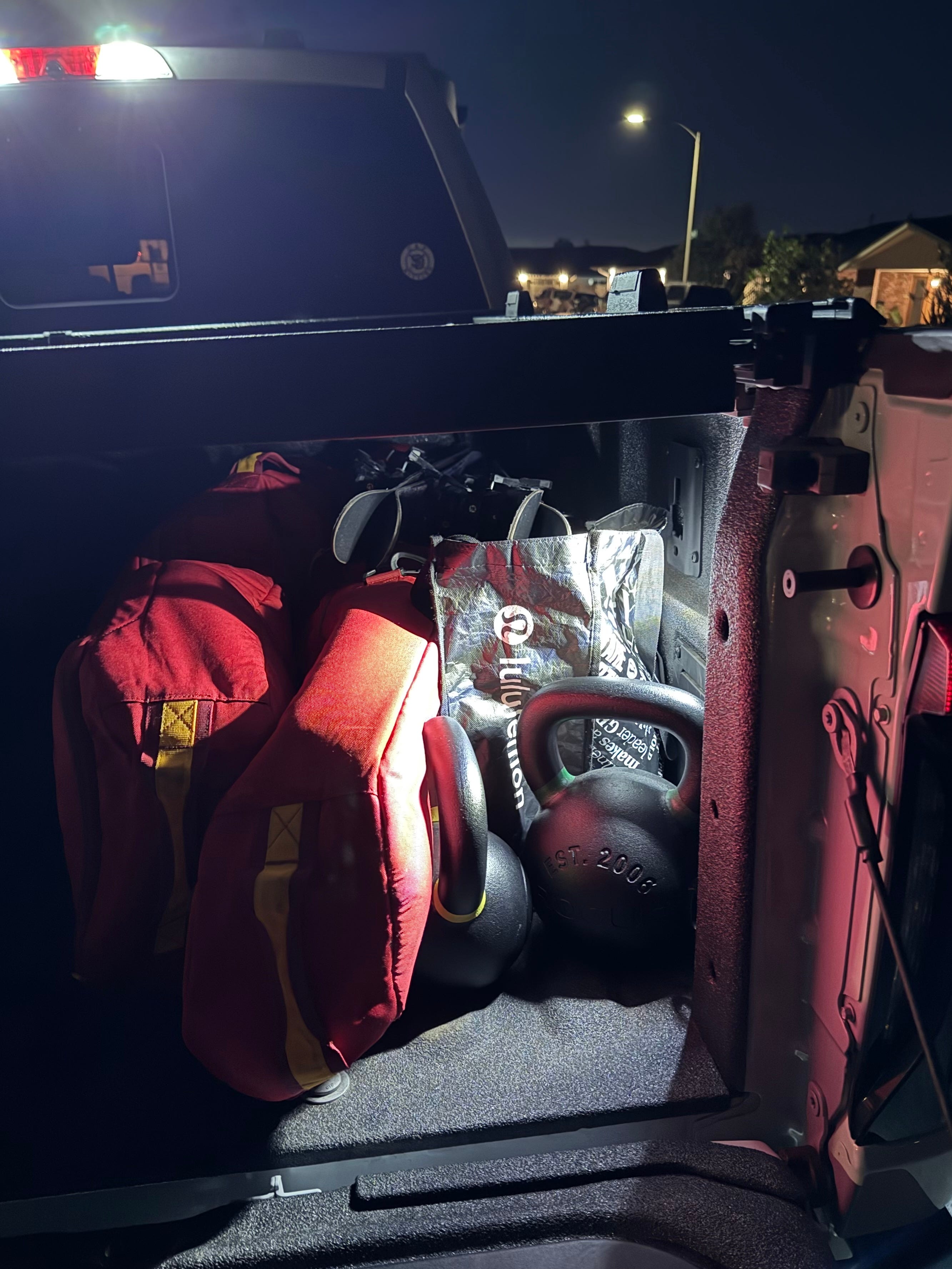
I look forward to other routines, too. I enjoy waking up at 5 a.m., walking our dog Lucy, and sipping coffee with Elizabeth while the house is still quiet and the day is just starting to take shape.
In high school, I loved my pre-game football routine almost as much as the actual games. I showered, dressed in the same sweats, left the house at the same time, blasted my AC/DC Back in Black cassette in the car, showed up early to the locker room, and always headed straight to the trainer to get taped.
I developed those habits — and many others — because routines matter. Routines help us in every area of our lives. They give us structure. They reduce stress. They block out distractions. They sharpen our focus.
They’re the building blocks — the fuel — we use to achieve our goals.
There’s power in routines. As Psychology Today put it:
“Boring routines can help improve well-being, avoid chaos, and even spur creativity.”
And routines can help your young ballplayer, too. Kids today juggle school, sports, friends, and family. A routine helps them stay grounded, keep perspective, and work toward their goals without feeling overwhelmed.
Recently, Alex jotted down a weekly routine at the suggestion of his hitting coach — and then asked Elizabeth and me to review it and sign it. We happily obliged.
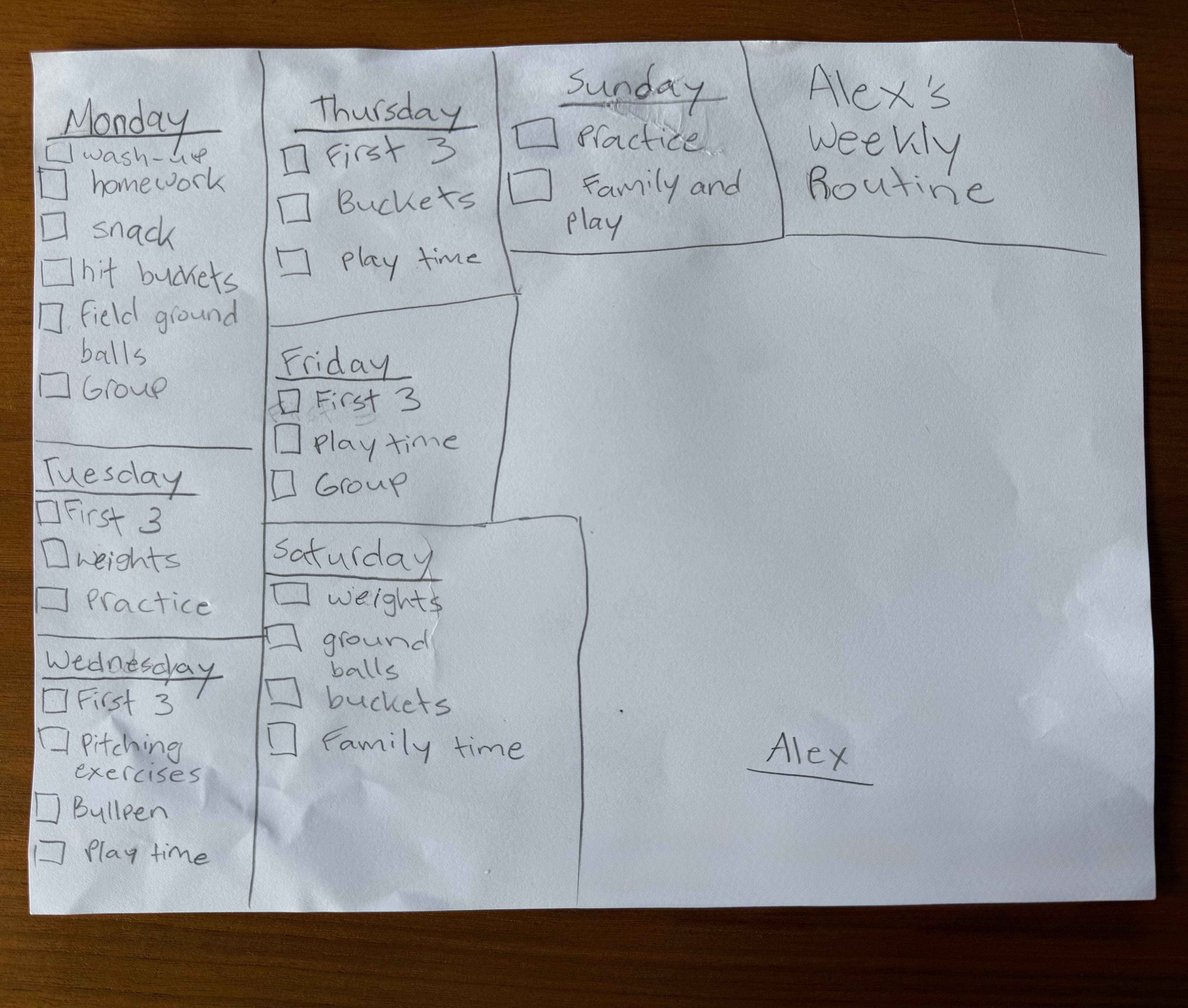
We expected to see “Group” (short for group hitting lessons) and team practices. But what impressed us most was the balance: homework, family time, play time. Alex built his own structure without us nudging him.
That’s when routines really start to matter.
And while routines get easier with age, it’s never too early for your son or daughter to begin incorporating them into their week. Most kids actually find comfort in routine and structure, even if they won’t admit it.
For ballplayers, there’s no more important time than the hour or two before a game — and that’s where a good routine can really pay off.
Tournaments, games, and scrimmages demand focus — a quiet mind, a prepared body, and a routine that settles the nerves.
But that’s tough for young kids who haven’t seen their teammates in days and just want to hang out and goof around.
Tell them the social hour can wait. Preparation comes first.
Baseball will humble them on its own — they don’t need to give the game extra leverage. A routine doesn’t guarantee success, but it gives them footing. A routine gives them confidence.
And confidence is what carries them through the tough innings, the slumps, and the moments that define who they’re becoming.
Thanks for reading — and for being part of this growing community of parents who believe in showing up, supporting our kids, and doing things the right way. If your family is on a similar journey — the highs, the slumps, the breakthroughs, the lessons — you’re in the right place. I write to help parents like us navigate the grind with more confidence and a little less stress.
👉 Subscribe to Baseball Dad & PR Guy and let’s keep learning — and growing — together.
About Baseball Dad & PR Guy
Baseball insights. PR perspective. And a few curveballs along the way
I started Baseball Dad & PR Guy to share what I’ve learned from two worlds that have more in common than you’d think — youth baseball and public relations. Both teach preparation, communication, leadership, patience, and how to handle life’s curveballs.
Through my 12-year-old son Alex, his teammates, and his coaches, I’ve come to love baseball — all its beauty and all its challenges. My goal is to help baseball parents avoid common mistakes and support the journey their son or daughter is pursuing. On the PR side, my goal is to help young public relations professionals reach their potential.
Baseball and public relations both teach lessons that transcend the ball field and the PR world — so there’s really no reason not to subscribe.😎
⚾️ Join our growing community of parents helping parents: Travel Baseball Moms & Dads and Baseball Parents Podcast on FB and Twitter. Please also check out my new website, tonymanolatos.com, and my linkapalooza. 🔗
Loved this, Tony. Great reminder that routines give kids confidence and that our job is to keep showing up for them, no matter what. Thanks for sharing.