


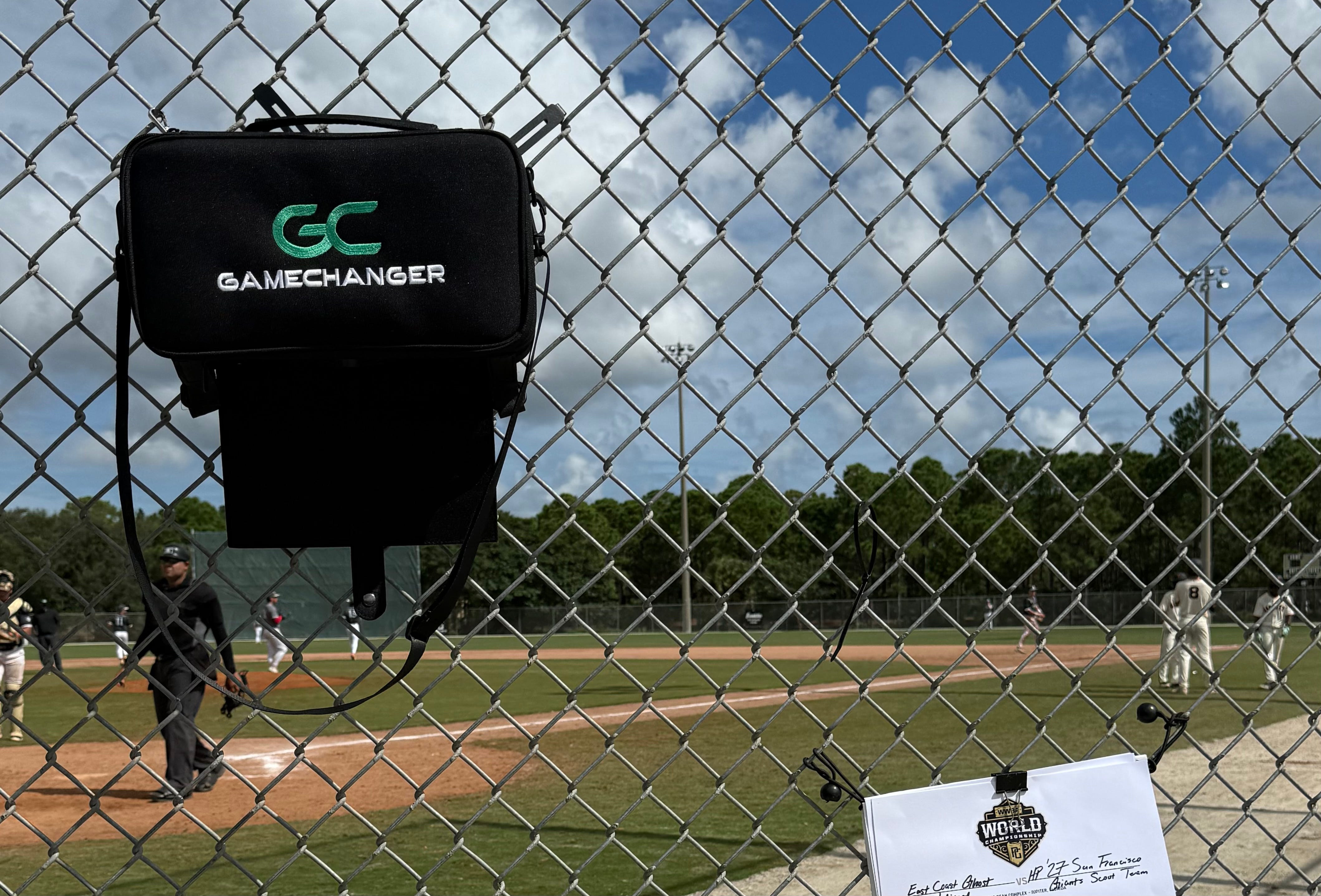
There was a time when I felt like pointing out a mistake to the parent keeping score with GameChanger was probably not worth it, but I went against my better judgment. I would regret doing so.
I normally don’t follow GameChanger during games. I’m sitting in the stands, usually with the sun on my face and a great view, making the dust blowing in my direction easy to ignore. So why would I also be checking my phone?
My head is in my phone too often when I’m at home, so it’s nice to take a break from that. Some parents enjoy following the action on GameChanger during games, and I do check the app sometimes for pitch counts or to confirm the inning or score. “Yes, it’s really just the third inning,” I’ve said to Elizabeth on more than one occasion while looking up from the app.
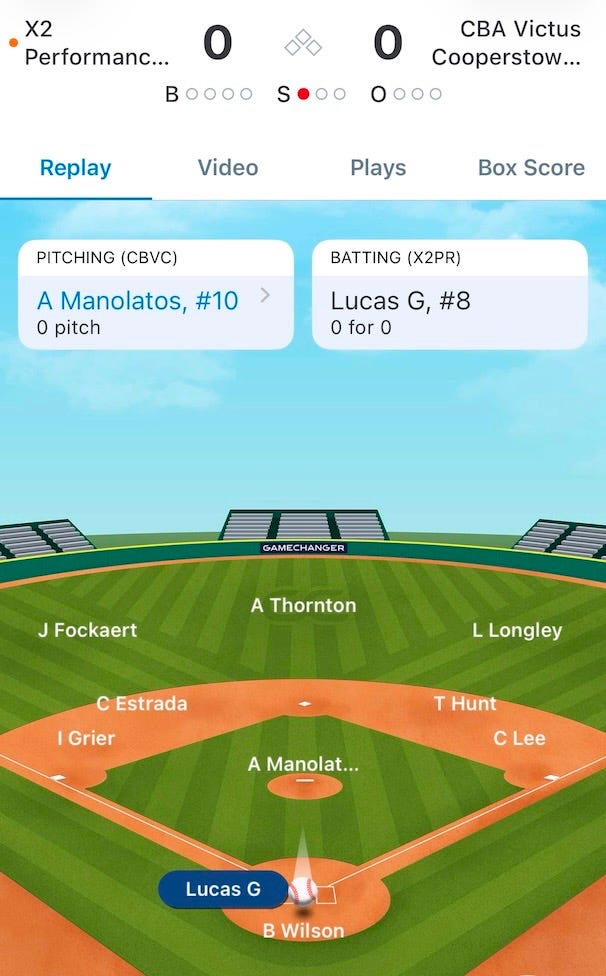
Elizabeth wasn’t with me when a dad I was seated next to showed me his phone. I wasn’t sure what I was looking at other than the GameChanger play-by-play screen. So he quietly pointed out that the parent keeping score had just given my kid an error. The problem was my son wasn’t playing that inning.
I hesitated. I asked myself, was it worth saying something? Then I pictured Alex reviewing the box score that night and asking me why he was credited with an error he didn’t commit.
I walked over to the scorekeeper, who was huddled up with a couple other parents. I hesitated again because it seemed like they were trying to sort some things out on the phone one of the parents was using to score that game.
“Hey,” I politely said, sounding like I would if I had a question for a new boss. “Alex was marked with an error, but he wasn’t on the field.”
Before I could finish, the response came back with the irritation I worried my question might cause. And I get it. Keeping score is a thankless job. It can be stressful, and not just because the action on the field moves fast at times. We’ve all heard the grumpy complaints in the stands, and the passive-aggressive whispers.
I walked away, and I apologized later, noting I normally let situations like that slide because it’s not a big deal, and because the intent isn’t negative. Some parents don’t see it that way. They will tell you some kids never get calls other kids get on GameChanger. While I’m sure there’s some truth to that on some teams, I’d argue most parents are not trying to screw over anyone’s kid on game day.
Either way, the fact remains that the app is not universally loved, but it is universally used. I can’t recall a Little League or travel ball game the last few years where I have not seen GameChanger being used, and some organizations are moving to it as the official record, replacing the book used for decades to score games.
GameChanger’s app allows teams to designate up to four people as staff, and those folks have access to stats and they score your games. Staff members also have the ability to go into the app anytime after a game and edit box scores. The game can move quickly. Mistakes happen. If something was recorded incorrectly, it can be fixed to reflect what actually happened.
When I managed Little League, I used GameChanger to help jog my memory and that meant I needed it to be accurate. So every night after a game I would log onto the app, and if something wasn’t correct, I’d fix it. That meant when I would go into the app in a day or two to set my lineup for the next game, I was looking at accurate information.
I’ve written about the benefits of the app, including its magical ability to keep grandparents connected to the action from three time zones away. A lot of young ballplayers love it, even if some of them use it too often to compare themselves to teammates. The streaming feature and the video clips are treasures.
So how do we close the credibility gap to get everyone on the same page about what GameChanger is and isn’t, so there’s less criticism and fewer hard feelings? It’s not like the technology is going away. If anything, we should expect to see enhancements and new uses that will make the service even more ubiquitous.
GameChanger, owned by DICK’S Sporting Goods, is keenly aware of the issues and it’s why it has developed what it calls GameChanger University. That online platform offers free videos and tutorials for anyone wishing to advance their scorekeeping skills. I think it’s a fantastic idea, but I’m not sure how many parents and coaches use that service. I’m also not sure that education alone erases most of the sticky situations that arise on tournament weekends.
My gut tells me this is more about culture and community than sharp scorekeeping.
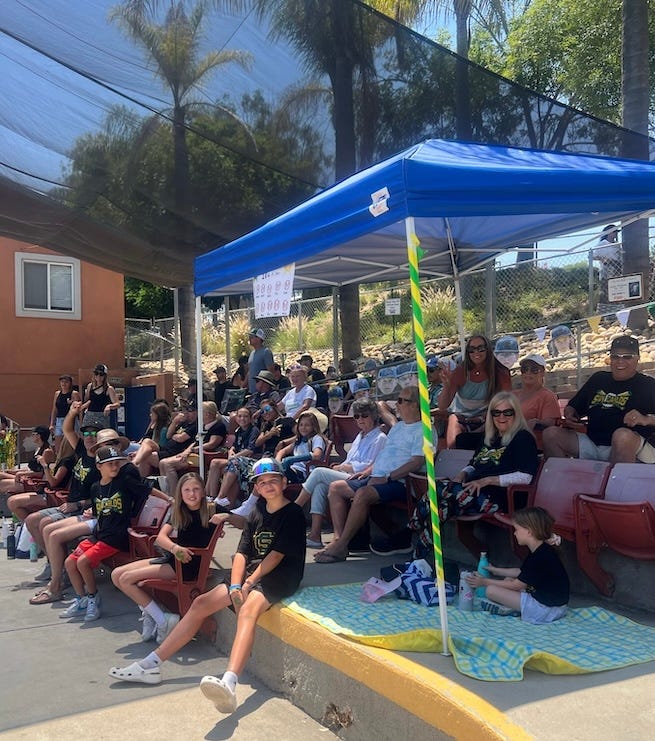
If we want more acceptance of the app, and fewer sticky situations, we need to change how we think about it. I think that starts at the top.
I think league directors and coaches should set the tone at the beginning of each season — letting parents and players know the app is in play, what it’s used for, why it’s a trusted source but not the only source, and how to handle conflicts when they arise. Very often, at least in the years I’ve been around the game, all of that is left unsaid.
It also would help if more coaches set expectations and established guardrails with parents keeping score. Without that, you get different approaches by different parents. One mom I know used to brag about how hard of a scorekeeper she was, and her husband did too. “She’s harder on the boys than their coaches,” he would say. I didn’t say anything because it wasn’t my place, but I wanted to tell them to lighten up.
There are coaches who don’t rely on GameChanger because they have their own system for tracking performance. Some of them acknowledge they don’t look at stats. Others track quality at-bats from the dugout. A batter who dribbles a grounder to the pitcher on the first pitch is given a single star or no stars, for example. The kid who forces a pitcher to throw nine pitches with runners in scoring position is awarded multiple stars, regardless of the outcome. I’m not sure if GameChanger is developing a way to track quality at-bats, but there’s nothing preventing coaches from blending their system with the ones parents and players use.
A few years ago, Alex was batting lead-off and he started a game with a 12-pitch at-bat that ended with a single into shallow right center. I was coaching first base that day. When Alex rounded the bag, the pitcher started crying. He was replaced moments later.
None of that made the box score, but it didn’t need to. Kids from around the park approached the field during that game and afterward. “Did Alex really start the game with a 12-pitch at-bat?” they asked.
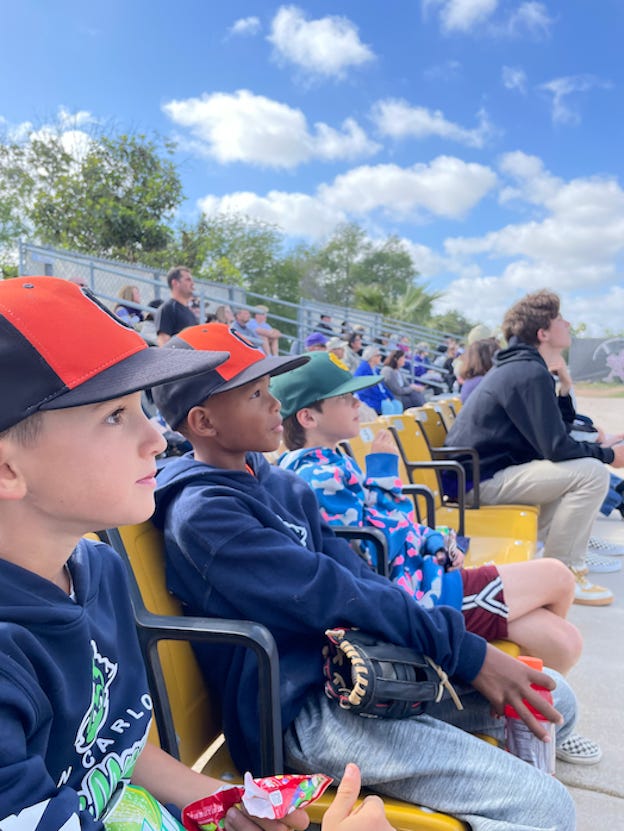
A healthier relationship with GameChanger would mean less tension and fewer hard feelings.
Trust me when I tell you that the kids out there pick up on just about everything happening a few feet from them.
The adults in the stands shape more of the experience on the field than we realize. Allowing a streaming app to complicate that doesn’t do the kids any favors, even if that error was marked incorrectly.
How I Help Parents and Players
I coach players and parents to help kids play loose, with confidence and joy. The game gets harder, and our relationships suffer, when we add pressure.
If you’ve gotten the car ride home wrong, caught yourself coaching from the stands, or gotten caught up in the comparison trap, you’re not alone. None of us want to get these moments wrong. The good news: it’s fixable, and it starts with two short guides you can use before your kid’s next game.
Grab your parent playbooks — $20
Already a paid annual subscriber? Playbooks are included with your subscription.
Is your kid in a slump, freezing in big moments, talking about quitting, or playing small because of nerves and pressure? Tell me what’s going on.
Email me your issue and I’ll get back to you within 24 hours — $50
A lot of players and parents benefit from coaching. For players: it’s confidence — nerves, pressure, bouncing back. For parents: it’s the moments — what to say, what not to say, when to get out of the way.
Book a 1:1 Tony Talk for you or your ballplayer — $150/45 minutes.
About Baseball Dad & PR Guy
Baseball Dad & PR Guy is a weekly newsletter about youth sports culture and how parents and coaches shape the experience for young athletes.
Subscribers get my free Car Ride Home Playbook — what to say, and what to leave unsaid on the ride home.
My essays are built around the 5 Moments That Shape Young Ballplayers, from the nerves before a game to the car ride home.
From the stands, I write about those moments and what they mean for confidence, identity, and a kid’s love of the game.
Read more about the 5 Moments and why they matter.
⚾ Follow me on Instagram: @tonymanolatos. I drop new reels weekly that make my wife and kids cringe. They’re built for parents, players, and coaches. Some have taken off. One has more than 300k views.
⚾ A community for parents: Travel Baseball Moms & Dads (Facebook)
⚾ Follow along: Tony Manolatos – Baseball Dad & PR Guy (Facebook)
More at tonymanolatos.com
I feel like the PR Guy has been leading the way on some of these Baseball Dad topics lately, lol. It’s been impressive and fun to read.
It's been some time since I coached, but my Gamechanger experience is that the scorekeeper needs to be very careful with all the special rules of youth baseball. Continuous batting orders, extra hitters, free substitution in the field, special runners, etc., can be hard to enter. I had a box score once that had a kid shown in three spots in the batting order. Hopefully that's been improved.