


Author’s note: This essay is adapted from my upcoming book, The Magic and the Mess of Youth Baseball: And What the Game Taught One Dad About Letting Go.
“I don’t want to play,” I told my dad in the garage that night, before he could get inside the house.
My best friend, Randy, lived two doors down. His flag football team, the Dolphins, had broken up, so he was available in the draft that year. Coaches could keep five or six players from the previous season and draft the rest. My dad tried to draft Randy, but the coach of the Bears, Mr. Dolata, got him first.
I was crushed.
“Don’t worry,” my dad said. “I’m going to try to work out a trade.”
And he did. My dad traded a big kid he’d selected in the first round, who turned out to be a terrific football player, to get Randy.
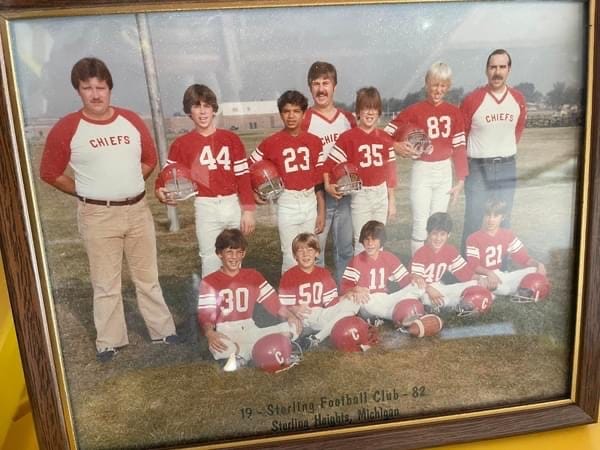
I played flag football when I was a kid, forty-some years ago, and some of those memories are so vivid it’s like they happened yesterday. That night in the garage is one of them. I remember the other teams in our league: the Raiders, the Bears, the Colts. I remember which teams my friends played for, and even some of their coaches.
That's the power of youth sports. The memories we carry, including those shaped by the adults around us, can last a lifetime. When we remember that, we keep the focus where it belongs: on the kids.
My dad was our coach. We were always the Chiefs, every season, maybe because my Italian mother’s family was from Kansas City. The Colts were our main rival. They were good. So were we.
Their coach was Gary Peck. I remember his name because my dad would joke around the house that we had to beat Peck Head. He thought that was hilarious.
My dad was harder on me than the other boys. He expected more from me, just as I would expect more from Alex decades later on the football field and on the baseball diamond. My dad loved to compete. But he also knew how important my friends were to me, and he never lost sight of the fact that this was a kid’s game.
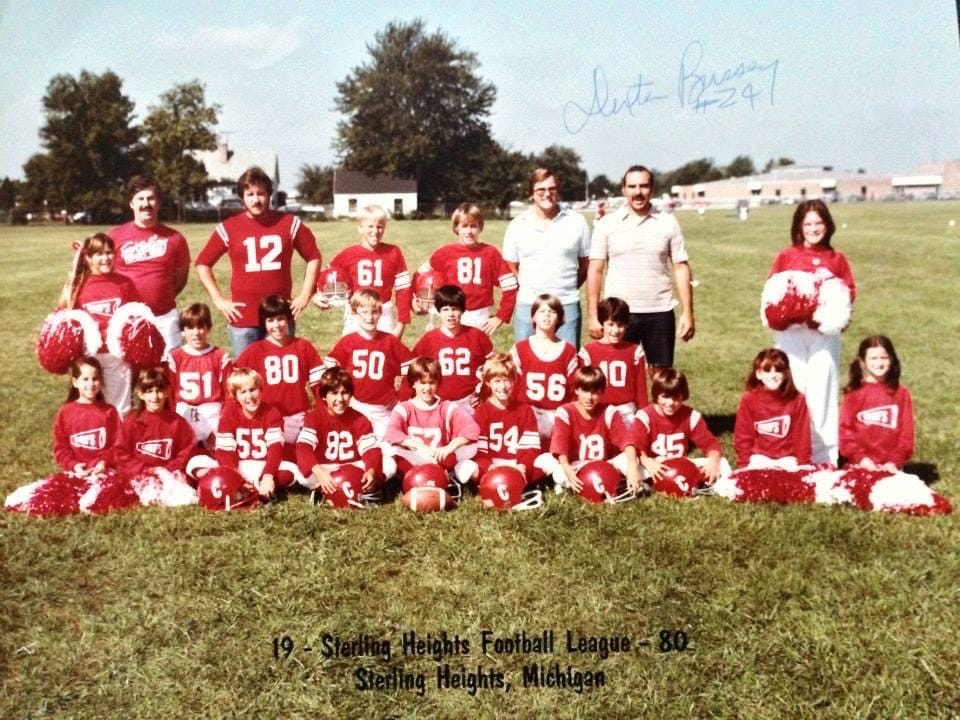
We had some ballplayers on those Chiefs teams. Randy was a year older, so he was stronger and faster. He moved effortlessly too, like God had built a young athlete. Our quarterback was Chris, and he was the best player in our league. He was gifted too. He also was driven, never one to go through the motions. My dad and Chris’s dad, both Greeks, bonded quickly.
Chris went on to become a star quarterback at our neighborhood high school, one of those big public high schools in suburban Detroit, but baseball was his future. The Dodgers drafted him, and he spent ten years in the minor leagues without reaching the majors. More recently, he’s managed the Greek national baseball team. Randy became a top basketball player at the same high school.
My family moved farther north when I was twelve, and I ended up at a Catholic high school, where I had a decent enough football season my senior year to draw some recruiting interest from a handful of smaller colleges. I lost touch with my friends from the Chiefs. Facebook didn’t exist back then. My dad kept up with Randy, Chris and some of the others through what my parents heard from other parents and what he read in The Detroit News.
We beat the Colts. My dad beat Peck Head.
When I think back to those Chiefs teams, what I remember most are the moments. The practices, the car rides, the chilly mornings, my dad’s face. I can see him in our garage, telling me not to worry. Nearly fifty years later, that’s still with me.
How I Help Parents and Players
I launched this newsletter more than a year ago because I wanted to help other parents and I’ve always enjoyed writing. Coach Jay Fejeran of SD CAP Hitting, who trains my son and dozens of other ballplayers, told me what I was really doing was coaching. “You’re coaching parents, players, and coaches,” he said. “And this stuff is important. We don’t spend enough time on it.”
So I leaned in. I started coaching players and parents to help kids play loose, with confidence and joy.
If you’ve gotten the car ride home wrong, caught yourself coaching from the stands, or gotten caught up in the comparison trap, you’re not alone. None of us want to get these moments wrong. The game gets harder, and our relationships suffer, when we add pressure. The good news: it’s fixable, all of it, and it starts with two short guides you can use before your kid’s next game.
Grab your parent playbooks — $20
Already a paid annual subscriber? Playbooks are included with your subscription.
Is your kid in a slump, freezing in big moments, talking about quitting, or playing small because of nerves and pressure? Tell me what’s going on.
Email me your issue and I’ll get back to you within 24 hours — $50
A lot of players and parents benefit from coaching. For players: it’s confidence — nerves, pressure, bouncing back. For parents: it’s the moments — what to say, what not to say, when to get out of the way.
Book a 1:1 Tony Talk for you or your ballplayer — $150/45 minutes.
About Baseball Dad & PR Guy
Baseball Dad & PR Guy is a weekly newsletter about youth sports culture and how parents and coaches shape the experience for young athletes.
Subscribers get my free Car Ride Home Playbook — what to say, and what to leave unsaid on the ride home.
My essays are built around the 5 Moments That Shape Young Ballplayers, from the nerves before a game to the car ride home.
From the stands, I write about those moments and what they mean for confidence, identity, and a kid’s love of the game.
Read more about the 5 Moments and why they matter.
⚾ Follow me on Instagram: @tonymanolatos. I drop new reels weekly that make my wife and kids cringe. They’re built for parents, players, and coaches. Some have taken off. One has more than 300k views.
⚾ A community for parents: Travel Baseball Moms & Dads (Facebook)
⚾ Follow along: Tony Manolatos – Baseball Dad & PR Guy (Facebook)
More at tonymanolatos.com