


I’ve been called a Daddy Ball coach more than once.
That part never surprised me. If you coach your own kid long enough, someone’s going to say it.
If he plays a lot, you’re favoring him.
If he succeeds, it’s because you help him.
If he struggles, it’s because you’re too hard on him.
Some will say you promote him too much.
That’s all part of the deal.
I can handle the criticism. I expect it. I have a harder time when it lands on him. What I wasn’t prepared for was seeing him wrestle with some of it.
If you’ve ever come home from a game thinking, “I made that worse” or “I’m not sure how to help him”—I put something together for you. I’ll send it to you when you subscribe. ↓

Coaching your own kid is complicated. You’re trying to build a team, develop players, and protect a relationship — all at the same time on a very public stage. You’re going to get some of it wrong. I did.
Youth sports has given our family more than it has ever taken. Alex’s best friends are usually teammates. Nicky has made good friends through the seasons, too. We’ve met coaches and trainers who treat our kids like family, and some of our closest friendships were created in lawn chairs, on sidelines, and in dugouts.
But youth sports also comes with opinions, and not all of them stay in the stands. There are conversations you don’t hear but become aware of. There also are direct shots at your coaching and character. A few critical voices can stir up drama and take some of the joy out of a season.
Most of it rolls off. Until you notice it affecting your son.
That’s when things change. That’s when you realize the perception isn’t just about you. It’s about him—and how it makes him feel, when all he should be worried about is competing and having fun.
“Daddy Ball” is an easy label to throw around.
Harder to carry when you’re the kid whose dad is in charge.
Last year in Little League, a mom questioned my decision to give Alex a game ball. Every player on my team received one game ball—no more, no less.
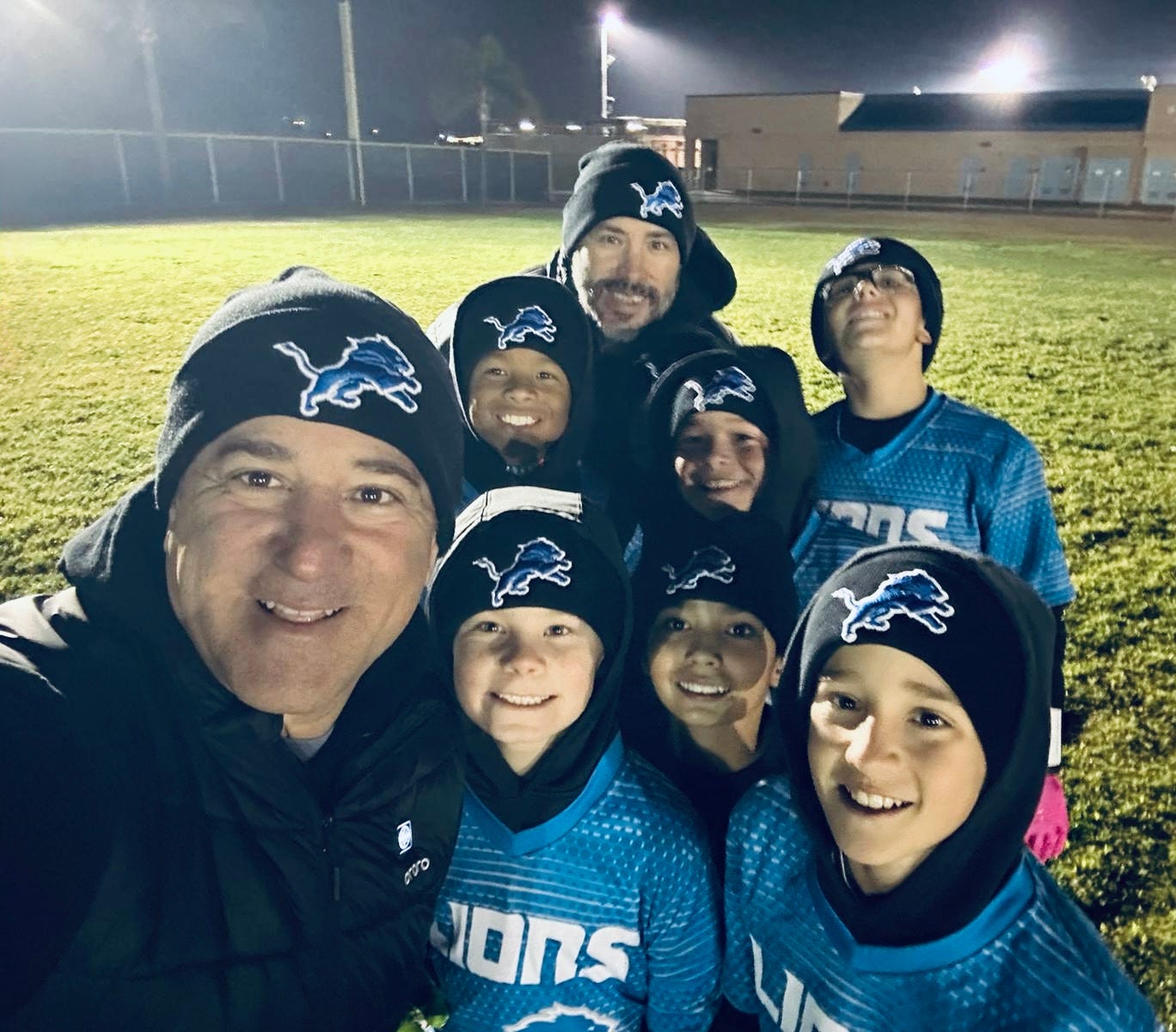
Two years ago, a dad from our flag football team sent a string of angry late-night texts after a playoff game about his son not playing quarterback and my son playing too many offensive snaps. He would later apologize.
Last year, the boys who played flag for me were a couple plays away from winning it all—but our season started on a very different note. A family new to flag football quit after opening night, convinced their son deserved more offensive snaps and Alex deserved less. Their son had told me he didn’t want to play offense because it was overwhelming. So he played every defensive snap and only a handful on offense. We would slowly work him into the offensive, I told him.
Even when you’re doing the right thing, not everyone sees it that way. And when you coach kids, you’re also managing parents. Most are supportive. A few are not.
Alex was aware of the noise. He didn’t let much of it bother him, but some of it did, and that’s when I struggled too. I felt bad for him. I wanted to protect him. I just didn’t always know how to shield him. I was honest with him, open, and reassuring. That seemed to help.
Then there were the times I hurt him myself. I felt bad about that too, but it was easier to deal with. At least that part was on me.
One evening, on our way home following a long practice, he told me he was upset because I was harder on him than I was on everyone else.
He wasn’t wrong.
I did expect more from him. I expected him to set the tone. To hustle. To handle coaching without pouting. To make his plays and act like a leader.
I wasn’t hard on him because he’s my son. I was hard on him because I believed he could handle it.
But that belief can blur into over-coaching if you’re not careful.
There were moments I held him back more than I should have. I told myself it was for the good of the team and the development of other players. Some of it was. The rest was optics.
Then there was Little League Opening Day last season.
I made the decision not to start Alex on the mound.
He was our best pitcher. He knew it. I knew it. Our coaches and players knew it. But I also knew how it would look. So I told him I wanted to avoid the Daddy Ball perception right out of the gate and that he’d start Game 2. He didn’t love it, but he understood.
The night before Opening Day, our scheduled starter said his arm was sore. His dad — one of my assistant coaches — suggested we rest him and start Alex.
So that’s what we did.
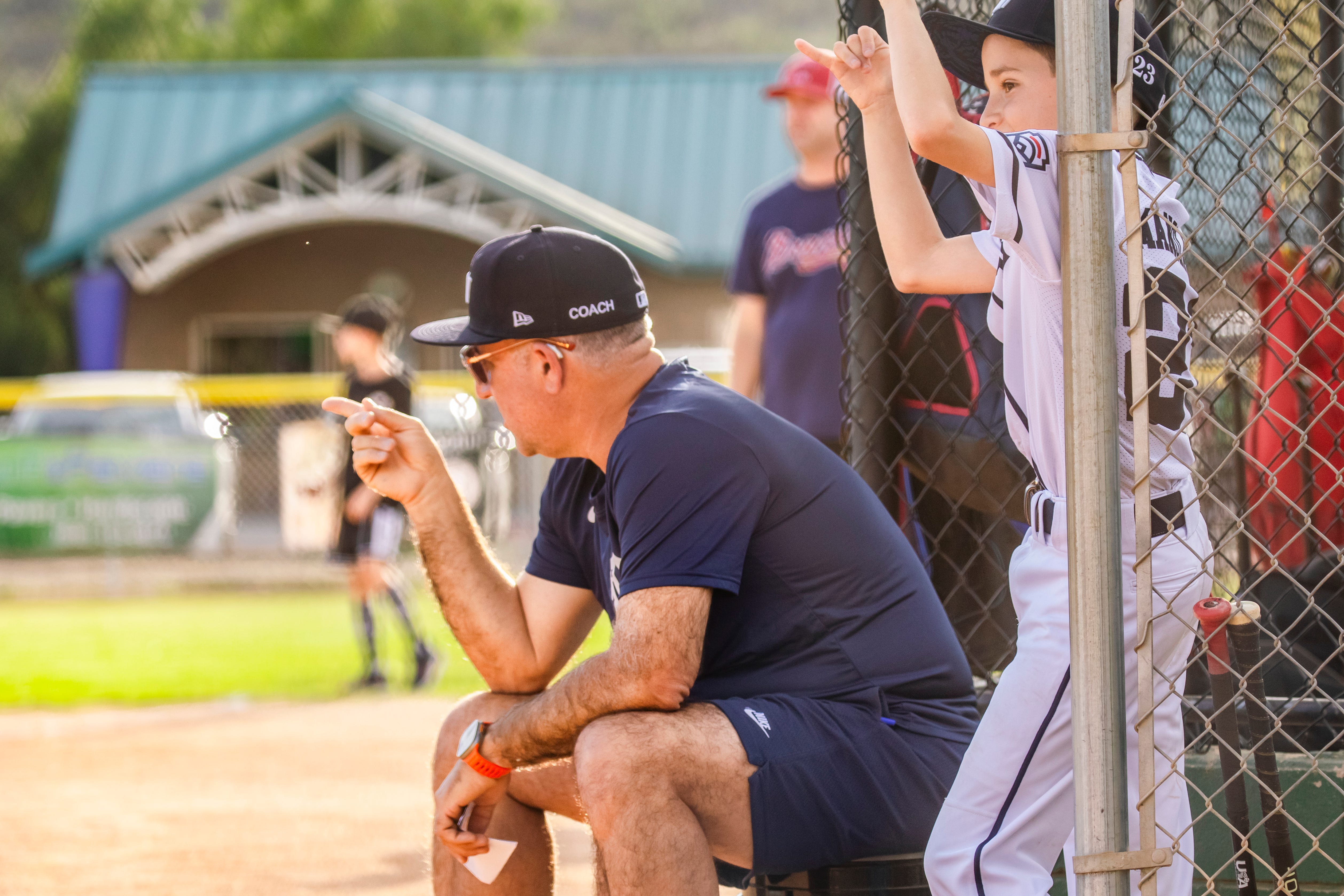
Alex pitched three innings, struck out five batters, and we won.
When it was over, it felt like that’s how Opening Day was supposed to unfold. And I realized something uncomfortable: I had been more focused on managing optics than managing the team.
Even then, perception didn’t disappear. In the last inning, when I walked to the mound to make another pitching change, Elizabeth heard someone in the stands sarcastically wonder whether I was going to put my son back in.
It confirmed what I already knew. The narrative would always be there, regardless of how Alex performed.
My job wasn’t to eliminate it. My job was to lead the team — and to protect my relationship with my son.
I wouldn’t change much — except the moments when I managed perception more than the team. I told myself I was protecting fairness and setting the right tone. What I didn’t see clearly enough was that Alex was paying a price for those decisions.
That’s the paradox of coaching your own kid.
You’re there because he asked you to be. You’re trying to lead a young team, manage adults, and do right by every kid in the dugout or on the sidelines. But somewhere in that balancing act, it’s easy to forget your son doesn’t just hear you as a coach. He hears you as his dad.
And he hears everything else too. The second guesses. The comments in the stands. The assumptions about who earned what.
He didn’t ask to carry any of that. He just asked me to coach him.
That’s why the noise isn’t the hardest part.
The real work is making sure my expectations — and the pressure that comes with being the coach’s kid — never become his burden.
###
Go Deeper
Some of you are dealing with issues that keep you up at night: Your kid can’t recover after an error. He doesn’t like his coach. He’s constantly checking GameChanger and comparing himself to his teammates. He wants to quit.
That’s what my one-on-one coaching sessions are for.
Visit my Stan Store to book a coaching session, email questions, order playbooks, or inquire about speaking.
About Baseball Dad & PR Guy
Baseball Dad & PR Guy is a weekly newsletter about youth sports culture and how parents shape the experience for young athletes.
It’s built around the 5 Moments That Shape Young Ballplayers, from the nerves before a game to the car ride home.
From the stands, I write about those moments and what they mean for confidence, identity, and a kid’s love of the game.
Read more about the 5 Moments and why they matter.
⚾ Join our growing community of parents helping parents: Travel Baseball Moms & Dads on Facebook.
More at tonymanolatos.com