


Author’s note: these weekly newsletters, and your feedback, have turned into the basis of a book I recently completed.
‘DO SOMETHING COOL, ALEX!’ is the story of a PR guy who’s gone toe-to-toe with the Chargers when they lobbied to leave San Diego — and still got outmaneuvered by a Little League board. It’s a prescriptive memoir that explores Daddy Ball, the Travel Ball grind, the road to Cooperstown, and what I call The Five Moments that Shape Young Ballplayers, written by someone who’s made most of the mistakes he now writes about.
The manuscript’s finished, and I’ve started querying literary agents.
More soon. Thank you for reading.
My friend told me he was going to say something he knew I wouldn’t like hearing.
Then he told me Alex shouldn’t pitch ten months out of the year.
Maybe I surprised him, but I agreed. Why wouldn’t I? I was talking to Brian Sackinsky, a guy who pitched in the College World Series and the big leagues, and who now coaches at a high school where his son was named Freshman Pitcher of the Year last season.
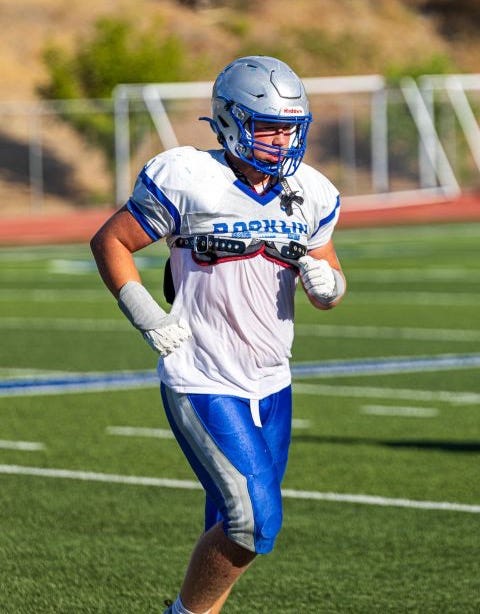
His kid is twice Alex’s size, and he only pitches four months out of twelve. This past summer, while his dad was coaching a travel team, Brian’s son focused entirely on friends, getting stronger, and getting ready for the start of the JV football season.
I met Brian earlier this year in a virtual session for baseball parents I hosted, one GameChanger had promoted on social media. Brian saw it, signed up, and messaged me on LinkedIn to say he loved what I was doing.
I used a slide deck and some handouts to guide us that evening, and the discussion couldn’t have gone better. We all quickly realized we’re dealing with the same issues, and so are our kids. As a former professional pitcher for eight seasons and a dad to five athletes, Brian brought a rare perspective to the session. At times, I sat back and simply tried to take in all of what he was saying, and I caught myself doing the same thing on the phone with him the other day.
Brian had called me to check in on Alex and the shoulder injury he sustained while pitching in Cooperstown. What he told me wasn’t something I was hearing for the first time. My wife, Elizabeth, has been saying the same thing for a while, as do a lot of baseball minds I trust: a lot of kids are playing too much baseball.
The Warm-Weather Trap & the Conflicts the System Creates for Parents, Players, and Coaches
The modern youth sports ecosystem is designed to push players and squeeze their parents. There’s always another private lesson, another mandatory practice, another $300 tournament weekend. This is especially true here in sunny Southern California, the undisputed national epicenter for travel baseball. In SoCal, baseball isn’t a pastime; it’s a year-round, multi-million-dollar business that serves as the primary financial engine for the booming youth athletics market.
The upside of this pressure cooker shows up on Division 1 rosters, at the Little League World Series, and on the pristine fields of Dreams Park and All Star Village every summer in upstate New York. This past summer, my son’s travel team made an extraordinary run in Cooperstown, finishing 5th out of 104 teams at Dreams Park. It was an unforgettable milestone, but the geographic breakdown of the top five says everything about where the power lies: Arizona, Hawaii, Florida, Texas, and us here in San Diego.
The Sun Belt system produces elite results, but the structural costs are eye-opening. What used to be a community-run volunteer tradition has morphed into a massive $40 billion commercial machine, according to data from Stax consulting and U.S. Congressional hearings on the industry held this summer that specifically examined private equity's growing role in driving up costs for families. A nationwide study by the Aspen Institute’s Project Play initiative revealed that parent spending on youth athletics has soared 46% since 2019, with the average family now paying $1,016 annually per child. As a travel baseball parent, I can only look at that figure and wish that was all it cost my family.
I’ve written before about the upsides, and there are many. I believe this game is beautiful, magical at times, and you cannot measure the depth of the life lessons it teaches. But the costs can’t be ignored.
And the real toll isn’t just a drain on bank accounts and family time. The machine pushes young athletes toward early specialization, triggering an epidemic of burnout and overuse injuries. It sets up a simmering running tension between parents, players, and coaches. The system is fundamentally designed to penalize the very thing our own parents preached to us: everything in moderation. Not in travel baseball. Excellent coaches — men you trust, men who are genuinely developing your kid — will drop him or her the second you decide to give your kid a healthy, necessary off-season and stop paying your monthly club dues. It leaves us parents trapped in a dilemma: How do we do right by our kid’s health and adolescence, while also doing what all parents are hardwired to do: lean in, sacrifice, and fiercely support them when they find something they love?
My friend Brian didn’t argue when his son picked football over travel ball. He knew the break would bring him back to the diamond hungry instead of dreading it.
He does add a caveat: he’s not saying young ballplayers should stop swinging a bat for long stretches. Hitting is about timing and rhythm, and it doesn’t cause the violent repetitive stress on the body that pitching does.
Some veteran coaches see value in long breaks. Manny Gagliano, Alex’s former travel coach, would send parents and coaches an email every December telling us to shut our kids down for at least two months, especially young pitchers. This summer he told his own son not to pick up a bat or a ball for a while. His son was the starting third baseman at Patrick Henry High School, which had just won the prestigious 2026 CIF San Diego Section Open Division championship. When that long championship season ended in late May, Manny told his son to take a break for a few months before junior college ball begins.
Redefining ‘The Grind’
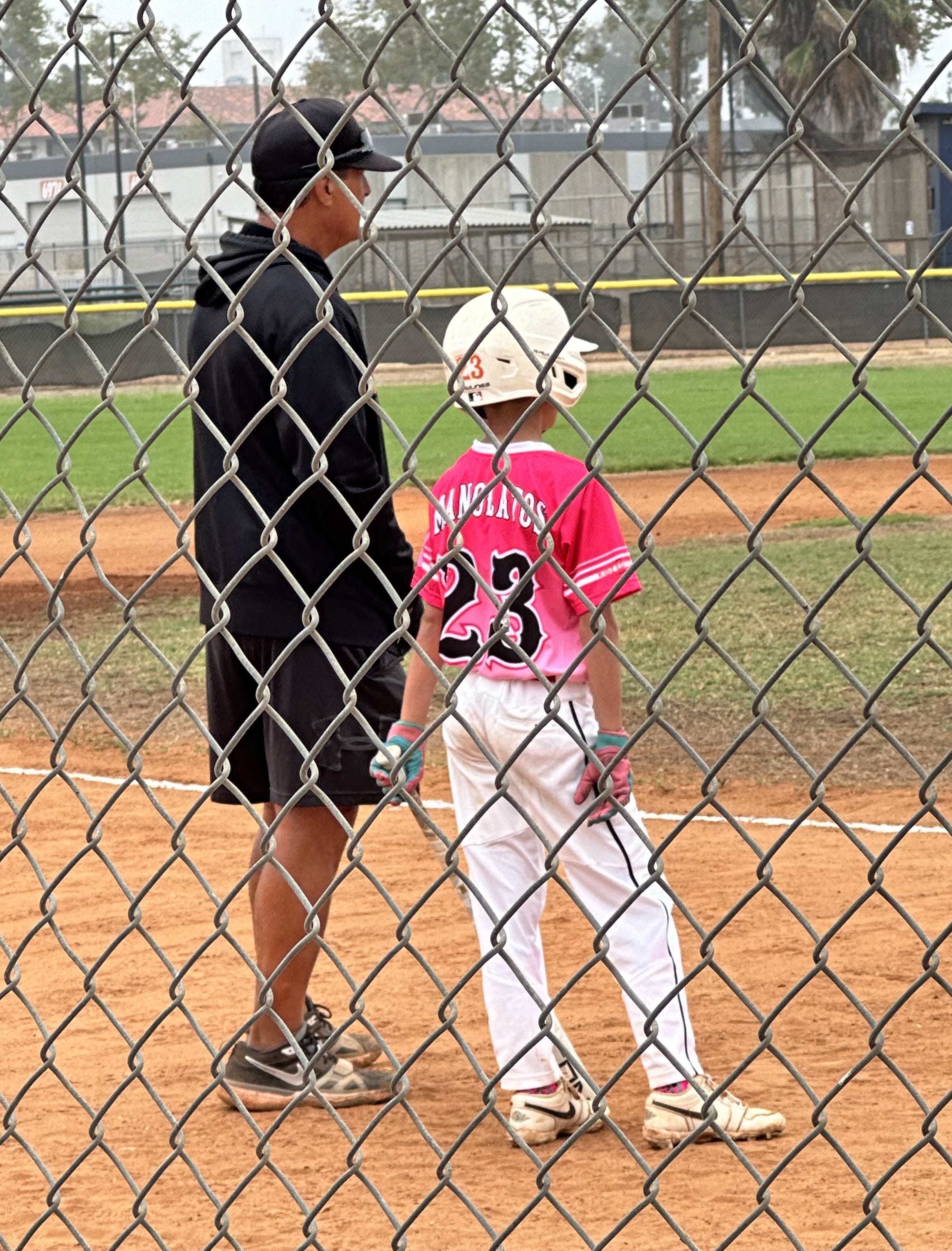
When Alex comes in from ground ball or tee work in our backyard, or from working out in our garage, he likes to say to anyone listening: “The grind never stops.”
The kid puts in the work. It’s been a rough summer for him, dealing with a Little League Shoulder diagnosis, but when he’s healthy he practices with his team twice a week. He takes a competitive group hitting session weekly with his hitting coach. He throws bullpens with his pitching coach or me every few weeks. He lifts weights in our garage a couple times a week. He fires up my laptop or his iPad at the breakfast bar in out kitchen to study videos of major league pitchers and hitters he likes — guys like Jacob Misiorowski, Mike Trout, and Fernando Tatis — to pick up their tendencies. He does all of that on top of band work, playing catch with me, hitting buckets of balls off his tee into a net in our backyard, and fielding ground balls I roll, bounce, and hit to him. When I’m not around to do that, he throws those same balls against the side of our house to get his glove work in.
I love that drive. But I’ve also come to realize that the healthiest routines, the ones that lead to long-term success, include real, structured downtime.
I’m reminded of this every morning when the wearable on my wrist signals my phone to tell me that if I could just get a little more sleep, I would recover more completely. That tracking data is for my eyes only — it shows me the capacity I need to lift heavy kettlebells four times a week in my garage.
But for our kids, a lot of data isn’t private. Nearly everything young ballplayers do nowadays is measured, tracked, ranked, and blasted on social media. Veteran coaches are rightly worried about the data deluge. It used to be just radar guns. Today, technology measures spray charts, arm path, hip-shoulder separation, and much more. The result is a culture where kids constantly feel judged, evaluated, and unable to turn it off. It’s not just when they see the lineup card or are sent to the outfield every time they attend practice. Those moments are among many that can create doubt and a fear of failure, the very emotions coaches and parents do not want kids to carry into games.
Stepping off the rubber, Brian told me, rests the mind as much as the body.
53 Weeks Away
Jason Botts, a former big-leaguer who writes the Substack Have Bat Will Travel, has seen the power of stepping away firsthand.
In August 2026, Jason wrote about his fourteen-year-old son, Lenox, who went 53 weeks without playing in a single game. At thirteen, Lenox mostly played corner outfield when he wasn’t pitching. He made enough mistakes out there that he stopped believing he could play a premium position. In Jason’s words, he “didn’t think of himself as an infielder.”
But Jason noticed his son’s natural athleticism. Lenox is long and lean, more bounce than anchor. Jason believed he had the tools to play shortstop. He didn’t set out to give his son a full year off, but a family move to San Diego meant most travel teams were already full.
So, father and son trained almost daily for a year — cages, defensive reps, and the weight room. Lenox logged long stretches at shortstop with nobody watching besides his dad, and — more importantly — nobody evaluating the results. Zero feedback from coaches, teammates, and umpires.
Lenox grew five inches during that stretch. Away from the pressure, he built an internal confidence that his dad felt would show up when the workouts turned into weekend tournaments.
When he finally joined a San Diego travel team, Lenox played shortstop every single inning he wasn’t on the mound during his first tournament with his new team. Outside of an inning or two when he was younger, he had never played shortstop before in a game.
He held it down.
“He has now caught up to his peers, and performed defensively that weekend in a beautifully present, consistent, and occasionally flashy manner,” Jason wrote.
A few weeks ago, Lenox played in his second tournament with his new team and did so well that Jason said he felt he needed to try and manage his son’s newfound expectations after 5 games of the best baseball he’d seen him play. So the father told his son how proud he was, told him the hard work was clearly paying off, and then he told him, “Just remember, you’re not really this good.”
Development Over Exposure
Isn’t that the ultimate goal? To help kids earn those big moments because they put in the work? When you hear baseball purists say “development over exposure,” this is what they mean.
Development often happens when no one is watching. Exposure includes the expensive showcases hosted by big industry brands that some parents feel obligated to chase whether their kid is ready or not.
Theoretically, the idea is simple: fewer games and more development builds better ballplayers. Sounds easy, right? Easy in a vacuum, but not in the competitive travel baseball environment where patience never seems to have a spot in the lineup.
Bad coaches prioritize winning over development and disguise it as competitiveness. Good coaches develop talent that sticks around. They also use sports to teach life lessons, and the best ones help parents navigate the unknowns. I’ve often called Alex’s coaches to ask if we should accept an invite to a showcase or related event. “In 8th grade he needs to start doing some of that stuff,” his travel coach told me last season when Alex was in 7th grade.
The travel ball community will lift you up and push you as fast as you’ll let it. It’s easy for families to get caught up in chasing what the kid down the street is doing, or for a young player to look at his Perfect Game profile and feel defeated.
When that happens, step back. Get away from the game. Young ballplayers benefit too when they connect with the game without the performance anxiety. This includes helping a trainer, coaching younger kids, or working as a scorekeeper or umpire. That work advances a kid’s baseball IQ, and it builds character. It also gives them a break, and sometimes that’s all any of us need.
Even elite athletes build in rest, because recovery doesn’t just restore what’s been lost. It prepares you for what’s next.
The grind is easier with rest. Without rest, the grind turns into burnout.
Go Deeper
I coach players and parents to help kids play loose, with confidence and joy. The game gets harder, and our relationships suffer, when we add pressure.
If you’ve gotten the car ride home wrong, caught yourself coaching from the stands, or gotten caught up in the comparison trap, you’re not alone. None of us want to get these moments wrong. The good news: it’s fixable, and it starts with two short guides you can use before your kid’s next game.
Grab your parent playbooks — $20
Want something more specific worked through — your kid, your situation? I do that too.
Email me your issue and I’ll get back to you within 24 hours — $50
Book a coaching session aka Tony Talks, for you or your kid — $150/45 minutes
Lastly, every week I drop new reels on Instagram: @tonymanolatos. Some are related to my essays. Some aren’t. It’s a place for parents to connect with me and each other, to share stories that are funny or moving, do’s and don’ts, and more.
About Baseball Dad & PR Guy
Baseball Dad & PR Guy is a weekly newsletter about youth sports culture and how parents and coaches shape the experience for young athletes.
Subscribers also get what I use after games — the Car Ride Home Playbook — what to say, and what to leave unsaid on the ride home.
My essays are built around the 5 Moments That Shape Young Ballplayers, from the nerves before a game to the car ride home.
From the stands, I write about those moments and what they mean for confidence, identity, and a kid’s love of the game.
Read more about the 5 Moments and why they matter.
⚾ A community for parents: Travel Baseball Moms & Dads (Facebook)
⚾ Follow along: Tony Manolatos – Baseball Dad & PR Guy (Facebook)
More at tonymanolatos.com
No offense, but today's parents and their drive to push their kids in sports, is what causes kids to burn out. To a kid who loves a sport, you take what used to be fun and now, make it a job, not realizing that 1 maybe 2% of kids in sports make it to the bigs. As a former athlete, in a much different time, I used to coach youth baseball and quit because some parents were pushing their kids so hard, it took the fun out of the game. No wonder kids burn out and hate a sport they used to love.
Great piece. definitely an industry that's hard to work through even though there's very strong voices working to educate and try to damper the anxiety so many still get caught up within it and so do our kids.