


A quick note before we get into it: I normally publish on Sundays, but this story out of Tulsa is moving too fast to sit on. It's a bit different from what you usually get here, but it's about exactly the kind of adult behavior this newsletter exists to examine. Let me know what you think. Thanks for reading. —Tony
Tuesday night, on the way to practice, Alex asked me what was going on with that Little League team from Tulsa that was disqualified. I’d seen the headlines, but I hadn’t actually read the stories. So I told him to Google it and read to me, because my hands were on the wheel.
He read. I drove. Neither of us had the whole story straight by the time we parked 20 minutes later. But we had the same reaction. Shocked. Not surprised. I wanted to know more. So did Alex.
I’ll get into what I’ve learned, but before I do it’s worth pointing out that the rapidly unfolding story tearing apart the youth baseball community in Tulsa, Oklahoma is the latest in a long line of stories about parents harming a kid’s game. This one does feel different because of all the wild details that are likely just the tip of the iceberg. I’m not sure yet what bothers me the most, but it’s probably along these lines:
The parents and coaches gaming the system
The administrators who were either duped, part of the crooked behavior, or looked the other way
The folks at the top of Little League International, and what their own words in court revealed
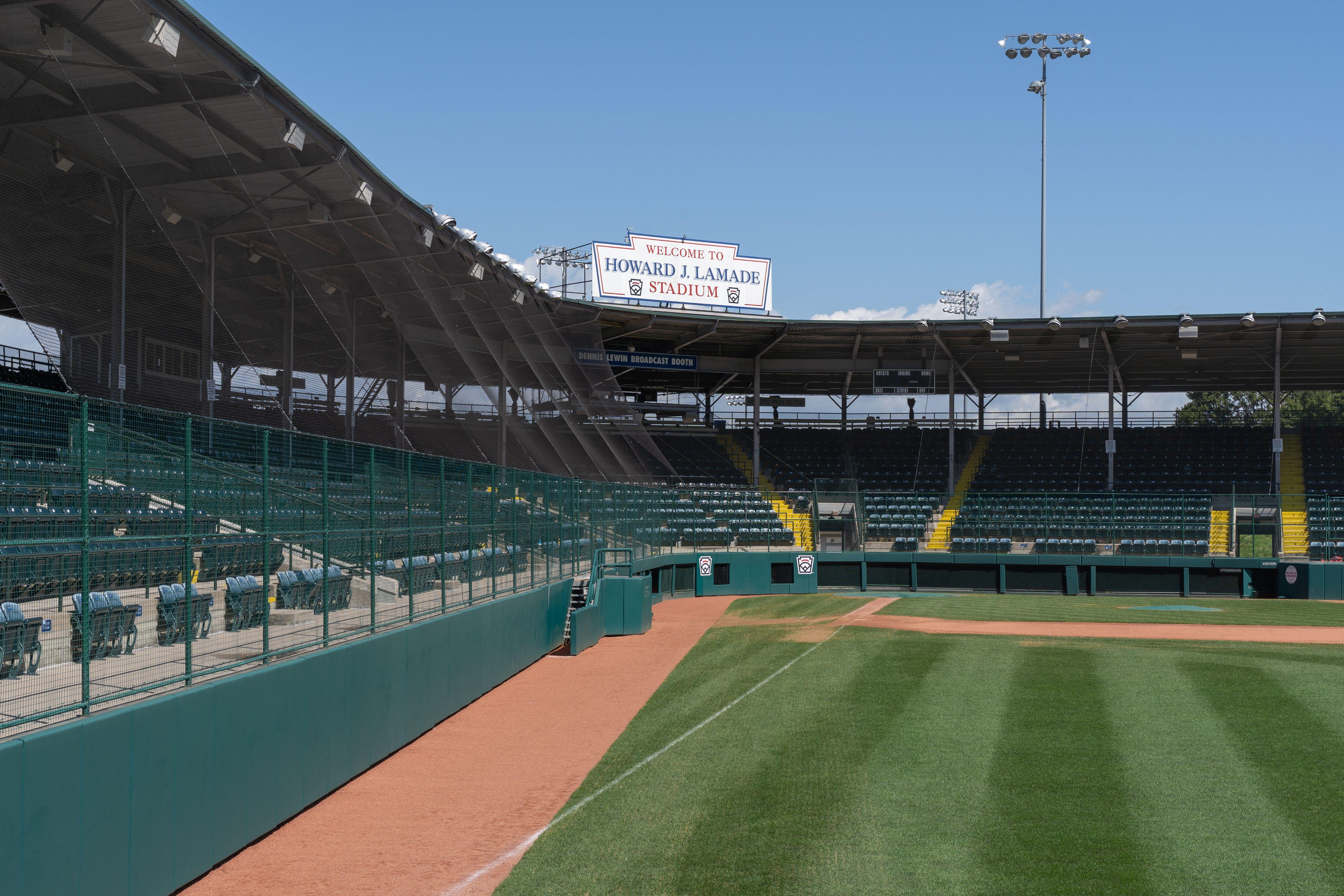
Tulsa National Little League governs softball and baseball leagues, and not one — but two — of its All-Star teams were disqualified this summer. Softball first, in July, over player eligibility rules and related allegations. Then baseball, this week, over a boy identified in court filings as O.G. Both All Star teams were yanked from competition during the Southwest Region Tournaments, the boy’s team a win away from advancing to play in the Little League World Series.
That’s why Alex and so many kids are invested in this story. A lot of them tune into the World Series. A lot of adults do, too. Alex enjoys it more so lately because sometimes he sees kids he’s played against. The games will go on, as they say, but there will be a cloud over all of it stretching west to Oklahoma.
Tulsa’s All Star Softball Team
The allegations swirling around the softball team were beyond brazen. A Texas league whose team had just lost to Tulsa’s filed a protest claiming the softball program skipped its required player draft this season to bring in what was practically an intact travel ball roster for All Stars — a serious violation, if true. Little League’s actual disqualification didn’t confirm the draft or travel-team claims. It removed the softball team over undocumented residency and school-enrollment paperwork instead. But those accusations, that a local nonprofit quietly skipped a draft and imported a stacked roster in the light of day, were out there in writing weeks before anyone found paperwork with a wrong birth year next door.
Tulsa’s All Star Baseball Team
The All-Star teams chasing a trip to Williamsport are referred to as 12u teams in youth baseball circles because they’re built primarily with 12-year-olds playing their last season of Little League. The arrows pointing at the Tulsa team sharpened after opposing leagues filed protests going back to late July, over general eligibility and other questions that Little League International dismissed. It was a last-minute protest, filed the day before the regional championship, that sealed the team’s fate. It highlighted a new claim about one player.
O.G. lived outside Tulsa National’s boundaries. The local Little League has a provision for that: if a player’s younger sibling, age seven or under, plays a full season in the league’s Challenger Division — the adaptive program for kids with physical and intellectual disabilities — an older sibling can join that league too. It’s a good rule. It exists so a family with a kid who needs that special program can keep their children in the same league.
O.G.’s father, according to a Little League International court filing, recently acknowledged the sibling on the registration was actually 10 years old, three years past the cutoff, and had never set foot on a Challenger field. The birth year on the form was false. A rival league’s protest — signed by three separate Little Leagues, obtained by a reporter who’s been covering this story all summer — put it more bluntly: using a special-needs program to manufacture eligibility is “so egregious that anyone involved with this should be banned for life from Little League.” Little League’s disqualification didn’t go that far. It just said the player was ineligible, and under the rules, one ineligible player disqualifies the whole team.
The district administrator overseeing Tulsa’s league told Little League officials she relied on written guidance from the regional office when the player was first cleared to play, and that the wrong birth year listed for that player’s sibling wasn’t caught until after the state tournament — the final round of All Star play ahead of regionals — ended. She asked Little League’s national office to apply whatever rule was broken “with the same consistency and fairness that should have applied to every compliance issue at the state tournament.” Maybe that’s a real defense, or maybe the bad decisions in Tulsa weren’t limited to a handful of parents and coaches.
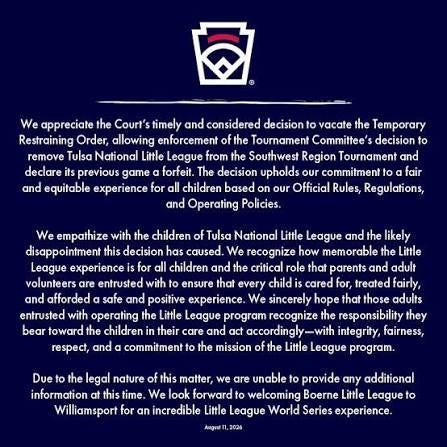
Little League International isn’t buying it. “When one team follows the rules and another team conceals material eligibility information until the last possible moment,” their lawyers wrote this week in the league’s emergency motion, “the Courts should not substitute its feelings of sympathy for the team that violated the rules.”
The protests filed by Tulsa’s regional competitors also said an unnamed “GameChanger admin” has been deleting and modifying Tulsa National’s season data on the app most travel and rec teams use to track stats and games, calling it an attempt “to deceive and/or hide the facts of how the season was played” in order to meet All Star eligibility requirements. Little League hasn’t confirmed that.
The Legal Drama
Tulsa's parents sued, but not to get O.G. back on the field. His family had already pulled him ahead of regionals once the heat was turned up. They sued to keep the other boys on the All Star team in the tournament, competing for a dream spot at the Little League World Series.
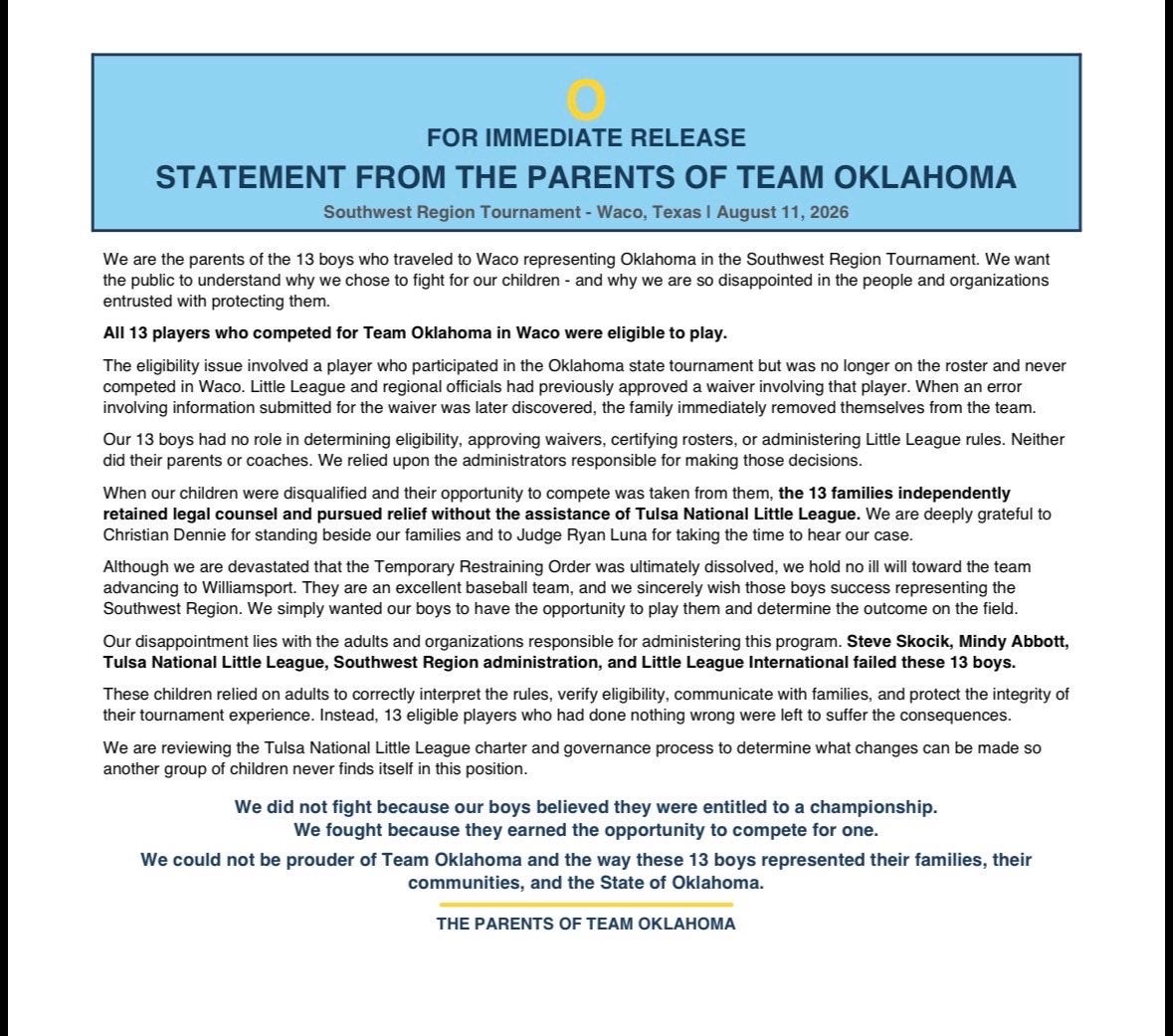
“Our 13 boys had no role in determining eligibility, approving waivers, certifying rosters, or administering Little League rules. Neither did their parents or coaches,” the parents said in a statement after Little League International disqualified the team this week. “We relied upon the administrators responsible for making those decisions.”
A judge in Waco, Texas, home to the Southwest Regional Tournament, granted the parents’ restraining order Monday night, essentially saying the Tulsa team shouldn’t be disqualified while the allegations are sorted out. Little League International responded yesterday morning (Tuesday, Aug. 11) and it did so in a big way: with a 330-page filing arguing it was too late to reverse course anyway — Boerne Little League, the team Little League had ruled would advance to the World Series instead of Tulsa, had already flown home, and ESPN had already packed its trucks. The judge agreed and dissolved his order that afternoon.
Boerne’s coach, Greg Yost, called the last 24 hours an emotional roller coaster, according to media reports. His players went from celebrating a championship, to fearing they’d lost it, to keeping it after all. “I’m just happy that it worked out, because our kids worked so hard and they deserve it,” he said.
Happy for the Boerne boys, but Alex and I keep coming back to Tulsa. What were these folks thinking and why did they think they could get away with any of this?
The parents of the Tulsa players for some reason felt the need to say in their statement that this was all due to an error on a form. Even if that's true, it skips right past Little League International's separate claim that the sibling never participated in a Challenger game at all — a detail that would matter regardless of the birth year.
The System That Created This
All of this feels like a risk-it-all strategy to win a 12u baseball tournament, but nobody involved is ever going to say that. You don’t need to know the motive to see how this could happen, because Little League told us, in its own words, before any of this ever reached a courtroom. Back in July, after the softball disqualification, Dan Velte, Little League International’s vice president of operations, told a reporter that protests get handled “case-by-case,” that there’s “no set timeline” and “no set process” for pulling a league’s charter. And this week, arguing in court that a Texas judge shouldn’t second-guess how it runs things, Little League International’s own lawyers invoked what they called, “Texas’s long-standing doctrine of judicial non-intervention with the affairs of a self-governing association.”
Self-governing. No set process. That’s not me characterizing the system. That’s the organization describing itself. Little League parents complaining about politics and a centralized power structure that answers to no one isn’t news, but rarely do you get such a clear understanding of why from the people in charge.
The Tulsa parents who sued said power brokers at every level are to blame: “Tulsa National Little League, Southwest Region administration, and Little League International failed these 13 boys.”
Little League isn’t on an island. A lot of youth sports organizations run on the same design: a small number of volunteers, minimal outside oversight, a system that bristles at scrutiny, and a culture where the parents and other volunteers checking the rules are often friends, fellow coaches, or board colleagues of the people breaking them. Most volunteers are who they appear to be — good parents with good kids who happily give up their weekends, and a lot of weeknights too, because they love their kids and the game. But a system with no real checks and balances is a system waiting for someone entitled, desperate, or both, to manipulate it.
Tulsa isn’t the first time that’s happened. Little League vacated an entire team’s tournament wins, banned a manager, and dissolved a district over an eligibility scheme in 2015.
So where do we go from here, as parents standing outside all this, watching it happen to a league we’ve never heard of in a state we don’t live in?
The system that let this happen in Tulsa is the same one running the league up the street from you. It’s not going to fix itself, and every incentive tells it to resist change. That only changes when the people showing up to those parking lots on Tuesday nights start asking harder questions before there’s a scandal that forces them to.
The system pits our best selves against our nervous selves. By that I mean our primary instinct as parents is to protect our kids, and we know we’re opening them up to blowback if we complain too loudly and annoy the wrong people. That’s a real concern and I don’t know how that gets solved. But it’s clear more parents need to look closer, ask who’s checking the checkers, and speak up when something doesn’t add up, even when it’s easier not to and you know that the board member running the snack shack is not going to smile back at you.
Alex is thirteen now, old enough to read a court filing from the passenger seat and ask questions about adults who thought they’d get away with something like this. I share his disbelief.
My guess is he suspects nothing will change beyond the fallout in Tulsa. If so, he’s probably right. Most parents will shake their heads, scroll to the next headline, and hope it doesn’t happen to their kid, or the one down the street on his toy truck who hasn’t played his first t-ball game yet. That kid is counting on the adults around him, all of us, to have learned something from this mess before it’s his turn.
Don’t we owe him that?
About Baseball Dad & PR Guy
Baseball Dad & PR Guy is a weekly newsletter about youth sports culture and how parents and coaches shape the experience for young athletes.
Subscribers also get what I use after games — what to say, and what to leave unsaid on the ride home.
My essays are built around the 5 Moments That Shape Young Ballplayers, from the nerves before a game to the car ride home.
From the stands, I write about those moments and what they mean for confidence, identity, and a kid’s love of the game.
Read more about the 5 Moments and why they matter.
⚾ Join the conversation: Travel Baseball Moms & Dads (Facebook)
⚾ Follow along: Tony Manolatos – Baseball Dad & PR Guy(Facebook)
More at tonymanolatos.com
Well done! This is where we think parents have to resist the urge to become investigators. Ask questions, absolutely. Expect organizations to enforce their rules, absolutely. But when adults start publicly scrutinizing individual kids, we've crossed a line that rarely leads anywhere good.