


Travel baseball sits at the center of a $40 billion youth sports industry. Ground zero is right here in Southern California. From the outside, the critiques are familiar: cost, travel, burnout, injuries, competitive parents, lost family time, coaches stretched too thin.
Some of the criticism is fair. But after several years inside the travel ball ecosystem, I have noticed a few common assumptions do not match the reality on the fields.
One of them is the idea that travel baseball parents are either too intense, too loud, or too obnoxious—or all three.
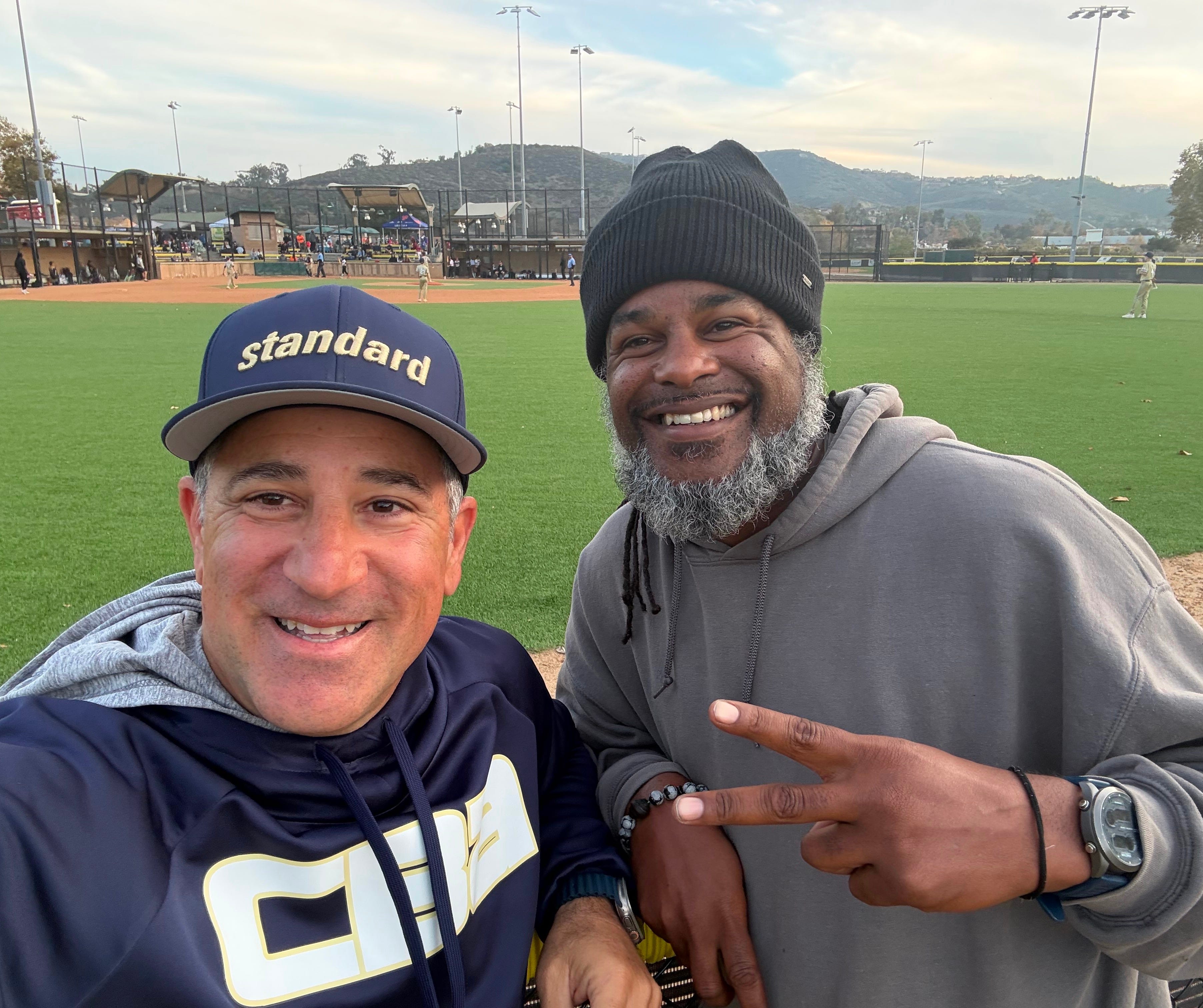
It’s true that some travel ball parents will never be mistaken for Ward and June Cleaver. But most are kind, reserved, good people leaning into a sport their kid enjoys and cheering for everyone on the team like they’re family. Yes, some of us are competitive. That’s my hand in the air. But usually not to a fault.
Most of the parents Elizabeth and I have met in travel baseball and Little League are supportive, steady, and genuinely happy to see kids succeed—not just their own.
Sure, there are tense moments sometimes. Every team has some drama, and some parents do create unnecessary pressure with unrealistic expectations. After all, for every 1,000 high school baseball players, only about 24 will make a Division I roster.
Most of what I see are families spending long days at the ballfield cheering for kids who love the game.
The dads and grandfathers we watch games with are kind and supportive. Invested, yes. We all are. But not loud or intense. The moms and grandmothers are often the calmest people at the field—steady and prepared, armed with drinks, snacks, sunscreen, and hugs.
One of them approached me recently at a tournament.
“I have some good photos and videos of Alex on the mound and at the plate,” she said. “What’s your number? I’ll text them to you.”
Moments like that happen far more often than the stories people hear about out-of-control parents at travel ball tournaments.
Another misconception I’ve noticed involves development.
From the outside, it’s easy to assume most player development happens with the travel team.
When we entered travel baseball several years ago, one thing I didn’t fully understand was where a lot of the skill development actually happens.
Travel teams provide competition. There’s some skill work at practice, usually heavy on fielding and game situations, but where teams really shine is building culture, confidence, baseball IQ, unity, respect, tenacity, and a love of the game. Those are qualities that serve kids long after their playing days are over.
The games are fast, tournament weekends are packed, and coaches are juggling a lot: players, parents, logistics, communication, and everything else that comes with youth sports.
The field is where kids compete. A lot of development happens somewhere else.


Our son learned how to throw a football curve while warming up before a game last season. One of his coaches pulled me aside during the game and pointed to Alex fooling a hitter with a pitch I had never seen him throw before.
“You see that?” he said. “I taught him that pitch twenty minutes ago.”
The football curve has become one of Alex’s best pitches, but he didn’t learn it during practice or in a bullpen with a coach.
Alex trains with a pitching coach a couple times a month and hits weekly at the same facility, SD CAP in El Cajon, where he’s worked for nearly three years. It reminds me of a baseball gym or neighborhood rec center — gritty and unassuming, home to forgotten water bottles, worn baseballs, focused kids, camaraderie, and coaches who know their craft. The work is serious and challenging, but fun too. Pitching, hitting, and fielding are taught like school subjects.
There’s something cool about seeing your son on a Friday night grinding through a group hitting session alongside high school players weighing college offers, all of them counting barrels and hoping they’re not on the losing team that ends the night with push-ups.
The strides these kids make are noticeable. Sometimes at tournaments I can tell a player trains there just by watching his approach in the box. Other times Alex will point it out.
“Dad,” he’ll say quietly. “I train with that kid.”
Competition teaches lessons development can’t. Development prepares kids for competition. Both matter.
In youth sports, progress rarely happens in one place. It shows up in small moments:
A kid learning a new pitch while warming up.
A late-night hitting session in a warehouse.
A father tossing his son grounders in the backyard.
A coach teaching the two-strike approach or the delayed double steal.
An infielder making a mound visit to reassure a pitcher during a close game.
Or the burger and fries after a quiet car ride home.
None of this happens in isolation. Coaches, parents, teammates, trainers, and long afternoons at the ballfield all play a role.
Over time, those moments add up. They shape young ballplayers — and the culture surrounding the game.
###
Go Deeper
Some of you are dealing with issues that keep you up at night: Your kid can’t recover after an error. He doesn’t like his coach. He’s constantly checking GameChanger and comparing himself to his teammates. He wants to quit.
That’s what my one-on-one coaching sessions are for.
Visit my Stan Store to book a coaching session, email questions, order playbooks, or inquire about speaking.
About Baseball Dad & PR Guy
Baseball Dad & PR Guy is a weekly newsletter about youth sports culture and how parents shape the experience for young athletes.
It’s built around the 5 Moments That Shape Young Ballplayers, from the nerves before a game to the car ride home.
From the stands, I write about those moments and what they mean for confidence, identity, and a kid’s love of the game.
Read more about the 5 Moments and why they matter.
⚾ Join our growing community of parents helping parents: Travel Baseball Moms & Dads on Facebook.
More at tonymanolatos.com