


“Are you his dad or his coach?” A stranger asked me that in the grass beyond a field where I was throwing Alex BP. That question was the spine of a reel and a short story I shared recently. Turns out I’m not the only one working out the answer.
A lot of us parents coach too often when all our kid really wants is his mom and dad. I was reminded of that last month when I ran into Alex in a restroom at a ballpark after he struck out against the fastest pitching he’d seen in a game. I wrote about that moment and discussed it in the same reel about the coach/dad question. What I said, and how I handled that moment, struck a chord with a lot of parents.
Since I shared this story previously I won’t get into much detail, but essentially what Alex got from me, after telling me how hard the pitcher was throwing, was his dad not a coach. The payoff arrived with his next at bat against the same pitcher — line drive single with the game on the line.
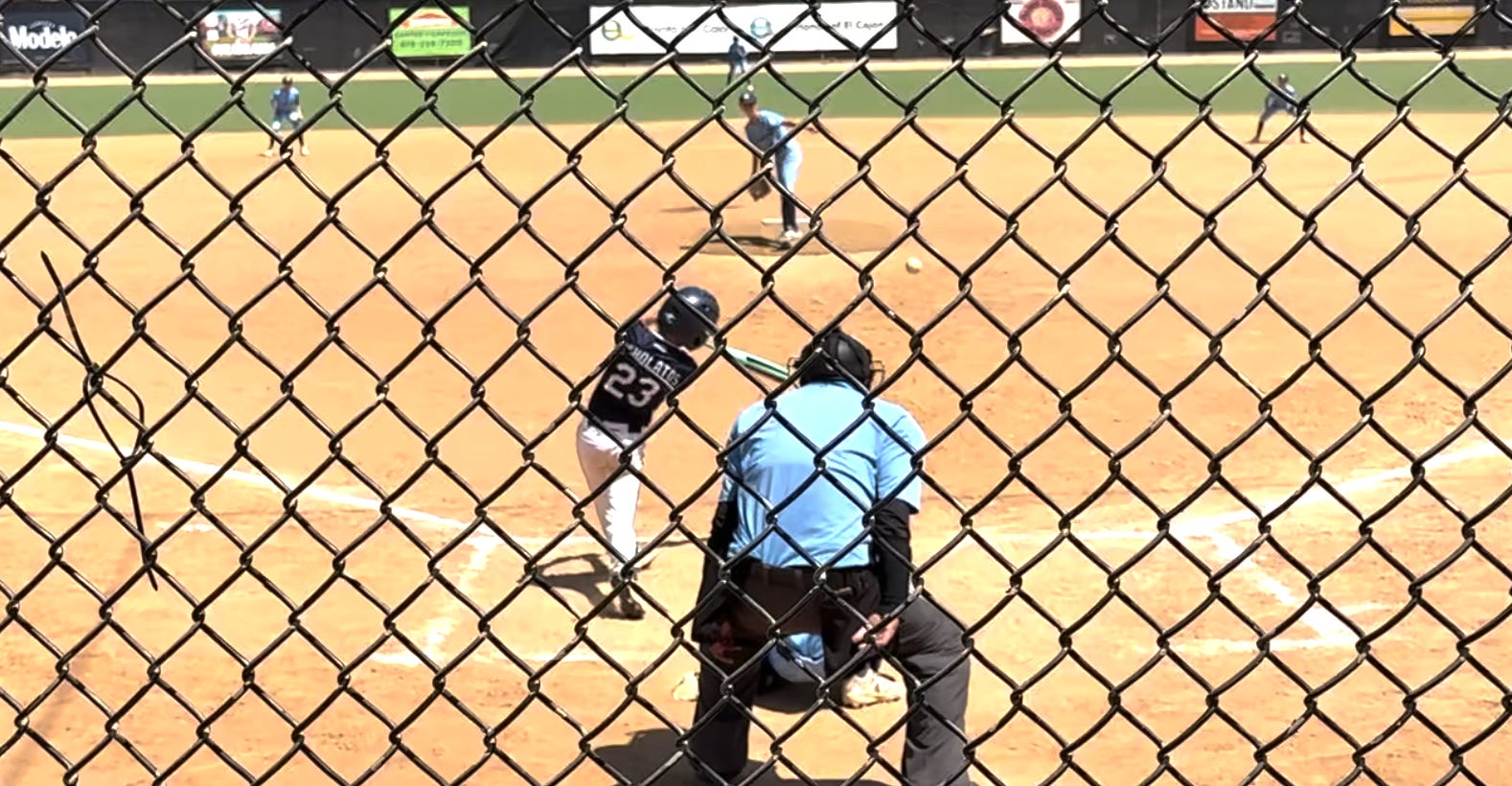
We all face these moments — in a restroom between innings, in the stands, or during the car ride home after a bad game. It’s one voice. It might sound different depending on the situation, but the message is the same: do better, be better, try harder, what’s wrong with you?
Before a game it sounds like advice. During a game it sounds like coaching. After a game it sounds like a critique of everything that went wrong. Some of these moments you can see coming, like the breakfast table before a game or the drive to the field, and you can decide what you’re going to say ahead of time. Others arrive with no warning, leaving you no time to plan. You’re reacting, running off of whatever foundation you’ve built.
The voice that shows up at the breakfast table, in the car, and behind the backstop doesn’t change until you understand what it’s doing to your kid, and to your relationship with him or her, and what would help instead. Once you have that clarity, the moments are easier. You won’t always master them, but you’ll get more of them right. Muscle memory builds, and you start showing up with support, love, and encouragement instead of coaching and criticism.
A dad I don’t know, whose daughter plays college volleyball, left this comment on my reel: “Wish I was better at this. Sometimes easier said than done. Still working on it with my daughter who plays college volleyball.”
I wrote back: “Don’t be hard on yourself. None of us are perfect. I don’t get all these moments right. My wife will tell you that. But I try to, just like you, and our kids see that. Keep showing up. And try to practice ‘show don’t tell.’ Sounds simple but isn’t always easy.”
Here’s what I didn’t say:
This past spring, mid-game, Alex was struggling on the mound. He’d pitched two days earlier in the same 3-day tournament and pitched well. That was a lot easier to watch than seeing him in this elimination game. I saw what he was doing wrong. Didn’t say anything initially, but eventually I did.
“Work down the escalator instead of down the elevator,” I said from my lawn chair between his team’s dugout and home plate. “Come over the top.” Later, I added, “You’re missing in the same spot. What’s the adjustment?” Next pitch was a strike and then another. The count was 0-2, he was way ahead and about to get out of this inning, but he would end up walking that batter. “C’mon,” I said as I slapped my knee. Hard. Loud. He probably didn’t hear it, but he might have seen it.
Elizabeth was sitting next to me. She didn’t say anything about my coaching. But the knee slap was too much.
“You gonna put that in your Substack?” she said.
Alex’s coach walked to the mound. If he was frustrated, he didn’t show it. He said something quiet and supportive, took the ball, and Alex walked to the dugout looking like he'd let his team down.
I let him down. Elizabeth was right. I messed up.
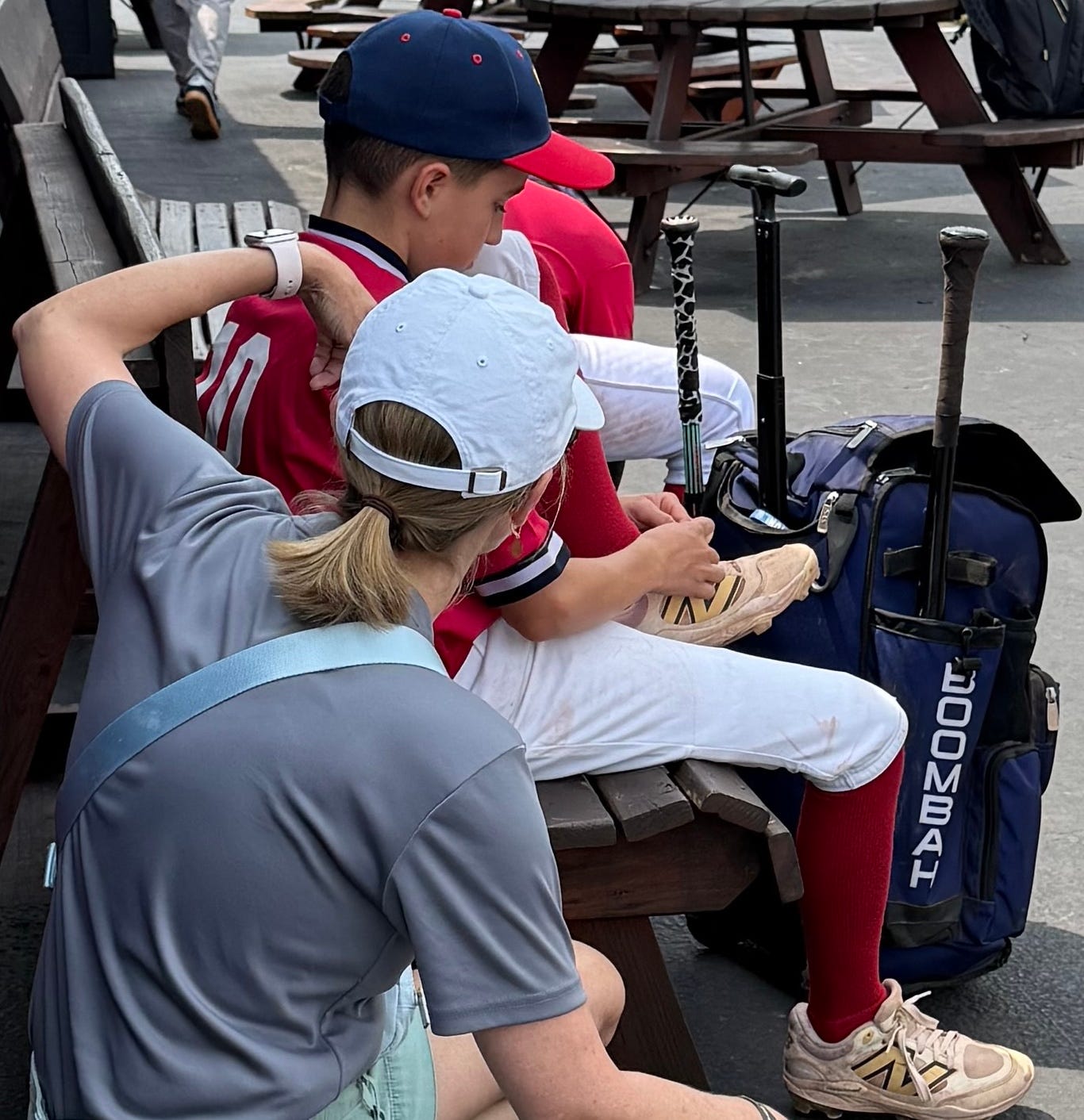
A lot of us struggle when our kids struggle, myself included. And that’s not the only time we add pressure and make the game harder. I get more of these moments right than I used to, but I’m not perfect. None of us are.
A dad with five kids, four of whom he’s coached himself, left a comment saying he still struggles with his youngest, who’s about to start high school. I told him what I’ve come to believe: none of this is easy. All of it is fixable. We never really graduate from working on it.
A former D1 athlete wrote, “That parent/coach balance is so important and like you said, can take a huge amount of pressure off these kids!”
A dad who spends his career around the game professionally, three kids of his own, told me on a call that my reel made him realize he needs to say less from the stands.
If reps solved this, all of us would have fixed it by now.
We haven’t because reps aren’t a substitute for self-awareness.
Months after the knee slap, Alex and I were driving to Los Angeles for the final round of USA Baseball tryouts, the kind of slow moving morning built for a dad to fill with coaching and reminders. I started in exactly that place, something about working through the ball, something else about keeping his head down at the plate. I heard myself and stopped.
“You know all this,” I said. “You’ve got this.”
“Yeah, Dad, I’m good,” he said.
He turned the music up and we listened to iTunes the rest of the way.
Perspective helps but it’s not always there for us. We forget sometimes that none of this really matters until they’re 16. When they’re younger the focus should be on development, getting stronger, staying healthy, studying the game, competing.
It helps too when we show them instead of telling them. I first heard “show don’t tell” from Brian Sackinsky, a former big-league pitcher and father of five, in a video interview we recorded for paid subscribers. Show him through what you do, instead of what you say, that you trust him.
That’s the job, most days. Saying yes when he asks you to throw BP instead of finding a reason not to. Standing at the fence instead of narrating from it. Leaving the music on in the car.
If you’re catching yourself in similar spots that’s not evidence you’re bad at this. It’s proof you’re paying attention. Keep paying attention. That awareness is where change lives.
Sometimes to a stranger I look like Alex’s coach. A kid working the snack bar at a recent tournament asked me the same question as that man in the grass. Alex sometimes asks me to coach him — he might ask after a game what I saw in his swing or in his delivery — but mostly he just wants me to be his dad. He has a lot of great coaches. My job is easier than theirs.
Go Deeper
As a parent coach, I help you help your kid play loose, with confidence and joy. The game gets harder, and our relationships suffer, when we add pressure.
If you’ve gotten the car ride home wrong, caught yourself coaching from the stands, or gotten caught up in the comparison trap, you’re not alone. None of us want to get these moments wrong. The good news: it’s fixable, and it starts with two short guides you can use before your kid’s next game.
Grab your parent playbooks — $20
Want something more specific worked through, your kid, your situation? I do that too.
Email me your issue and I’ll get back to you within 24 hours — $50
Book a coaching session — $150/45 minutes
Lastly, every week I drop new reels on Instagram: @tonymanolatos. Some are related to my essays. Some aren’t. It’s a place for parents to connect with me and each other, to share stories that are funny or moving, do’s and don’ts, and more.
About Baseball Dad & PR Guy
Baseball Dad & PR Guy is a weekly newsletter about youth sports culture and how parents and coaches shape the experience for young athletes.
Subscribers also get what I use after games, what to say, and what to leave unsaid on the ride home.
My essays are built around the 5 Moments That Shape Young Ballplayers, from the nerves before a game to the car ride home.
From the stands, I write about those moments and what they mean for confidence, identity, and a kid’s love of the game.
Read more about the 5 Moments and why they matter.
⚾ Join the conversation: Travel Baseball Moms & Dads (Facebook)
⚾ Follow along: Tony Manolatos – Baseball Dad & PR Guy (Facebook)
More at tonymanolatos.com