


So your son had a bad tournament. Big deal. Do not overreact. I say that because a lot of parents need to hear it.
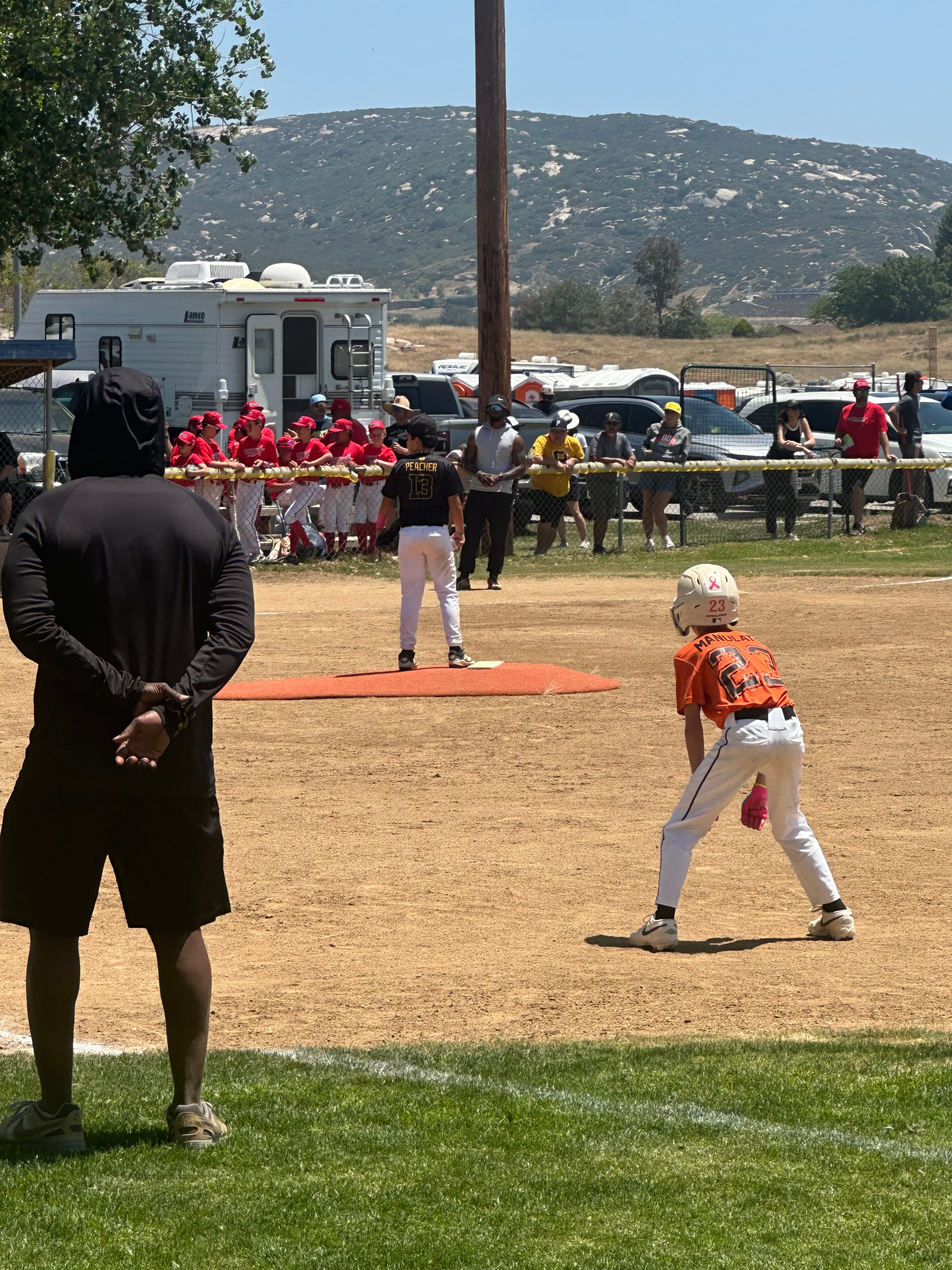
The boys who play travel baseball carry the weight of the world on their shoulders at these weekend tournaments. They want to perform well for their team, their coaches, their parents, and themselves. All that pressure makes a game that’s already difficult and full of tense moments even harder—which is why no one likes seeing anxious parents coaching their kids from behind the backstop.
Some young ballplayers chew through the pressure and channel it, turning it into fuel. I’ve seen my son, a 12U player, do that. But not all the time. Kids are going to have moments of brilliance and moments that crush them. When they fall they’re going to look to you, their parents, to see if everything is okay. You need to be their rock, their beacon, their lighthouse that’s always glowing no matter how rough the seas are.
Our instinct as parents is to try and fix things, but when we overreact after a bad tournament or two, we send the wrong signals. We hurt their confidence—which is the last thing we would ever want to do to any young ballplayer.
If there’s one key to greatness on the diamond, it’s confidence. It certainly helps off the diamond, too. Kids build confidence through practice, small victories, reps, more reps, buying into their process, and embracing the journey. Their confidence also grows when they know their teammates and coaches like them—and when they know the people they love the most, mom and dad, believe in them.
THE CAR RIDE HOME
Praise him and encourage him on that car ride home. If he’s dwelling on mistakes, pivot. “You struggled at the plate, and that’s going to happen sometimes,” you might say. “But your play in the field this weekend was outstanding. You made all your plays, and I saw you working hard out there. I’m really proud of the effort you put in.”
Make sure he knows you are proud of the things he can control—effort, attitude, and leadership, for example.
There is a good chance your son won’t want to talk about his performance on the drive home after a rough outing, and that’s okay. Don’t force it. He likely knows what went wrong and what he needs to work on. If he doesn’t, chances are when he feels better he’ll ask you—or maybe he’s already asked his coach.
HIS JOURNEY
The important thing to remember is this is his journey. And when he’s 8, 9, 10, 11 or 12, it’s a long one with plenty of road ahead. One or two bad tournaments or practices won’t make or break him. Yes, coaches may lose some confidence in him after a rough stretch, but most evaluate through a wider lens — practices, scrimmages, games, successes, failures, effort, and being a good teammate all count.
Of course, there could be a player just behind your son who is performing well and deserves a shot at a bigger role with the team. That’s going to happen. But remember: travel baseball is a marathon, not a sprint. And it should be competitive. This isn’t little league. Your son should be pushed by kids behind him while chasing kids ahead of him. That competition will drive him and help him reach his potential.
If he’s moved down in the order or loses reps in the field or on the mound after some bad games, don’t sweat it. Seriously. Don’t stress him out, and don’t get in the coach’s ear.
Talking to a coach about your son’s playing time or performance can be tricky. Wait 24 hours and see how you feel. If you still want to talk, send a polite email or ask the coach after practice what your son can do to earn more time. Even better, once your son is old enough (11 or 12), encourage him to have those conversations himself.
If he wants to get better, he will. He’ll get back in the lab and work on what he needs to improve. You’ll be there to support him.
HOW YOUR SON RESPONDS MATTERS
The kids who see setbacks as the end won’t play much ball beyond travel baseball. The kids who see setbacks as opportunities for growth will succeed at a much higher rate. For more on this topic, check out this podcast by MLB agent Matt Hannaford: Travel Baseball: How Your Son’s Response Will Shape His Future.
How do you respond when life gets challenging? How do you want your son to respond?
It’s okay for him to be mad or even throw himself a small pity party after a bad game or two. But if he shakes it off in a few hours and gets back to work the next day…well, that means your son has the grit he needs to succeed on and off the field.
Don’t rush him out to a field the day after a bad weekend for a workout. Don’t text his trainer to try to wedge in a session ASAP. Instead, be cool. He’ll very likely follow your lead—for better or worse—so set him up for success.
See how he responds. Let him grow. Odds are, he will make you proud.
About Baseball Dad & PR Guy
I started Baseball Dad & PR Guy to share what I’ve learned from two worlds that have more in common than you’d think — youth baseball and public relations. Both teach preparation, communication, leadership, patience, and how to handle life’s curveballs.
Through my 12-year-old son Alex, his teammates, and his coaches, I’ve come to love baseball — all its beauty and all its challenges. My goal is to help baseball parents avoid common mistakes and support the journey their son or daughter is pursuing. On the PR side, my goal is to help young public relations professionals reach their potential.
⚾️ Join our growing community of parents helping parents: Travel Baseball Moms & Dads and Baseball Parents Podcast on Facebook. Please also check out my new website, tonymanolatos.com, and my linkapalooza. 🔗