


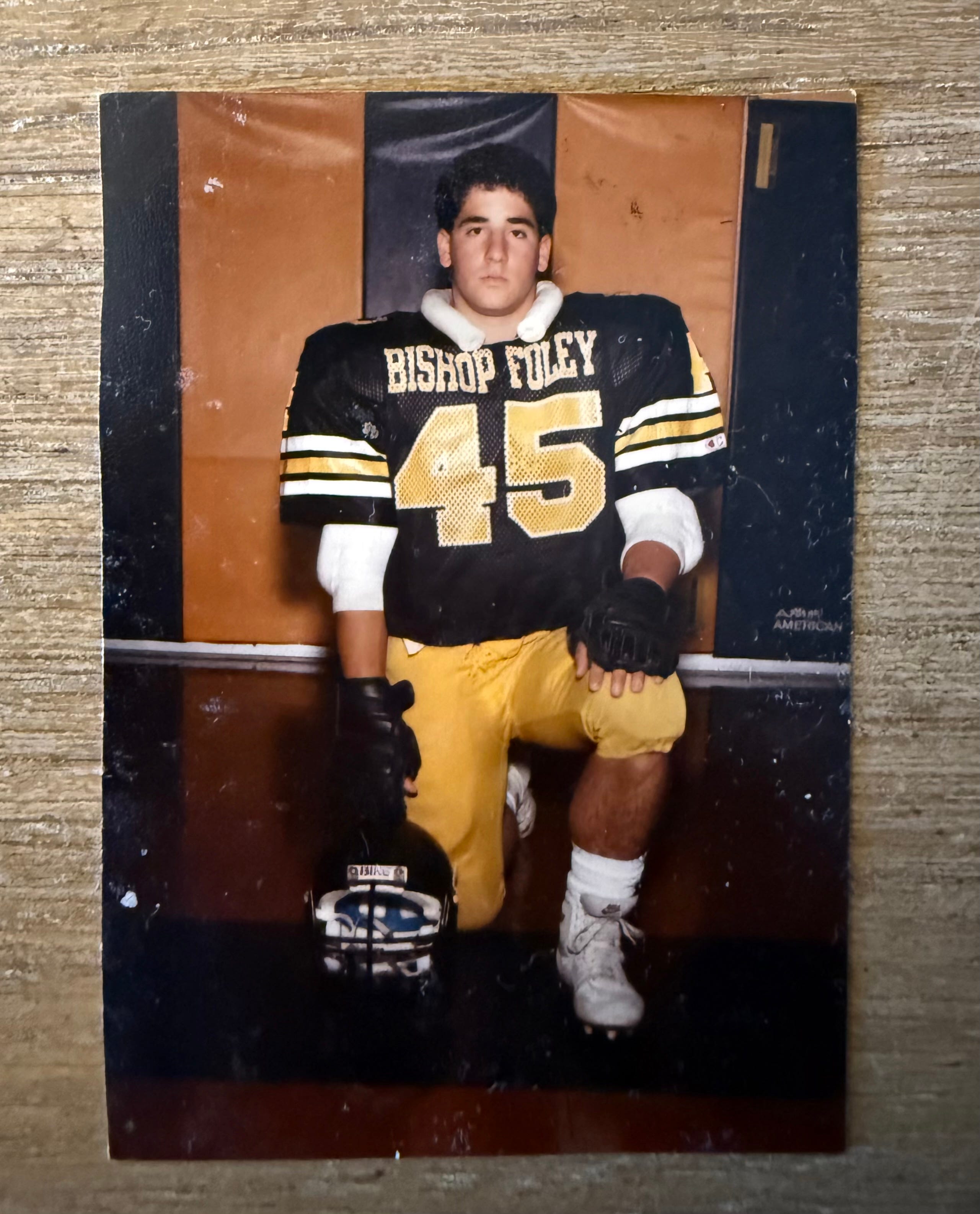
“Quick guys hide the condoms. Here comes coach!”
The defensive coordinator, a guy who looked like he’d played football, said that as the head coach of my high school football team walked toward us. There were five or six of us, all linebackers and defensive linemen, each of us on a knee huddled around the coach who ran the defense. He was using his index finger to draw in the dirt so we could see our gap responsibilities ahead of our next game the following day.
That was a few decades ago at Bishop Foley Catholic High School in suburban Detroit. I was 17 at the time, in my senior season at Foley.
Our defensive coach had broad shoulders, smoked Marlboros, cracked jokes, and let us have it if an opposing team ripped off a run up the gut for seven or eight yards. “That’s not good enough!” he’d shout from the sidelines. Back then, I had calcium deposits in my biceps from deep bruises that kept getting reinjured before they healed. Ah, football. So the head coach reversed a pair of thigh pads and taped them to my biceps before practices and games. That same defensive coordinator liked to say to anyone around, “Look at Manolatos, he’s getting his muscles taped up again!”
Our head coach was affable too but in a different way. He was clean cut, probably never smoked, usually wore a tie and sweater vest when he wasn’t coaching. He taught government at the high school, which was built in the shape of a cross with a chapel at its center. Before leading us onto the field on game day, he walked us to that chapel. We huddled around him in full pads, dressed in our black and yellow game uniforms, sunlight often filtering through the stained-glass windows. Our home games were played Saturday afternoons back then because our field didn’t have the lights it has now. He would lead us in prayer.
The defensive coordinator wanted the head coach to hear that joke, so he delivered it cleanly and clearly. There was no mistaking what he had said. Our head coach cracked a smile as he approached us, but I could tell he was not overly amused. The rest of us, including that coach drawing up plays in the dirt, could not stop laughing.
Coaches like those two are hard to find. They create a bond with their players held together with respect, love, and high expectations. It’s not much different than the relationships we have with the people we call family. The best coaches have a lot in common, and I’m not talking about their ability to draw up an effective game plan.
As baseball parents, it pains us to see coaches who don’t like our kids and how that affects them and their game. We want them to play for coaches who make them laugh, who push them, and hold them accountable. When you have that, you don’t want it to end, but it does eventually because baseball keeps moving from one chapter to the next.
My son Alex, who turned 13 in May, just completed one of those chapters and is now at the beginning of a new one. Last week his team moved from 12U to 13U, but this move up was different than those in the past because it arrived with a new set of coaches. That meant the time had come for the boys on his team to say goodbye to good coaches they enjoyed playing for. Alex told me twice this summer he was going to miss playing for his coaches, but that he was also excited for 13U.
Alex plays for CBA San Diego. Coach Anthony Soto runs the younger divisions, 9U to 12U, and Coach Matt Jervis directs the older group, 13U to 18U. Soto spent a lot of time in the 12U dugout this season, including leading CBA Victus on a memorable run in Cooperstown.
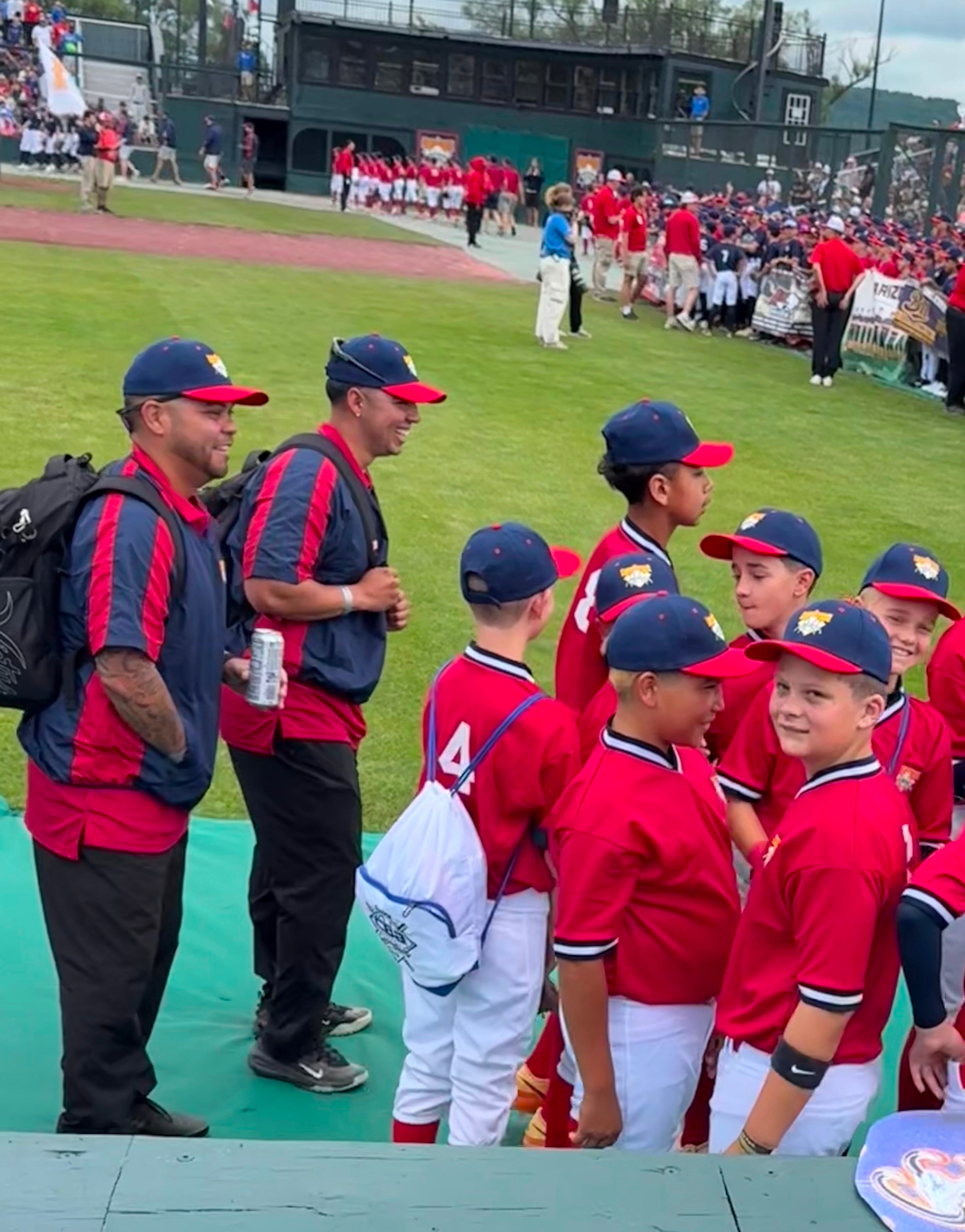
Coach Soto is a baseball coach. It’s what he does. It’s not a side hustle or something he takes on as a hobby. He’s a big reason why Alex joined CBA a year and a half ago.
He is the best in-game pitching coach Alex has ever had. He can reach him immediately, but not by raising his voice. Sometimes the coaching is stern, but it’s always supportive. What’s impressive is he never has a bad read on Alex’s mechanics or emotions. That might be because he took the time to get to know him. Very often on the way home from a tournament Alex would share something he and Coach Soto talked about that day, and it almost never had anything to do with baseball.
In the dugout during one game, Coach Soto told Alex about the banana sandwiches his dad used to make him before games, back when money was tight at home. Alex told me about it and said he wanted to try one. That afternoon he did, and he loved it. At the next tournament, Coach Soto and I were walking from the field to our trucks and I told him — Alex had tried it and loved it. He laughed and called out to him in that parking lot: “Don’t be afraid to slap some peanut butter in there.”
Once, when Alex was trying too hard to locate his pitches, Coach Soto called out to him from the dugout, “Don’t be so fine, Alex.”
Another time when Alex had fallen behind a batter and then worked the count to 3-2 before the hitter grounded out, I heard Coach Soto say, “Way to come back from a 3-0 count. Job well done.” Early on during their relationship, Alex got down on himself on the mound during the first inning. The score was only 1-0 but Alex’s body language said the score was more lopsided. “This game is not going to end one to nothing, Alex!” Coach Soto said. That was one of the last times I saw Alex struggle to control his emotions on the mound. Last October, at a top-tier Perfect Game tournament in Las Vegas, Coach Soto put his arm around Alex after he faced a Canes National team from Texas. Alex gave up one run and struck out four over three innings, throwing 27 of 41 pitches for strikes and clocking a new PR on his fastball. “You pitched a helluva game,” he told Alex. “You should be proud of yourself. I’m proud of you.”
At the plate, Alex is a line-drive gap hitter, but one evening at practice he turned on a pitch and connected for one of those deep fly balls down the left field line that sort of moved in slow motion against the night sky. “That’s not your game!” Soto called out.
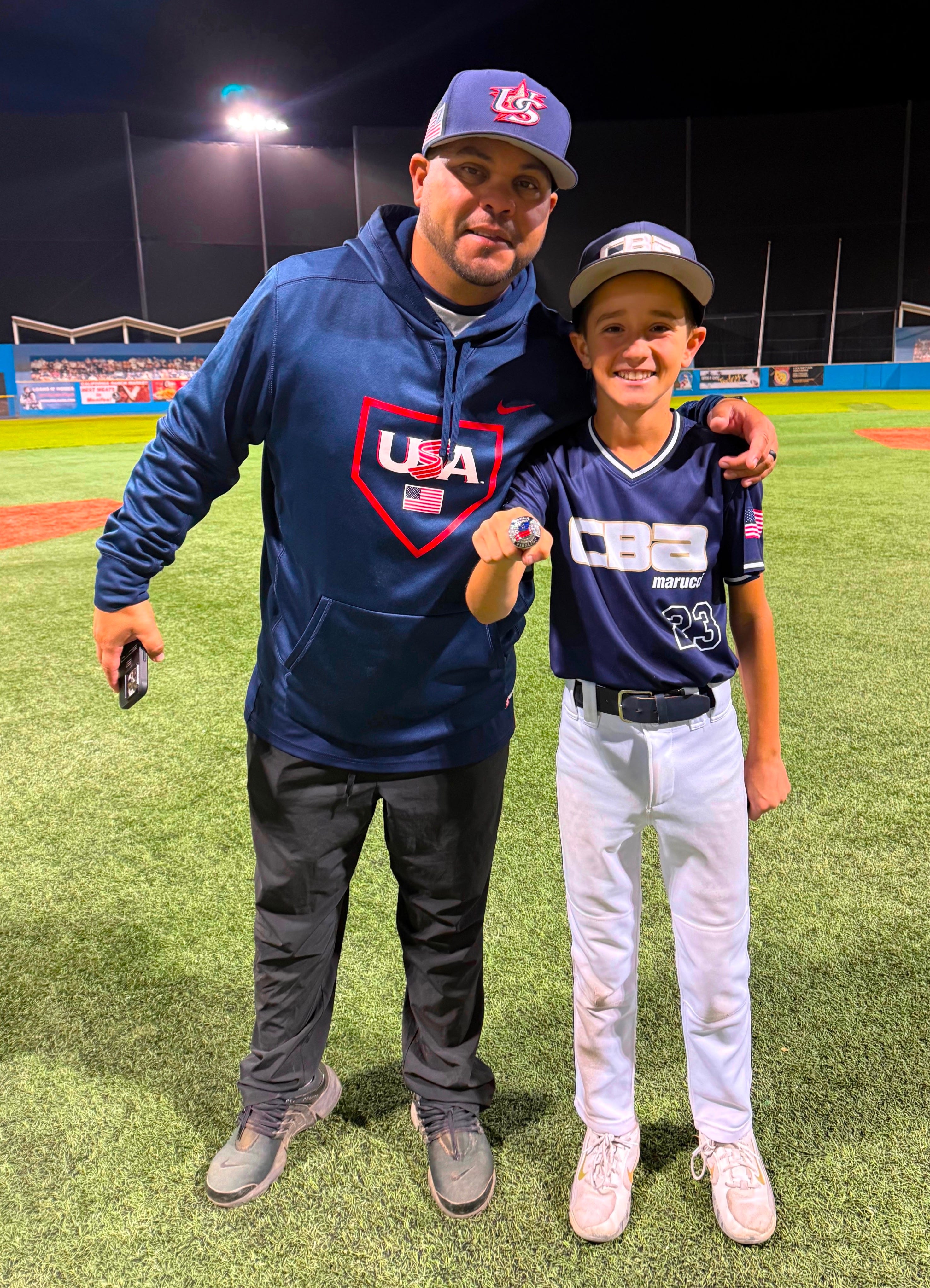
Outside of Cooperstown, when Coach Soto led the team, Coach Eddie managed 12U this past season. Coach Soto’s father-in-law, Coach Fredo, also was in the dugout and at most practices with Coach Eddie. The plan was for Coach Eddie to play the heavy, the bad cop, to Coach Fredo’s good cop. But that’s not who Eddie is. He’s a young guy, a former pitcher. Big smile. Easy demeanor. I’ve never heard him yell. Even when he was upset, there was a stillness about him. He could bring the hammer when he needed to. It just never came down too heavy.
Not long ago, I wrote about the time when I slapped my knee and said, “C’mon!” after Alex walked a batter, who he had 0-2. It was his second or third walk that inning. He was called in to close out that game, but after getting two outs he couldn’t shut the door. What happened next crystallized why I trusted Coach Eddie. He calmly walked to the mound, said something supportive to Alex, and gently took the ball from him. A couple weeks later, at the next tournament, he had Alex back on the mound as the Game 1 starter. Such a savvy coaching move, and it worked. Alex pitched well.
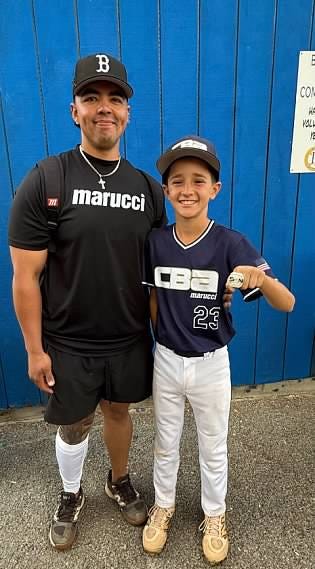
Coach Fredo treated Alex like a grandson. “He loves Alex,” Coach Soto told me once. That wasn’t surprising to hear. Alex was fond of him, too. When I saw them together, I saw a coach helping a kid get better and two people who genuinely liked each other. “I threw some knuckleballs to him today and he had no idea how to handle ’em,” Coach Fredo told me in the parking lot recently after a practice. Alex was by my side. The two of them smiled through that joke. Another time, another parking lot: The team had just suffered a one-run loss after being up multiple runs most of the game. It was that slap-my-knee game. Afterward, as I loaded Alex’s bag into the bed of my truck, Coach Fredo spotted me. He walked over and said: “There wasn’t one thing or one kid who lost that game for us. Everyone contributed.”
Coach Jervis mostly knows Alex through Coach Soto. In addition to his roles with CBA, he is the head baseball coach at Maranatha Christian Schools, where Alex and his team practice twice a week. Jervis and Soto are in regular contact. He has seen Alex practice a handful of times, run an intra-squad scrimmage Alex played in, and asked him to guest play for other CBA teams a couple of times. The CBA Marucci national team he helps coach won back-to-back Perfect Game WWBA World Championships in 2024 and 2025 in Jupiter, Florida.
What makes Alex’s move to 13U easier is knowing the culture he has come to trust at CBA doesn’t stop with one group of coaches.
Travel baseball is big business. I wrote about that last week. The coaches leading the better organizations need to win, in part because coaching is their livelihood and the strength of the program matters. But parents don’t judge an organization on wins alone. When parents ask me about CBA at hitting facilities, tournaments, or USA Baseball tryouts, they usually already know something about the organization, and it’s positive. That’s a credit to the coaches. They want to win, but they’re also developing confidence and character, and you can see that in the way their players carry themselves on and off the field.
“How is Alex liking things?” Coach Soto asked me a month after Alex joined the club. It was about an hour before gametime and Alex and his teammates were warming up between two ballfields and just past one of those playgrounds where a lot of young brothers and sisters run around instead of watching baseball.
I remember thinking how refreshing that felt — for a coach to approach me with an open-ended question about my kid. Very different from Little League, I thought.
I told him Alex was happy and Elizabeth and I were pleased too, and then I asked him how Alex was doing.
“He’s a good ball player and he listens, but he’s not a ‘Yes Man’ and I like that,” he told me. “I think he’s more of a second baseman than a shortstop, but I want to work with him some more there. He’s a very good situational hitter, but his crown jewel is that arm of his.”
I nodded and thanked him for the time and for working with Alex.
“Thanks for the trust,” he said. “I have an open-door policy, reach out anytime.”
When you find coaches like that, let them do their job. Support them. Reinforce the lessons. I’m not telling you to blindly trust anyone with your kid, but get out of the way.
If you’re a parent wondering who your son should play for, spend some time watching practices and games. Talk to other parents and coaches. Watch how the boys on the field respond to tough moments.
I thought about all that a few days ago, Alex seated next to me in the backseat of an Uber, headed north on I-75 to my mom’s place in suburban Detroit. As we came up on my old high school, I spotted the football field’s lights above the trees and warehouses, and the memories came back. All good ones and all built around two coaches who liked me, who made me laugh, who I played hard for because I wanted to, not because I had to.
Find coaches who can make your kid laugh and still hold him accountable. That’s the coaching superpower that tops ’em all.
Author’s note: These weekly newsletters have become the basis of a book I recently completed.
DO SOMETHING COOL, ALEX! is the story of a PR guy who’s gone toe-to-toe with the Chargers when they lobbied to leave San Diego and still got outmaneuvered by a Little League board. It’s a prescriptive memoir about Daddy Ball, the travel ball grind, the road to Cooperstown, and The Five Moments That Shape Young Ballplayers, written by someone who’s made most of the mistakes he now writes about.
The manuscript is finished, and I’m querying literary agents now.
Go Deeper
I coach players and parents to help kids play loose, with confidence and joy. The game gets harder, and our relationships suffer, when we add pressure.
If you’ve gotten the car ride home wrong, caught yourself coaching from the stands, or gotten caught up in the comparison trap, you’re not alone. None of us want to get these moments wrong. The good news: it’s fixable, and it starts with two short guides you can use before your kid’s next game.
Grab your parent playbooks — $20
Already a paid annual subscriber? Playbooks are included with your subscription.
Want something more specific worked through — your kid, your situation? I do that too.
Email me your issue and I’ll get back to you within 24 hours — $50
Book a Tony Talk for you or your kid — $150/45 minutes
Lastly, every week I drop new reels on Instagram: @tonymanolatos. Some are related to my essays. Some aren’t. It’s a place for parents to connect with me and each other, to share stories that are funny or moving, dos and don’ts, and more.
About Baseball Dad & PR Guy
Baseball Dad & PR Guy is a weekly newsletter about youth sports culture and how parents and coaches shape the experience for young athletes.
Subscribers get my free Car Ride Home Playbook — what to say, and what to leave unsaid on the ride home.
My essays are built around the 5 Moments That Shape Young Ballplayers, from the nerves before a game to the car ride home.
From the stands, I write about those moments and what they mean for confidence, identity, and a kid’s love of the game.
Read more about the 5 Moments and why they matter.
⚾ A community for parents: Travel Baseball Moms & Dads (Facebook)
⚾ Follow along: Tony Manolatos – Baseball Dad & PR Guy (Facebook)
More at tonymanolatos.com
Great article Tony. As you put it, especially at the younger ages, the coach is not only coaching your child's playing but also helping him or her in becoming a better person. It's always a great feeling to see a player you coached 8-10 years later and they still remember not only the games but also the relationship with teammates and you as a coach
Thanks for sharing.
Another great read, Tony. I can still recall vividly the words and tones of both good and poor coaches during my youth. It’s something i keep in mind whenever I’m around young players and do my best to have positive words stick in their brains for their lifetime, lol. Glad to hear you got Alex surrounded my great group of men — it’s something that will benefit him for decades.