


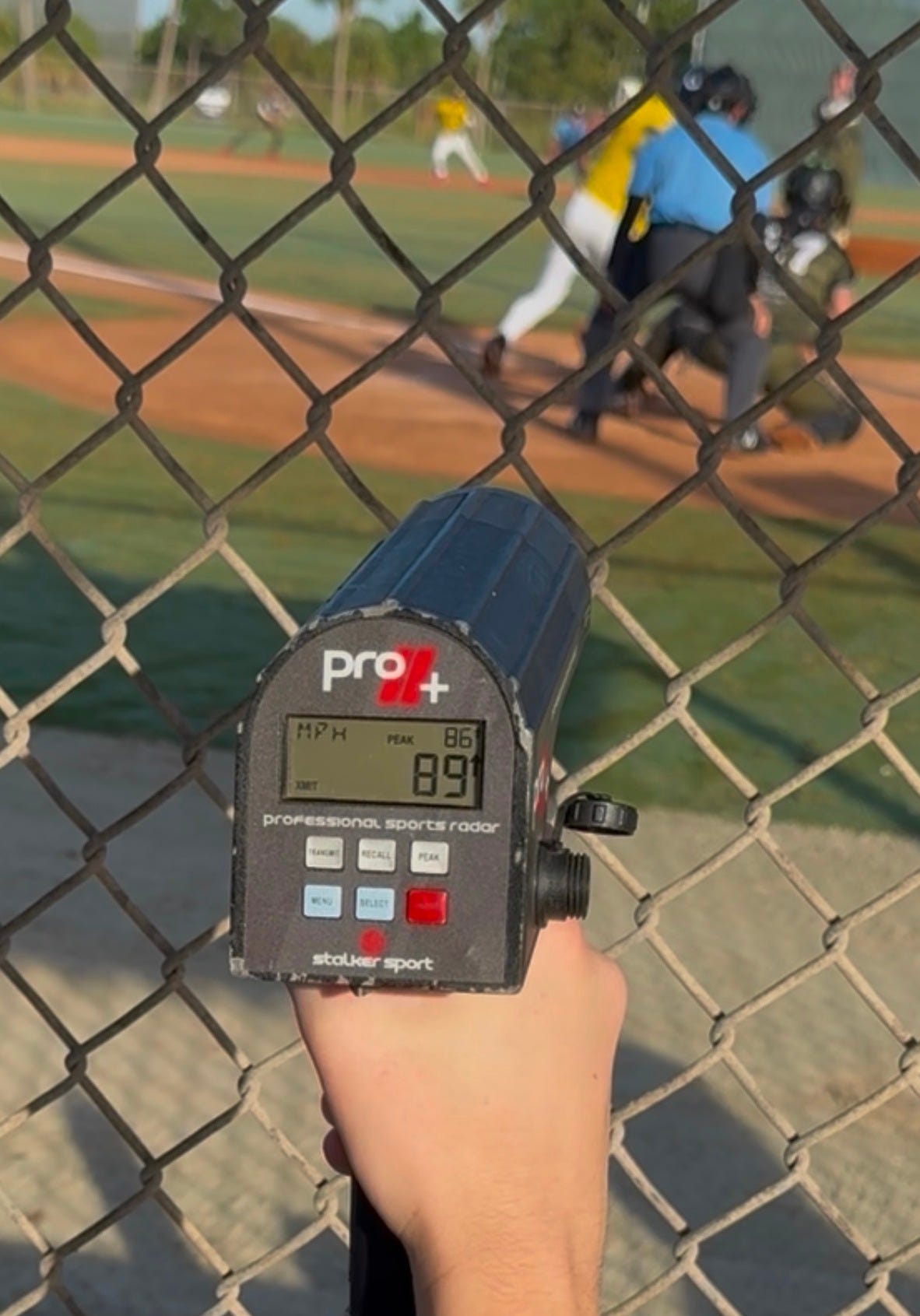
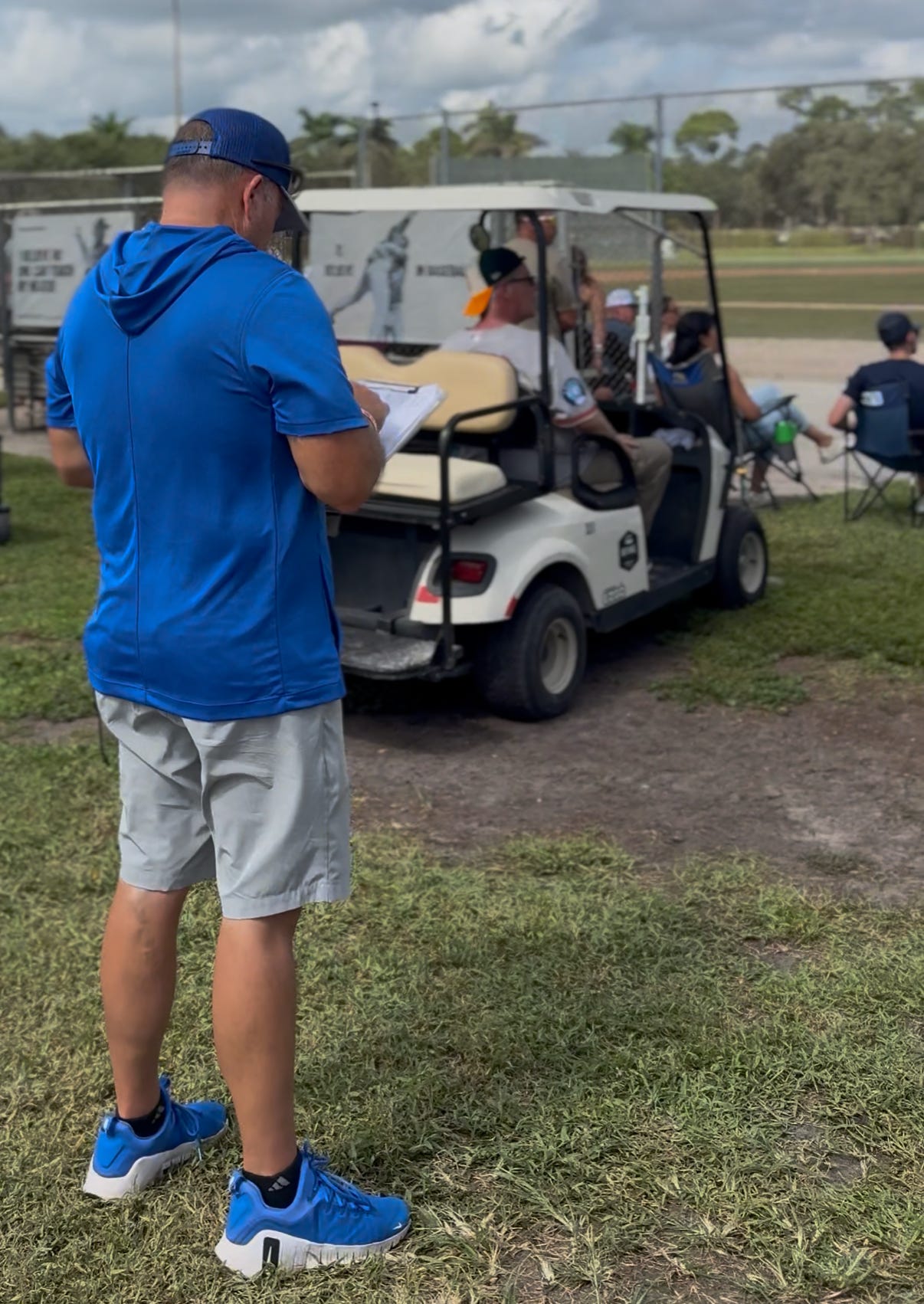
Radar guns. That’s the other thing I noticed, along with the golf carts, at Perfect Game’s WWBA World Championship in Jupiter, Florida. The scouts wheeled around in the carts and when they found the pitcher they wanted to see, they pulled up behind the backstop, and the radar guns came out. Some had their own velo trackers, others used the ones issued by PG.
Baseball people will tell you velo is only one piece of the puzzle on the mound, but nothing else at that event was measured as closely or celebrated as much. When an LSU commit touched 100 on the mound early in the tournament, PG had a graphic of him up on social media within hours. I didn’t see that kid pitch, but I saw other kids hit 93, 94, and 95.
I’m the father of a young pitcher who loves to throw hard, and he’s by no means the only one. I went to this event not knowing exactly what to expect and I came away understanding that pitchers are the hottest commodity at the top of the travel ball ecosystem. I get it. Pitching and defense win games. But I also worry about the risks and I wonder whether we’re losing too many arms – and the art of pitching – to the velo wars?
Most kids who pitch understand the risks, but that doesn’t mean they don’t love blowing up radar guns.
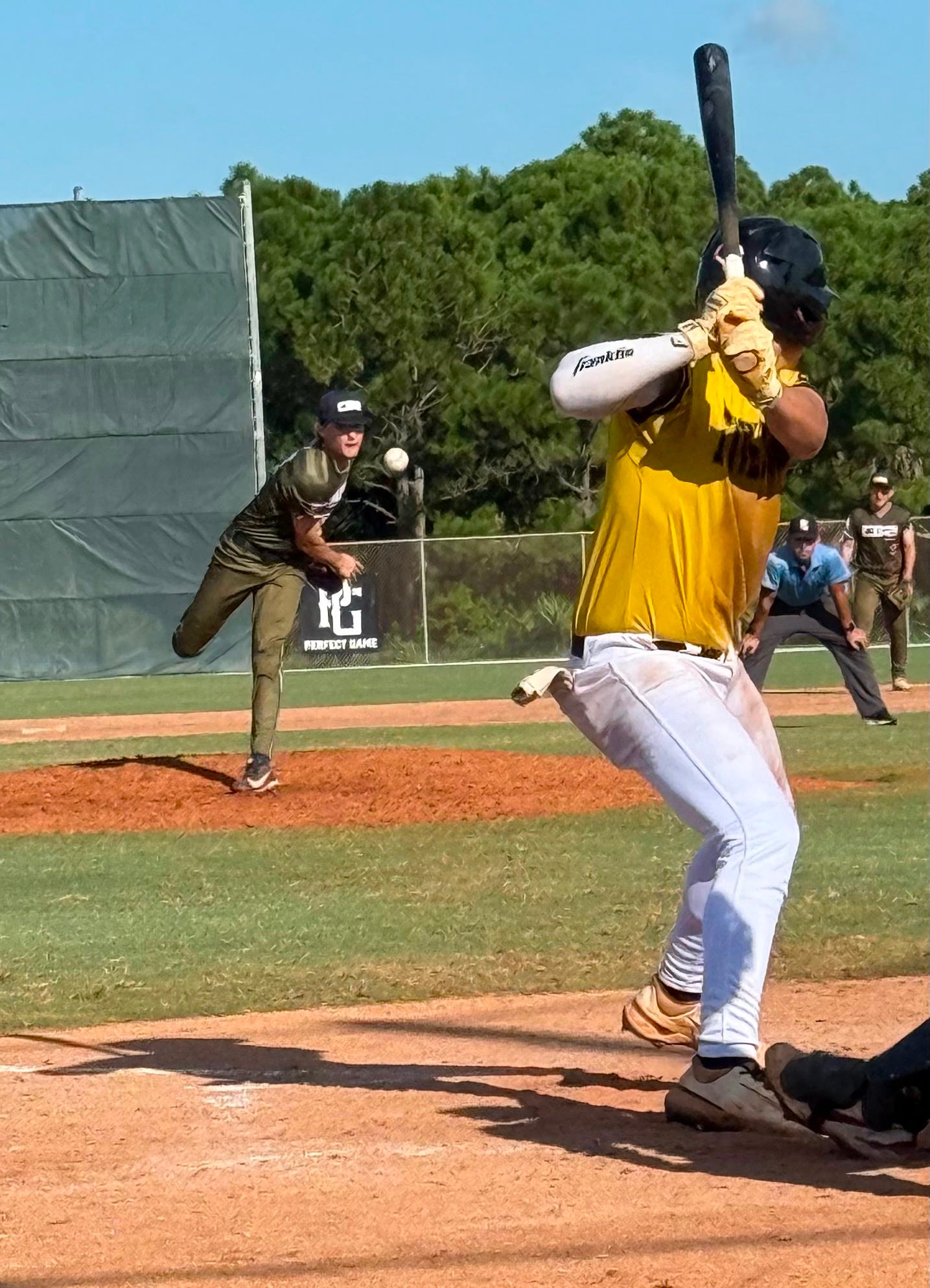
“My dad always says control over velocity...But it’s not really my thing. I like to throw hard,” said Easton DeBernardi, an 18-year-old who plays for the Chicago Cubs Scout Team and has been clocked at 93 MPH. At 6-feet and 180 pounds, he’s smaller than all the pitchers I saw in Jupiter. His arm is fresh though. A left fielder, he pitched for the first time this past summer and says he prefers closing over starting. “Because the adrenaline’s pumping...you control the game in that moment.”
The kids who throw the hardest and with pinpoint accuracy attracted the most golf carts and radar guns in Jupiter. They also gave their teams their best shot in a tournament loaded with D1 commits – and 700 MLB scouts and college coaches.
“We’ve got our three best pitchers going today, so we’ll see,” one coach told me ahead of what he referred to as a must-win game on day three of the five-day event played under steamy Florida weather.
Steve McKee, pitching coach at Florida Gulf Coast University, watched a young pitcher compete while explaining to me that he’s looking for kids who can throw strikes, especially early in the count. “Our top five were all drafted last year and all of them threw 90 or higher, but a ball is a ball whether you throw it 74 or 94,” he said.
Overuse injuries are common among young pitchers. I have first-hand knowledge of that, but every kid is different. Some kids who have pitched for years have never been injured. Everyone agrees arm care matters, but there’s no one-size-fits-all approach. Some families take a hands-off approach. Others are always looking for ways to help their kid throw hard, locate his pitches, and stay healthy.
Nicole LeRoy is in the second camp. Her son, Cooper, is a 6-foot-5 right-hander from Gilbert, Arizona, who tops out at 95 and sits atop Prep Baseball Report’s 2028 rankings in his state. He warms up and cools down with bands, does long toss and grip work, works with a pitching coach, and gets a full biomechanics screen twice a year. What Nicole cares about most isn’t on the radar gun.
“A lot of these kids are chasing velo, and I hate that. They get hurt,” she said. “Yes, my son will hit 95, but he’ll stay around 90 to 94 consistently, and consistency matters. Strikes matter.”
Then she said something more young pitchers need to hear: “Velo is not the goal anymore. It’s strike percentages.”
Coach Mark Wright, a Virginia high school and travel ball coach, made a similar point in a reel he shared from Florida last week.
“Here’s a hot take that’s not going to be a popular take,” he said. “At 17U baseball, if you throw 83 to 84, blow up the strike zone at like 65 and 67 percent strikes, and have a secondary pitch, you can win games down here…you get a tick faster — 85, 86 — you’re gonna have colleges on you.”
My son’s pitching coach has put a gun on him only a handful of times over three years of throwing bullpens together. “I don’t want him chasing velo,” Coach Chad Starkey told me. “I want him to hit his spots, to be a dog, to understand the situation. The velo will come.”
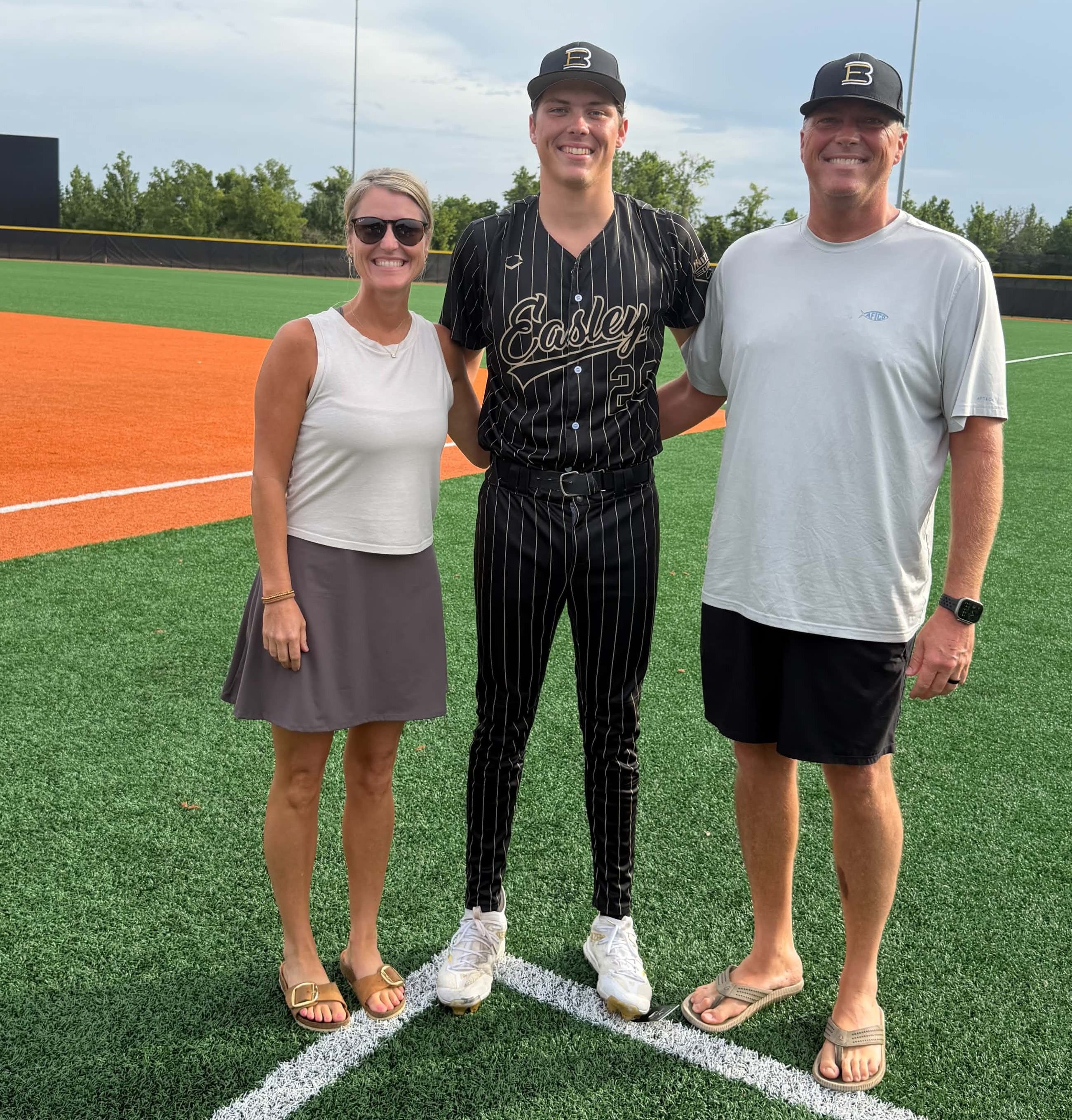
Julie Page’s son, Jack, a senior right-hander from Brandon, Mississippi, came to Jupiter off seven weeks of rest following summer ball. The Southern Miss commit had five weeks to ramp back up with his pitching coach, and she worried he wouldn’t be ready. “Velo wasn’t quite what he wanted,” she said afterward, “but a healthy arm is more important.”
Her son still made Perfect Game’s Day 2 top performers list: 5⅔ innings, eight strikeouts, no earned runs, and a 92 mph fastball. “Velocity is obviously important for a pitcher who wants to play at a high level, but we’ve never wanted velocity to come at the expense of his health,” she said. “For us, the bigger picture has always been development and longevity, not just what the radar gun says.”
Scott Harris’s son played third base until he lost his starting spot as a junior and decided to try pitching. He hit 90 over the summer. “I actually love the fact that my kid did not pitch growing up, ‘cause now his arm’s pretty damn fresh,” he told me in Jupiter.
The hard part now is the chase. “Now he’s chasing 91, 92, and it seems like the velo goes down when you start doing that.”
Velo and arm care get more attention than the mental side of pitching, and Easton’s dad, Brian, says that’s where his son still has the most to learn. Easton has the stuff, Brian said. What he needs is the situational feel that only comes from innings. Get a hitter down 0-2, and “if you just bounce a curveball in there, that’s strike three.”
That’s not always true but I understand his point. You want to keep your pitch count low and you do that by throwing first pitch strikes, staying ahead in the count, and getting outs with four or fewer pitches. Brian said he sometimes sees hitter tendencies that he’s not sure Easton sees, like a kid who chases with two strikes.
“I’ve seen that 100 times,” Brian said. “It needs to register.”
Easton has never had a pitching lesson, his parents told me. They also said they’re not worried about the toll on his arm. For his part, Easton said his focus is on what might be the hardest thing for young hurlers to do: letting go of a bad inning or outing. “It’s not your day, and so you let up a couple runs, the whole game’s not on you,” he said. “If you go out there and go, ‘I just sucked,’ you’re just gonna carry that with you. So you just have to drop it.”
Smart. So was how he came around to his dad’s vision. Remember, Easton had told me control over velocity isn’t really his thing. A few minutes later, as we walked toward the parking lot in Jupiter, he was making his dad’s case for him. Getting quick outs on contact, he said, beats piling up strikeouts while running up your pitch count.
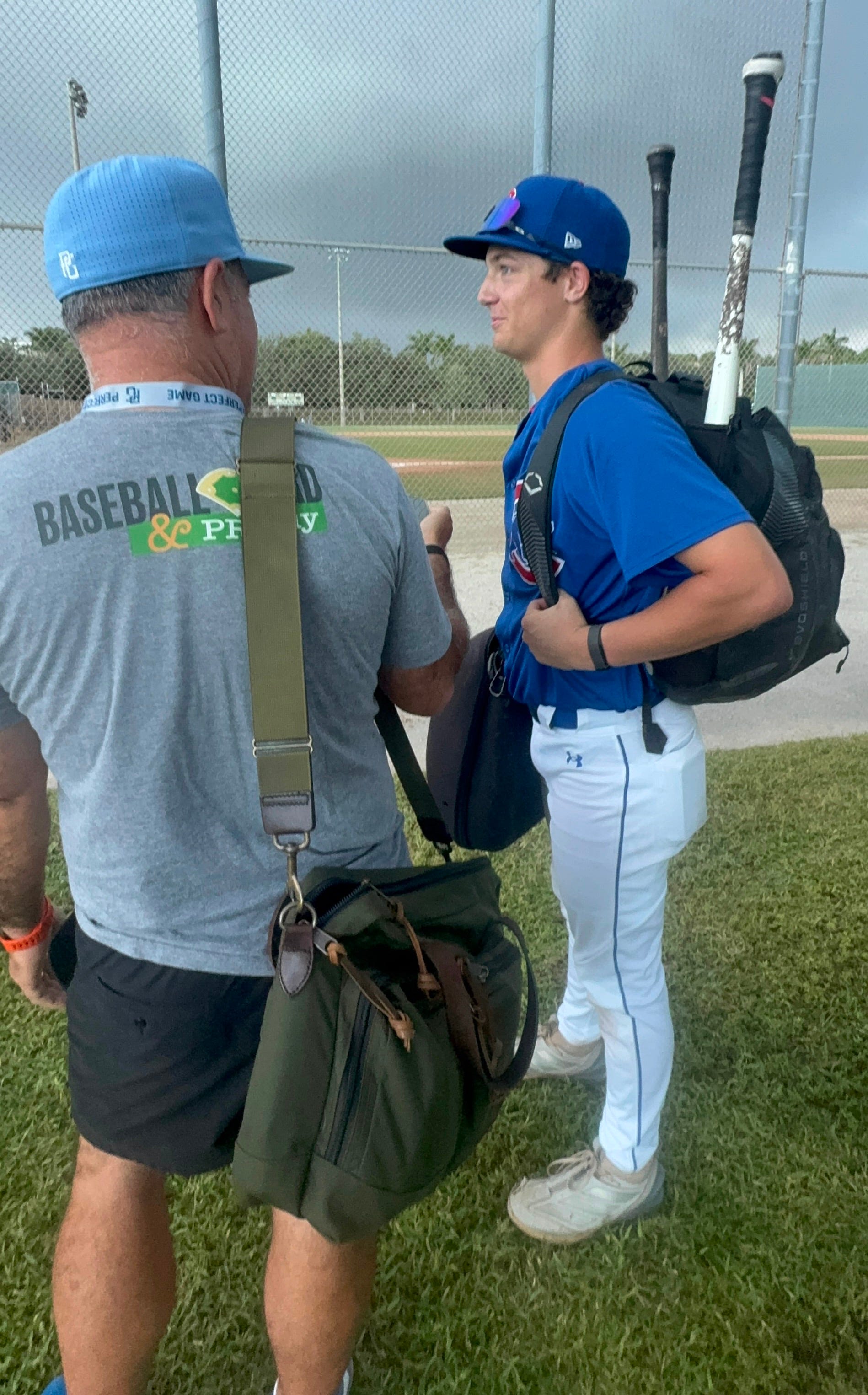
“If you can pitch for contact and get through games,” Easton said, “that’s better than burning 50 pitches for nine strikeouts.”
Efficiency doesn’t attract the same attention as velo and strikeouts. It’s not going to get you the splashy social media graphic celebrating your triple-digit fastball, but it’s the smarter approach. For teams and the kids on the mound.
How I Help Parents and Players
I coach players and parents to help kids play loose, with confidence and joy. The game gets harder, and our relationships suffer, when we add pressure.
If you’ve gotten the car ride home wrong, caught yourself coaching from the stands, or gotten caught up in the comparison trap, you’re not alone. None of us want to get these moments wrong. The good news: it’s fixable, and it starts with two short guides you can use before your kid’s next game.
Grab your parent playbooks — $20
Already a paid annual subscriber? Playbooks are included with your subscription.
Is your kid in a slump, freezing in big moments, talking about quitting, or playing small because of nerves and pressure? Tell me what’s going on.
Email me your issue and I’ll get back to you within 24 hours — $50
A lot of players and parents benefit from coaching. For players: it’s confidence — nerves, pressure, bouncing back. For parents: it’s the moments — what to say, what not to say, when to get out of the way.
Book a 1:1 Tony Talk for you or your ballplayer — $150/45 minutes.
About Baseball Dad & PR Guy
Baseball Dad & PR Guy is a weekly newsletter about youth sports culture and how parents and coaches shape the experience for young athletes.
Subscribers get my free Car Ride Home Playbook — what to say, and what to leave unsaid on the ride home.
My essays are built around the 5 Moments That Shape Young Ballplayers, from the nerves before a game to the car ride home.
From the stands, I write about those moments and what they mean for confidence, identity, and a kid’s love of the game.
Read more about the 5 Moments and why they matter.
⚾ Follow me on Instagram: @tonymanolatos. I drop new reels weekly that make my wife and kids cringe. They’re built for parents, players, and coaches. Some have taken off. One has more than 300k views.
⚾ A community for parents: Travel Baseball Moms & Dads (Facebook)
⚾ Follow along: Tony Manolatos – Baseball Dad & PR Guy (Facebook)
More at tonymanolatos.com